Farewell Jackie C…

Revisiting…Jackie C

Jackie Collins' Chances

Jackie Collins’ Chances

Yesterday (Sunday 19th September) I had an unusual experience. I found out that a writer I had loved and read voraciously had died. Nothing especially odd in that, I hear Enid Blyton isn’t exactly going strong these days. Except that, it was a writer from so long in the mists of my own reading life, that I had forgotten I ever read her, enjoyed her, been influenced by her.

I can’t really pinpoint when I first discovered the Jackie Collins canon, but I know I was in primary school, probably about 10 years of age. I also can’t remember how I came across a doorstop-sized bonkbuster aimed at grown women, suffice to say that I have a dim memory of being into gangster films around this time and being attracted to what, I now know to be, the first of her books about Lucky Santangelo, Chances.

But I do remember reading and re-reading that book. I do remember the yellowed pages, the smell of cheap paperback glue disintegrating and the pencil written 25p jumble sale price tag.

Oh, and the sex. I remember the sex as only a little boy in a pre-internet age could. Jackie Collins taught me anatomical details hitherto unmentioned in south coast Church of England primary school education and hinted towards untold riches for the gainfully exploratory. A lesson stored for the (all too distant) future, I remember thinking even then…

I remember action, gangster stories told with brisk clarity and swift violence. This was The Godfather but with more sex. A heady brew for the time. So much so, that I went on to read Lucky, the sequel, and – memorably startling the wee Reading Assistant who came into hear the year 6s read – Lady Boss the third instalment.

It occurs to me now, I was probably quite an odd child. But, no one really seemed concerned in the late 80s that what I was reading was probably vastly inappropriate. They just liked that I was reading at all.

I drifted away from Jackie. I dipped back in during my mid-teens but I never really took up the habit again – like smoking in reverse. I remember seeing her face on the back of the novels and being a bit alarmed (I don’t know what her stance on plastic surgery was, but all I can say for decorum sake is I found her disturbing).

Anyway, as I said, I drifted away from Jackie. But in her genre she could write. Effectively, efficiently and – I know realise – she did things for women readers (and, clearly, some men too) that stuffier ‘artsy’ writers couldn’t.

So, I’m sorry she went out of my mind for all this time. She deserved better. Now, I wonder if I can get hold of her back numbers on my i-pad…

If you are interested, you can find her work here:
http://www.amazon.co.uk/Jackie-Collins/e/B000APZA96/ref=sr_tc_2_0?qid=1442865014&sr=8-2-ent

And there’s a lovely obituary here:
http://www.theguardian.com/books/2015/sep/20/jackie-collins

The Corsican Caper

Peter Mayle's latest south of France delight

Peter Mayle’s latest south of France delight

The Corsican Caper In the UK, Peter Mayle is still best known for his non-fiction account of life in France, A Year in Provence. Nearly 30 years old, the book recounted Mayle and his wife’s move to a broken down house in the countryside and his struggles to work with the builders and locals.

In terms of epoch-defining work, this was definitely an under-the-radar success but the result was an glut of Brits shelving the rat race and heading to the sun at the earliest opportunity. The book also created an entire new genre of works by a range of authors with similar stories to tell. Some are excellent – Chris Stewart and Driving Over Lemons – some are rot.

But, what people are perhaps less aware of, is Mayle’s latter career as a novelist. He has been turning out a range of work – both fiction and non-fiction – since his big successes of the early 90s and the novels are of an infinite lightness and charm.

I’m never really comfortable with work being described in the ‘guilty pleasure’ category. Either you like the work or you don’t and Mayle, I’m sure, pours all his efforts into producing the work. They have a formula – charming, handsome English male with enough money to do what he pleases gets sucked into solving crime in the south of France, whilst dalliancing with a beautiful local girl and stopping for lashings of Provencal cuisine and gallons of rose wine.

So far, so parfait. However, over the last few novels, there appears to have been an evolution in the formula. The lead characters are now American and there is definitely a move to try and tap into a wider international market.

The Corsican Caper is the third in a series – preceded by The Vintage Caper and The Marsaille Caper and the first time Mayle has tackled a series of fiction titles – and is centred around the character of Sam Levitt, a former criminal turned adventurer for hire, who has, over the course of the books, been involved in wine heists, kidnapping and art theft. The gorgeous Elena Morales and his billionaire chum Francis Reboul, owner of a sumptuous Gatsby-esque mansion overlooking the Mediterranean near Marsaille, join Sam in his quest for a profitable life.

This latest novel actually centres around the house itself, when an unscrupulous Russian business man – Oleg Vronsky – who, when not indulging in standard Russian oligarch behaviour as prescribed by Mayle, such as purchasing a football club, tries to acquire the luxurious property by a series of increasingly desperate methods. This, inevitably, involves kidnapping, assassination attempts, the Corsican mafia and Sam saving the day. And lunch. Lots of lunches.

The charm of the novels is in the descriptions of the food and the wine. I’m guessing that Peter Mayle has had to dredge out his old thesaurus across the span of his writing for new ways of describing rose wine – but that’s OK because I like the vicarious experience of eating and drinking in sunny climes, especially when I’m stuck in a wintry Highlands.

The Corsican Caper is not high art. It’s not going to lecture you on the human condition or tell you anything about human nature which had slipped your attention previously. But, the novel nips along, the plot twists and turns without apparent effort on Mayle’s part and the man can write about wealthy people, enjoying the good life, like few others.

I can only offer a wholehearted recommendation for this as a first class beach book.

The Corsican Caper in Five Words: Crime and Wine in paradise

http://www.amazon.co.uk/Corsican-Caper-Peter-Mayle/dp/0345804562/ref=sr_1_1?ie=UTF8&qid=1433683461&sr=8-1&keywords=the+corsican+caper

Reposting: The Politics of ‘Poldark’

poldark

The smouldering cast of 2015’s BBC adaptation of ‘Poldark’

This post about the Politics of Poldark has proved consistently popular. Please note, this was originally written and posted in May 2015 after Season One and doesn’t deal with any later events in the show 

As with a great many of these sorts of things, I came to the 2015 adaptation of Winston Graham’s ‘Poldark’ novels late (i.e. after they had finished airing and we got them on DVD). I was not keen at first. “Oh good – another BBC costume drama about poncey aristos doing their best Colin Firth-impression” is not a phrase I’m likely to utter. However, I was delighted to be proved wrong. From early in the first episode, I was entranced. Not – in the way that apparently the middle aged cohort of Sunday night fantasists obsessed with Aidan Turner’s pecs are – but by the choice of subject at this particular juncture in political history. Brave does not begin to cover it. We’ve all heard the BBC criticised for bias – in Scotland for a pro-union stance, in England for its slavish adherence to Tory policy or for being the ‘Bolshevik Broadcasting Corporation’. I’ve always taken a neutral stance on this alleged bias – firstly, I’m sceptical that an organisation as Byzantine and disparate as the BBC is capable of maintaining a coherent party line (I struggle with believing in organisations to be that organised.) And, also, because I think if you’re being attacked for bias from all sides, then you’re probably on the right lines. But make no mistake – ‘Poldark’ is brave. In an age of austerity, with food bank usage topping 1 million people, (http://www.theguardian.com/society/2015/apr/22/food-bank-users-uk-low-paid-workers-poverty) for the nation’s broadcaster to produce an adaptation centred on a man of noble birth concerned with the survival of his workers to the extent that he will take on starving miners as farm hands and use his societal position to raise capital to put his people back to work is pretty ballsy.

Ross Poldark and serving wench Demelza

Ross Poldark and serving wench Demelza

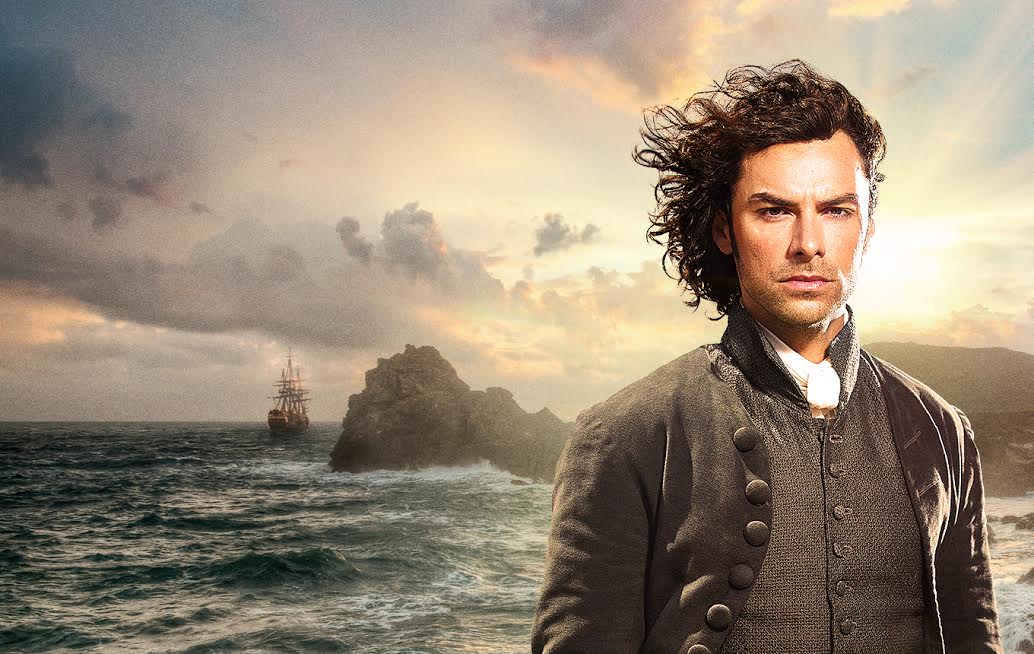
The point of business is not just to make money is like a refrain for Ross Poldark and he outrages his contemporaries with this standpoint. He stands up for poachers and petitions not only the court for clemency, but also the owner of the pheasants, because of the context of the boy poacher’s circumstances. He is acutely aware of the hardships of subsistence living in his period for normal people. Poldark even tries to form what amounts to a Fairtrade workers’ collective to gain a fair price for the tin mined in the region. “I’m disgusted by my class,” he tells the lovely Demelza (another waif saved from a poor home life by Poldark at a time he can ill-afford to pay for another mouth to feed), “not all of them, but most.” In short, the character of Poldark is like a socialist hero of another age – one who actually believes that by working together we can all get richer. At a time when the top 1% are stretching away from the other 99% across the developed world, I can scarcely think of a more suitable hero than a man who is willing to see poverty and hardship as the result of circumstance rather than sloth and ingratitude and well done to the BBC (and Mammoth Screen who have undertaken the lavish production) for daring to offer the nation a compassionate hero – even if he does spends too long topless scything and staring out of the window in moody contemplation.

Aidan Turner as Ross Poldark - a socialist hero?

Aidan Turner as Ross Poldark – a socialist hero?