It is a truth universally acknowledged, at least by those of us who inhabit the shade of Tim Shipman, Shane Whaley and the other learned denizens of the Spybrary community, that we are living through a golden age of spy fiction unrivalled since the original espionage frenzy of the early sixties.
Some have bubbled through to the public consciousness in showy ways – Mick Herron and his humour rendered in technicolour by Apple TV springs to mind – but Charlotte Philby, David McCloskey, Paul Vidich, Jeremy Duns (currently on sabbatical) and Charles Cumming are all regularly producing work so good it must be sought out.
As in any movement, however coincidental and loosely affiliated, there are the second tier-dwellers selected either for their real world espionage experience, their existing celebrity or their superb prose.
In Simon Conway, however, we have a writer very much moving into Mount Rushmore territory: he’s the complete package. A real world background of derring do straight out of a Boys Own adventure story, prose which oscillates between swingeing, biting satire and punch you in the face exciting.
He’s never been less than of the top tier – but here, his latest novel propels into the premier league.
He’s also consistent. ‘The British Agent’ may be his best yet, but ‘A Loyal Spy’, ‘The Stranger’ and ‘The Saboteur’ are also explosive spy stories of the very best.
In ‘The British Agent’, Conway arrives with a new publisher and an adapted writing style.
Penguin’s Michael Joseph imprint have delivered a Conway with shorter chapters, even more globe trotting locations and action to keep you on the edge of your seat.
The punchier chapters and the characteristic action ensure that Conway can weave his trademark political insights through this world of double crosses and bluffs.
In Chuff, Conway’s undercover British agent thrust undercover in a twisty turny American-made conspiracy the writer delivers an intriguing and hard nosed female hero who could happily break noses and rearrange testicles with McCloskey’s Artemis Proctor or Peter O’Donnell’s
Modesty Blaise (to name two outstanding spy heroines who span the two golden ages).
I’ve read a lot of novels this year for various reasons: few have been as engaging, as enjoyable or begin to compare with ‘The British Agent’ and I desperately hope a sequel is in the works.
“Don’t it always seem to go/That you don’t know what you got/Till it’s gone.” Joni Mitchell
Last week I went to a funeral. It happens. The person at the business end of the ceremony was my former housemaster, Dr Hobson.
In truth, it was one of those deaths which, if I’d thought about it, should not have been surprising. But it hit me far harder than I had expected. Hobson, as he was mostly known by us, took over a senior boarding house part way through an academic session, the year before I moved into it. As such, I was part of his first cohort whom he took all the way through from 14-18.
Those can be difficult years for the best of us. In a quote I can’t at the moment track down or source, a character reflects that school masters when he was at school were “dangerous lunatics, to be mocked or deceived as the moment required.” Many of the masters of the early 90s fit that stereotype. Dr Hobson never did.
At the funeral, another pupil reminded me that our junior house had been run by a spectacularly combustible character who used to carry out “blitzes”. Although a piece of terminology I had forgotten,I have not forgotten the red faced, vodka-fuelled rampages when books, personal possessions, crockery and cutlery were hurled to the floor in the late evening and then 50 children were left to put the pieces back together again.
There was nothing like that under Hobson. The same peer pointed out he never shouted at us. I hadn’t thought about it. But then again, he hadn’t needed to. We feared disappointing him, far more than his wrath – although make no mistake, we wanted to avoid that too.
It was an environment in which relationships with fathers was complicated. Despite the milieu of a mixed boarding school, the majority of us came from single parent homes, where absentee fathers were the norm.
That wasn’t my experience, but it certainly was the experience of the majority. Against that background, as another friend said last week, “he was probably the most stable male role model I had”. Amen to that.
He certainly had ways of dealing with us. For a fairly notorious start, he decided that we potentially needed to be cured of, what today would have been called, our toxic masculinity. Cue a violently bright pink day room where we spent much of our time. It was his son Richard who reminded me that we tried to turn this to our advantage by telling girls that we were in touch with our feminine side. It may even have worked in some cases.
Fast forward a quarter of a century and I have been a teacher for nearly 20 years. There are certain truths which you learn in a classroom:
you are the adult in the room. If you begin acting like the kids, and letting your emotions control you, you’re done.
The best teachers teach you things which can take years to be useful. These are life lessons – the gap between acquiring the knowledge and using it can be tens of years.
Every day is a fresh day. Grudges are for the weak. Everyone starts a new day with a new slate – especially when it’s hard to do.
The best teachers allow you to fail safely.
Dr Hobson did all of those things for me. Being a slow learner and a bad student, I made just about every mistake a teen could make and gave him many opportunities to try out his exasperated good nature. This is, after all, the same man who suspended me not once, but three times. The same man who saw me sort out my disciplinary record, rise to the position of prefect and deputy house captain for him and then watch as I very nearly got expelled mere weeks after attaining the status he had backed me for.
I do not remember his ever showing any anger or frustration with these evidently moronic choices. Wry, amused detachment for sure. But every day was a fresh start and I served my various punishments and took up where I left off.
Yet another friend, when I told him of Hobson’s death, said, “he was such a perfect housemaster for us, let us have a bit of freedom, but… was very much, and it wasn’t a phrase back then, a FAFO type house master.”
He was indeed. A good number of years ago I went to celebrate his retirement as he got ready to leave the school. He hadn’t changed much. Still wryly amused, still a big man, pleased to see us and friendly. Interested but distracted by the need to care for the youngsters still under his charge. I’m pleased I went.
At the funeral both his children, who I remember as later teens bemused by these gangs of idiot boys marauding about, were there with children of the same age as when we came under their grandfather’s care. The family were exactly what one would hope a Hobson family member would be: calm, kind, friendly, funny.
Hobson’s wife, who god knows must have borne the burden of taking on 50 hormonal barely shaved apes who chapped the door at all hours of the day and night, with a good natured grace few of us ever earned looked positively identical as though the last 25 years hadn’t happened. The family welcomed me and my peer as though we had never been away, which was kind beyond words.
Early 90s boarding schools were – for a variety of reasons – dangerous places. Dr Hobson made us feel safe: literally and figuratively. The other lessons: the patience, the amused detachment, the fresh slate, the serve your time and pick up without damaging the relationship? Those are all lessons taught to me by a brilliant teacher and, despite the gap in years, amazingly relevant. I don’t often reach his standards – I have neither his presence, nor his innate kindness and compassion in the classroom – but I try. And by trying, perhaps I’ll get closer to it.
I wasn’t as good at keeping touch as I should have been. Facebook messages, that visit for his retirement. What, a Christmas card would have killed me? It’s another failing I shall have to live with.
At the funeral, I realised that he was almost exactly the same age as my own parents. Four years younger than my Mum, a year younger than my own late father. My mum is also now living with dementia and is, to all intents and purposes, gone. The three of them got on well, mainly I realise now, laughing at me and my stupidity.
That generation is passing on now, some quickly like my dad, some in the slow, long goodbye of dementia’s savage fog. But we should cherish them: because like the lady sang, “you don’t know what you got till it’s gone.”
A Member of Parliament once described me as, “a Walter Mitty-like man” in the press.
Now, I should say that he had received quite a lot of provocation from me, as this came in the middle of an exchange of public letters which was probably best described as “colourful”.
However, I was impressed.
Firstly because I had assumed he’d written more books than he’d read so the gently obscure literary reference to a now little-known short story was interesting.
Secondly, I thought his chief of staff had written it for the same reasons!.
But thirdly, I thought it was quite a good insult. The sheer range of hobbies, interests and experiences I’ve tried to cram into my paltry time on this Earth probably does make me seem a little Walter Mitty-ish to some.
Of all the failed careers, experiments and states of mind, I think writer is the one I mourn the most.
I have a novel on a shelf somewhere. I think it is, objectively, awful. But I finished it, I drafted it, I sent it to some publishers with predicable results.
I was pleased to have even finished it. I’m reliably informed this itself is unusual.
I moved on: to more journalism, more blogging, more coaching, more politics. All while working full time and struggling to find time to write.
I will get back to it. I think the writing is in me. I can’t leave it alone. Like a damaged tooth persistently poked with a self destructive tongue.
I say all of this by way of preamble to a novel which enters the list of top reads of 2025 with a bullet.
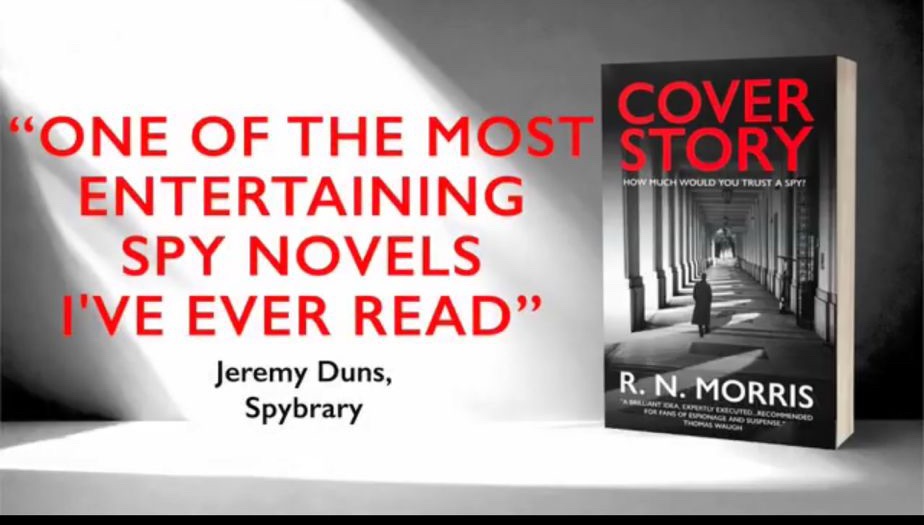
‘Cover Story’ by R.N Morris is one of those books so good I’ll have to leave my own work on the shelf a bit longer. I daren’t step into the same pond as someone this good.
It was Jeremy Duns who alerted me to it, (not exactly a slouch on the literary front himself, our Mr Duns).
Apparently inspired by a throwaway scene in Mount Rushmore espionage tv, ‘Le Bureau’, ‘Cover Story’ sees a struggling writer recruited by an old university friend to write a book on behalf of a spy.
Potentially, my adoration of the book was cemented by the introduction of Chris ‘Lazyboy’ Lazenby.
“One of those university contemporaries whom Col had sounded off to Jason about. Public school background, projecting the demeanour of an affable buffoon: sporty, boozy, posh-laddy, famously lazy… ”
Does all enjoyment come from egotism? Not sure, but I’m self aware enough to have sent that to a couple of university chums of my own.
“Saw this in a book. Rude. I feel “seen” as da yoof no longer say…”
“Hello Chris,” the first replied.
“Who has based their character on you this time?” said another.
So I was in. Fairly quickly I was sold that Morris could successfully structure a spy story and the inherent paranoia in the set up – basically “just because you’re paranoid doesn’t mean they’re not after you” – was well handled.
What I was really not prepared for was twofold: the way that Morris used the internal voice of the character and the spinning of hypothetical events and dialogue which is the domain of the writer to so effectively heighten the set up.
Secondly, I hadn’t been prepared for the quality of the writing. “You’ve scratched your nail on the windowpane of eternity,” a character says at one point.
There is also a knowingness and wry amusement to both the book and the writing.
Structured in the same way writers plan and structure stories (or do if they read the sort of how-to books which take you away from writing but feel like they are making a contribution anyway), Morris has all sorts of fun with the encroaching paranoia of his disintegrating hero.
“Now, in the cold light of day, to employ a cliché, which Col never normally liked to do, but this was an extreme situation, and extreme situations, if they did not exactly call for clichés, they at least connived at them… Yes, in the cold light of day, all the qualms he should have felt last night flooded over him. He was suddenly drowning in qualms.”
“What do babies dream about? Col wondered in passing. Elemental things. The warm sluice of sustenance from an indestructible nipple. The joy of shitting. The puzzle of a face and the unfathomable patterns of sound that came from it.”
“It was hard to imagine anything bad happening in a place that smelled of expensive cheeses and organic sausages, where he was protected by baskets of sourdough loaves and shelves of pickles.”
Those quotes are funny enough to have come from the current master of funny spy fiction, Mick Herron.
But I actually think the comparison inaccurate. Morris owes as much to Anthony Powell and Evelyn Waugh as he does to Herron or John Le Carre. While the hero lacks agency, the sentences continue to tumble, amusing the readers even as the protagonist suffers.
A fairly short novel, ‘Cover Story’ nails the insecurities of anyone who has ever seriously tried to put pen to paper.
The fact that it is so successful and sophisticated in its execution is a triumph for its author and one, I hope, he’ll have time to enjoy.
For those of us still marinating in our failure? Well, at least when I spiral off inventing scenarios at people encountered in trivial and brief moments? It turns out I may not just be a mad, Walter Mitty-like fantasist. I may just be a writer instead.
Post Script: An error with transferring the pdf of this novel to the Books app on my phone rendered the author as someone else, adding a lovely case of doubt as to the original author and echoing some aspects of the plot. I love a coincidence which can trigger paranoia all on its own. I think Roger Morris would approve…
A Labour government elected on a promise of change – but without any closely thought out plans other than saying change – a Prime Minister seen as too focused on freebies and foreign affairs at the expense of domestic duties, an agenda beset by scandals pulling focus from essential matters, separatist movements in Ireland and Scotland being marginalised and potentially disastrous, an insurgent party destabilising the political status quo and a seemingly radical set of politicians proving to be tiresomely business as usual much to the frustration of their supporters.
It is not exactly difficult to see why David Torrance was struck by the historical parallels when he published his book, ‘The Wild Men: The Remarkable Story of Britain’s Labour Government’ in 2024.
And those parallels – less ringing a bell than clattering cymbals in their resonances I would suggest – certainly add a timely atmosphere to an historical exploration which rattles along and is never a chore to read.
Torrance takes the sensible approach of tackling the period of eleven months of the first Labour government which ran from January to November 1924, essentially department by department, using the minister as the route into both the achievements and the failings of the administration.
What this approach brings – detail, an appreciation of the diverse personalities and perspectives these (mostly) men brought to their roles – does, perhaps, come at the expense of a grand over-arching narrative.
In fairness, it is entirely possible that this is deliberate because one of the things which most clearly emerges is the total lack of a coherent narrative put forward by the government, plus ca change. Just to take office was the achievement and, to the disillusionment of their voters, much more seemed to be beyond these “wild” men.
Ironically, the aspect which seems least convincing is the “wildness” of these men. Compared to the derangement of Liz Truss, the debauched merry monarch-ing of Boris Johnson, the debacle of the Covid PPE procurement systems or even Keir Starmer and the world’s most expensive pair of spectacles, Ramsey MacDonald’s charmingly monikered “McVitie’s Share Affair” would even qualify for a -gate suffix these days. Although, surely, the best named scandal title still remains the Teapot Dome Scandal.
These “wild” men are certainly “mild” by modern manners.
I believe it was Karl Marx who said, “history repeats itself, first as tragedy, second as farce,” and it is difficult to conclude much else than that the current Westminster administration has achieved nothing except for stripping the humour away from a program of leadership which is to farce what Mr Bean is to word play.
None of that, however, is the fault of Mr Torrance who has written a timely, engaging and entertaining book of interest to anyone keen to learn more about how we got where we are – and quite possibly where we’re going.
Author
Author David Torrance
David Torrance is a constitutional specialist at the House of Commons Library. Prior to that, he was a freelance journalist, broadcaster and writer for almost 20 years. As a Herald columnist, he was one of the leading commentators on Scottish and UK politics during the 2014 independence and 2016 Brexit referendums, while as the author or editor of almost 20 books, he published unauthorised biographies of the SNP leaders and First Ministers Alex Salmond and Nicola Sturgeon, as well as the authorised biography of David Steel. (Biography adapted from https://www.northbanktalent.com/clients/current-affairs-business/david-torrance)
How often does one read something which, within the first page, makes you wholly reconsider your stance on something?
I don’t mind admitting, hypochondria is not something to which I had really given a lot of thought. Or, any thought really. Now, I understand that this itself is a form of privilege – a freedom to not have worried about my health in any meaningful way, should not be taken for granted.
But if I had been given cause to pause and define hypochondria, I suspect I would have considered it… “a fear of illness entirely psychosomatic,” (a concept, and word, I know solely thanks to The Prodigy. Who says music teaches nothing?)
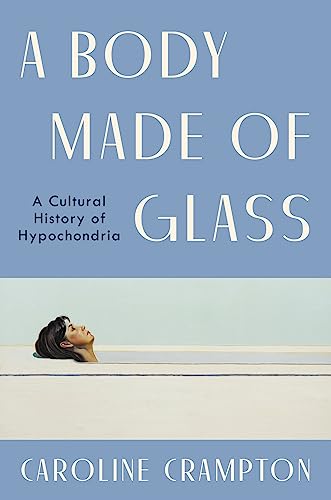
And yet, on page one of Caroline Crampton’s latest book, A Body Made of Glass, we are told of the teen cancer which, in essence, derailed her later teen years and triggers a long-term struggle with the condition of hypochondria.
Which seems… reasonable? It had never occurred to me that hypochondria might be based upon a rational foundation. To have been diagnosed, and then survived, what can only be described as a trauma, and to then imagine that every twinge may be the beginning of another setback on the road to full, sustained health, begins to look like a logical belief structure.
Crampton herself examines this in her own inimitable style. “The body has what has been described as ‘a limited vocabulary of subjective sensations’. I may think that I can feel things growing inside me that shouldn’t be there, like roots creeping unseen through the soil, but there is no evidence to suggest that this is actually the case.”
Creepily effective pastoral metaphor aside, the reader can’t help but think, “Yeah! How could you not!?”
Once you get up to speed with this concept, the slippery and transitional nature of the condition comes into view. What follows is fascinating as Crampton embarks on a multi-millennium tour of the way that medicine has approached the unknown – and unknowable – nature of medicine.
Spoiler alert – women seem to get the fuzzy end of the lollipop. Repeatedly.
I know Crampton best from her work on Golden Age of Crime podcast, Sheddunnit. She is an engaging and accessible doyen of that particular manor and her erudite, spectacularly widely read knowledge of the genre pervades that particular domain.
But it is nothing compared to the interdisciplinary tour de force which A Body Made of Glass presents to the reader. From ancient Egypt, via Plato, Peter Griffin and South Park, this is a whip smart journey through cultural reference points of high brow, pop and low brow culture.
Frankly I am exhausted by the thought of her reading list, let alone the writing of the text which followed.
Interspersed through these cultural touchstones are anecdotes, personal, observational – what I have come to regard as the “jar of pee” episode is one I see attracting attention in other reviews – but I was rather fond of the family she encounters at a hotel breakfast room who express their familial affection by recounting in lavish detail their bowel movements as they break their fast. Personally, I’d have recounted my own food at projectile velocity over them as a reward for this particular start to my morning but CC is a lot nicer than I am.
Crampton includes an excellent section of Robert Burton’s Anatomy of Melancholy, a text a favourite author of mine, Anthony Powell, leans heavily on in the later volumes of A Dance to the Music of Time. In the same way as Nick, the narrator of the series, says, “became rather hard not to see Burton in everything,” one feels Crampton has been living her life seeing hypochondria and its “’infinite varieties,’ Burton said,” in every book she has read, television show she has watched, every play she has seen.
She quotes Burton further when she recounts him writing, “the tower of Babel never yielded such confusion of tongues, as the chaos of melancholy doth variety of symptoms.’” Her corollary to this, that, “reading Burton, one comes away with the dizzying feeling that melancholy is everything and everything is melancholy,” is rather how the reader leaves the text feeling. Is hypochondria everything and everything hypochondria?
Does Crampton manage to move on and improve her trauma informed response to her childhood illness and the fruits of this poisoned tree it left her?
Well, that would be as bad as giving away the killer on page two of a Golden Age detective novel. Suffice to say, in a writer as warmly welcoming in her accomplished prose, as well as being as erudite and engaging as Caroline Crampton, you will just be happy to be along for the tour.
Author Bio
Caroline Crampton is a writer and podcaster. She writes non-fiction books about the world and how we live in it — The Way to the Sea(2019) and A Body Made of Glass. She makes a podcast about detective fiction called Shedunnit, she curates articles for The Browser, and reviews and essays for publications like Granta, the New Humanist,the Guardian and the Spectator. (Biography and photograph adapted from https://carolinecrampton.com/)
Also on the blog tour today, Booklymatters and Rogue Book Reviews
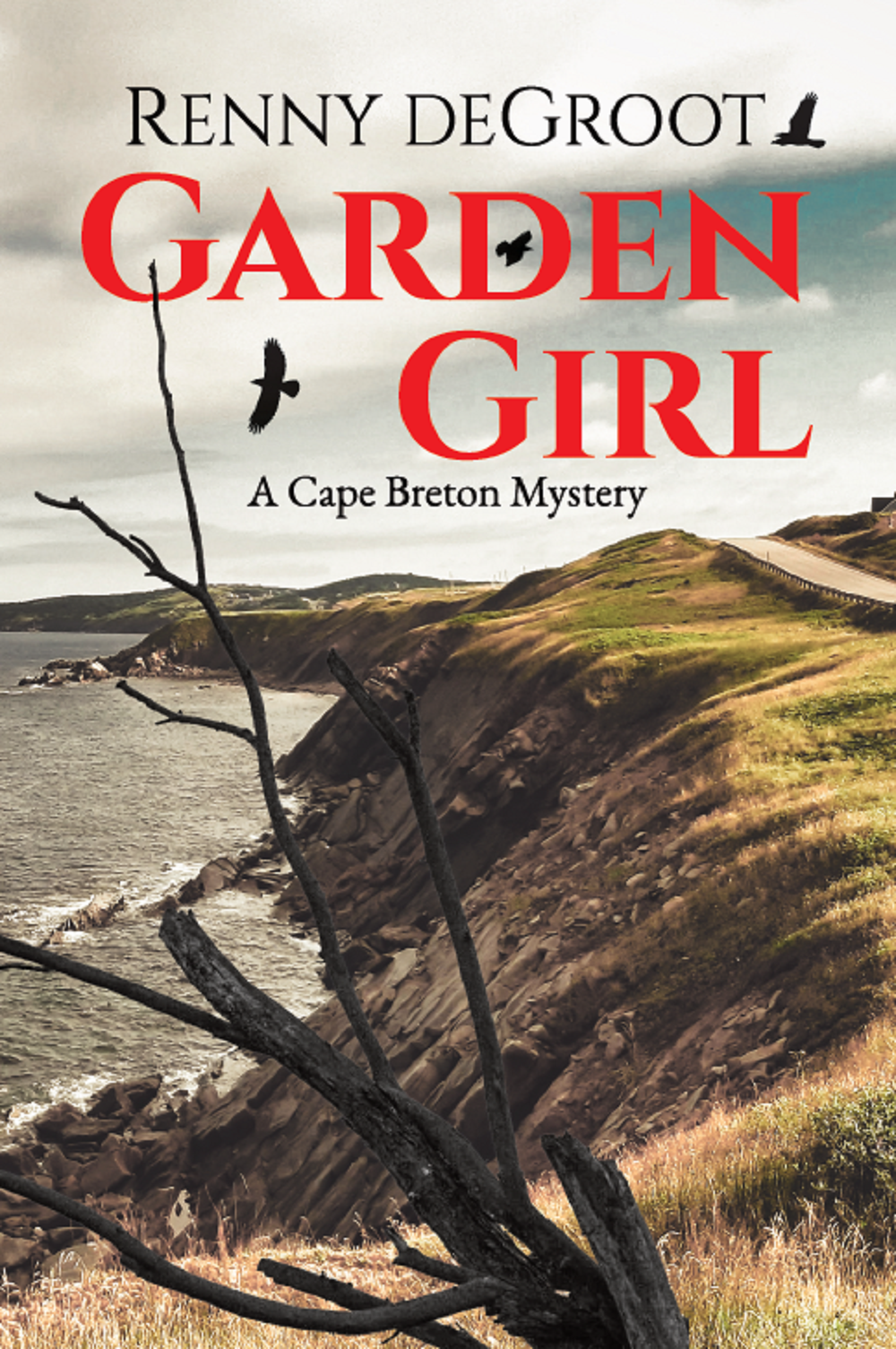
Gordie MacLean, a 53-year-old bachelor detective is content minding his own patch of Cape Breton Island with its rugged coastal landscape and low crime rate. When the remains of a missing person are discovered though, he’s in the right place at the right time to be lead on the case. MacLean battles his sergeant’s scorn and his own demons to prove that he can hunt down the killer; a killer who will stop at nothing to protect their long-buried secrets.
I’ve never been to Canada. All I really know about the Great White North is that they people like ice hockey and they’re notoriously polite. I associate Canadians with that same attitude that the Portuguese have to the Spanish or the New Zealanders to the Australians: the quieter neighbours, all the better for slipping under the radar and given themselves the space to value decency and openness.
Basically, cliches.
I suspect that lack of firsthand knowledge was what drew me to Renny deGroot’s novel, Garden Girl. Well, that and Taz the dog. Gordie is an engaging central protagonist, a man in middle age heading his first murder case with a dubious superior and a new partner to break in.
All of which, when rendered into black and white, sounds a little cliché itself. But deGroot has managed to craft a collection of characters – bi and quadraped alike – with whom it is no hassle to spend time. Gordie may be taciturn but he’s a fundamentally good guy, wants to welcome his new partner and look after his hound, even as a new love interest enters the picture.
In fact, this charming atmosphere and friendly set of characters also accounts for the slightly uneven tone which the novel sometimes has. It feels, sometimes, that there was an earlier draft of this book where Gordie was a worse man or where there was a backstory to why a clearly capable crime fighter like Gordie is so stalled in his career.
As it is, I think if deGroot wants to make this a series, she could channel Martin Walker or Donna Leon and lean into the camaraderie between her cops and her decent, nuanced characters because she can write an engaging plot and people. As a reader I want to spend time with them.
Overall, this is a good, honest detective tale, simply and competently told, sprinkled with (what feel like authentic) location details and narrated with aplomb by artist Nathan Foss. I’m just looking forward to the team’s next outing!
Renny deGroot was born in Nova Scotia, Canada, a first-generation Canadian of Dutch parents.
Her novels have been shortlisted for the Kobo Emerging Writer Prize and a Whistler Independent Book Award. They have been awarded several readers’ awards from the U.K., Canada, and the U.S. She has published mystery, historical fiction, short stories and non-fiction
Renny has a BA in English Literature from Trent University and studied creative writing at Ryerson University. She lives in rural Ontario with her Great Pyrenees and Golden Retriever, and vacations at her cottage in Nova Scotia.
Nathan Foss is a professionally trained and working theatre, film and voice actor who has appeared in film, television and theatre productions. He was a lead actor in Budai with Xiao Sun, as Romeo in the Montréal Shakespeare Theatre Company’s Romeo and Juliet and as a lead in the film Avant Que Tu Part which was an Official Selection of the 2020 Cinema On The Bayou Film Festival. He acted, directed and produced numerous plays and short films including In Loving Memory and commercials for Bios Medical.
Nathan graduated from the Neptune Theatre School and participated in workshops with Tom Todoroff, Scott Brick, Peter Dickson and Marc Graue. He studied voice and singing with Janice Isabel Jackson of Vocalypse Productions. Nathan trained in jazz, ballet and modern dance with the Leica Hardy School of Dance and the Joseph Wallin School of Dance. He performed in improv and attended numerous workshops for the performing arts.
Originally from Dartmouth Nova Scotia, Nathan is bilingual and is now located in Montréal Québec. Versatile by nature, Nathan is excited about the opportunity to expand his onstage repertoire into the fascinating medium of audiobooks and voice work. This allows him to successfully integrate his three passions of direction, production and acting into one form.
Also on the #blogtour for #TheSpyAcrosstheWater today is MJ Porter
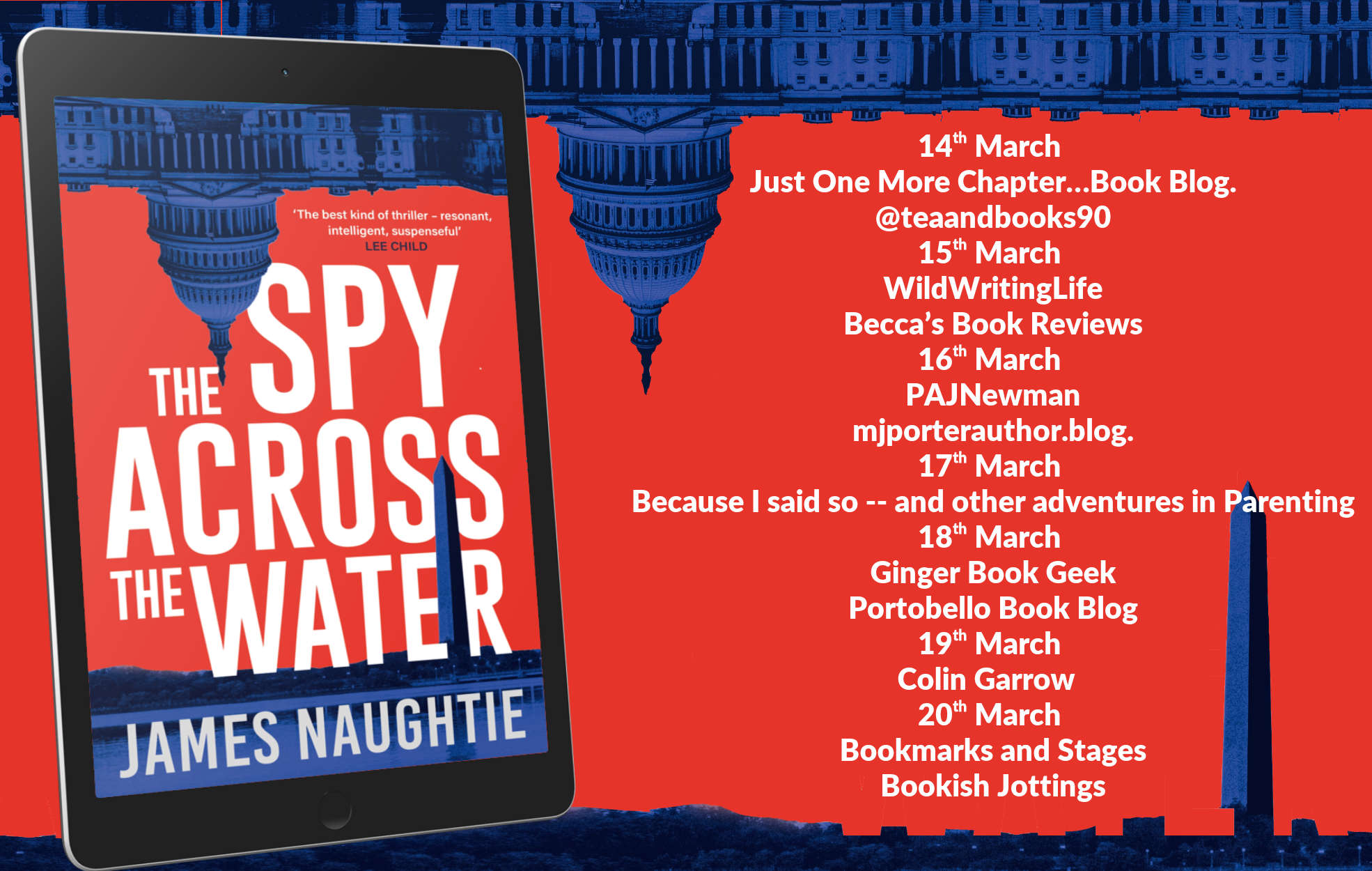
From one of our most treasured BBC broadcasters, The Spy Across the Water is the third instalment in James Naughtie’s brilliant spy series, woven around three brothers bound together through espionage.
We live with our history, but it can kill us.
Faces from the past appear from nowhere at a family funeral, and Will Flemyng, spy-turned-ambassador, is drawn into twin mysteries that threaten everything he holds dear.
From Washington, he’s pitched back into the Troubles in Northern Ireland and an explosive secret hidden deep in the most dangerous but fulfilling friendship he has known.
And while he confronts shadowy adversaries in American streets, and looks for solace at home in the Scottish Highlands, he discovers that his government’s most precious Cold War agent is in mortal danger and needs his help to survive.
In an electric story of courage and betrayal, Flemyng learns the truth that his life has left him a man with many friends, but still alone.
Is James Naughtie the most under the radar national treasure ever? If, like me, you grew up with his honeyed tones on Radio 4’s Today programme – and miss them still – then perhaps you might think he is. Reading The Spy Across the Water, made me feel really quite nostalgic for this man who’s voice is like a warm bath for the brain.
And Naughtie’s prose flows as seemingly effortlessly as his voice. Our central protagonist, Will Flemyng, is at the opening of the novel, US Ambassador under Thatcher’s government. One of the strongest aspects of the text is the way Naughtie does not fetishize those period details. Increasingly, one finds authors determined to insert their extensive research of their chosen historical milleau into their readers as though we were feeding to become fois gras and them the farmers. Naughtie does little to none of this.
Flemyng: good genre adjacent name; unobtrusively achieved by selection of spelling – and here, let us take a moment to appreciate what that particular spelling must have meant for poor JN’s typing and autocorrect functions on his word processor – is an attractive and debonair hero. A man of slick and accessible charm who can be a little prickly but always working towards the best available outcome.
This inner calm of the character clashing with the storm cloud building of the external events galloping towards him is mirrored by Washington setting intruding on the “Highland” rural idyll of the Flemyng family seat in Perthshire.
All in all, this is a fine spy thriller. It is smooth and slick without being showy or flashy. The cover wins points for me by not leaning on the “silhouette man” cliché which bestrides this genre like a colossus, but loses them again for the seeming cheapness of the design.
Overall, a literary thriller which wears its learning lightly and makes spending time with the hero a delight. Rather like discovering your childhood heroes are still thriving and working on their national treasure status.
James Naughtie is a special correspondent for BBC News, for which he has reported from around the world. He presented Today on BBC Radio 4 for 21 years. This his third novel, and his most recent book is an account of five decades of travel and work in the United States – On the Road: American Adventures from Nixon to Trump. He lives in Edinburgh and London.
There’s a book written for every one of us… Carl may be 72 years old, but he’s young at heart. Every night he goes door-to-door delivering books by hand to his loyal customers. He knows their every desire and preference, carefully selecting the perfect story for each person.
One evening as he makes his rounds, nine-year-old Schascha appears. Loud and precocious, she insists on accompanying him – and even tries to teach him a thing or two about books.
When Carl’s job at the bookstore is threatened, will the old man and the girl in the yellow raincoat be able to restore Carl’s way of life, and return the joy of reading to his little European town?
‘THE DOOR-TO-DOOR BOOKSTORE’ is a heart-warming tale of the value of friendship, the magic of reading, and the power of books to unite us all.
Translated by Melody Shaw
Sometimes one comes across a novel so simple in its artistry, so clean in its articulation and so charming and comfortable in its own skin that it deserves to be shared far and wide.
Carsten Henn’s ‘The Door-to-Door Bookshop’, lovingly translated by Melody Shaw is one such novel. Its setting and characterisation feels almost like a novelisation of a Wes Anderson film. The characters are charming and the plot matters less than the relationships between them and the pure joy of books, reading and friendship.
Like a love of literature – this deserves to be shared with the ones you love.
Purchase Links
Author Bio – Carsten Henn has worked as a radio presenter, wine and restaurant critic, and has published a number of successful novels. He lives in Germany.
Charles Cumming has long, rightly, been regarded as one of the top two or three working in the espionage genre at the moment.
Emerging around the same sort of time as the impressive Jeremy Duns and Simon Conway, Cumming has managed the difficult task of longevity – Duns remains on hiatus and missed by readers, if not by charlatan sub-editors.
Cumming has also managed that still more difficult task: reinvention. He has produced several multi-volume series and moved on without alienating readers who allowing quality to diminish.
Oh and, for good measure, he’s also produced at least three of the best modern-era standalone novels of the genre in ‘Typhoon’, ‘Trinity Six’ and ‘The Man Between’, the latter a 21st century Eric Ambler – and all the better for that comparison.
And so here we have ‘Kennedy 35’, the latest in the Lachlan Kite series of stories.
These books, beginning with 2020s ‘Box 88’ are both simple in conception and classy in their execution.
By running a duel storyline, an historic case involving Lachlan as young man, juxtaposed with a modern day story and examining the repercussions across years, combined with the heavy lifting of personal details from youth woven through the text, Cumming has made his own narrative niche.
Now, even one’s own vanity does not run to consider this an especially significant observation, but it did mean that I snorted out loud with laughter in an early chapter when a character said, “Now if somebody puts a guava in front of me, or if I taste or smell the brine of tinned food, I throw up.’ In French he added: ‘It’s like an inversion of Proust’s fucking madeleines.”
And it is this slightly self aware tone which permeates the text. A French character name drops Camus and Kafka within a thin spread of pages and Kite acknowledges this and chuckles.
Likewise, Cumming keeps the reader rooted in period detail “London was Oasis and Blur. It was Friends and Don’t Forget Your Toothbrush.” A lovely turn of phrase, although one unlikely to resonate much outside the UK?
At one stage I had fretted that these novels would become a conceit. After all, how many life changing experiences can one character have which includes formative experiences and be naturally tied into contemporary life?
I’m delighted to report the answer is… at least three and it better be four!
Here, Kite is embroiled in a scenario related to the Rwandan genocide and brought to life by the reappearance of an old friend.
This actually ties into the one strand which concerns me on Cumming’s behalf. If I’d been asked previously, I’d have placed the character of Kite as a “small c conservative”. In this novel, the obvious contemporary overtones related to HMG’s Rwanda deportation scheme are striking as is a recognition of where the UK now stands internationally now we have “taken back control.”
Our villains “will launder and provide cover for whoever pays their 20 per cent fee. In this they are not ethical of course. Boko Haram. Allied Democratic Forces. Al-Shabaab. It doesn’t matter. They are interested solely in the accumulation of money and the power which goes with it… She parties with Tory donors and Conservative MPs here in London, attends the sort of events that make their way into the pages of Tatler and Daily Mail online. She has blood on her hands but she also has money. The people who want that money are entirely without moral scruple. They turn a blind eye.’
‘It’s a modern disease,’ Kite observed.”
Or take this exchange between Kite and a French intelligence officer. “I don’t mean to be disrespectful to your wonderful country, Lockie, but you know as well as I do that the UK has been enabling the likes… for years. Your lawyers prepare their tax returns, your PR firms polish their images and if any journalist wants to write about them, their editor knows that a seven-figure libel action is waiting just around the corner.’
‘It’s much worse than that,’ Kite replied with an air of amused fatalism. ‘Successive British governments have actively encouraged anyone with a large enough chequebook to get it out in London and start spending. Dirty money washes through the construction sector, the hospitality industry, car dealerships, football clubs, you name it. Without it, the British economy would probably go into freefall.’”
Why would I say this worries me when a) these are opinions of fictional characters and b) objectively verifiable facts? Mainly because the world appears to have run mad and authors don’t seem to be free to express obvious truths without people weaponising them for their own ends.
I’m hoping that ‘Kennedy 35’s inclusion on The Times Autumn books to read means, perhaps, CC has slipped under the culture wars radar. I do hope so.
This is neither a Vince Flynn bombastic bullets ahoy nor a Le Carre-esque disaffection with the state of espionage in the modern world. This is, quite simply, a novel by a top class performer, performing at the head of the pack.
I was concerned that it actually marked the end of the series, so confident, so accomplished and so self-assured it appeared.
But, it is fair to say, with an ending which leaves well loved characters physically and emotionally up in the air, ‘Kennedy 35’ is a triumph of a novel about which I can only say: read it. You will not be sorry.
Charles Cumming was born in Scotland in 1971. He was educated at Eton and graduated from the University of Edinburgh in 1994 with First Class Honours in English Literature. The Observer has described him as “the best of the new generation of British spy writers who are taking over where John le Carré and Len Deighton left off”. In the summer of 1995, Charles was approached for recruitment by the Secret Intelligence Service (SIS). A year later he moved to Montreal where he began working on a novel based on his experiences with MI6. A Spy By Nature was published in the UK in 2001. (Biography courtesy of Harper Collins)
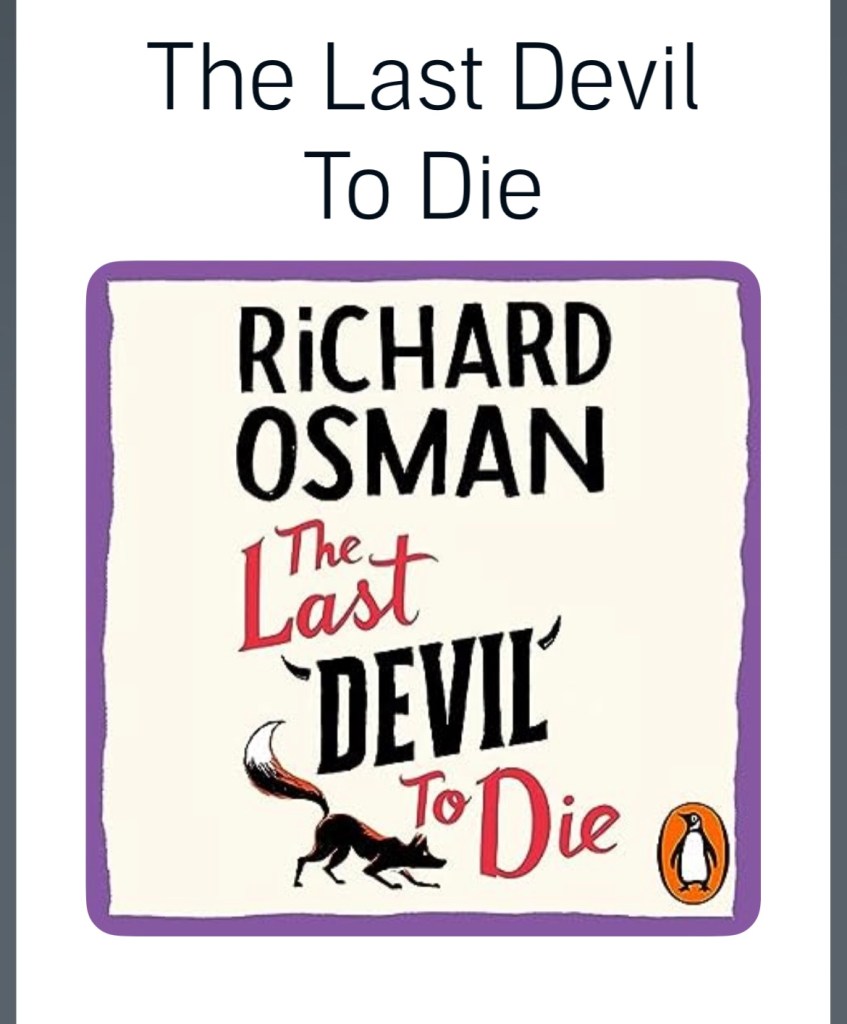
In that 2021 review I wrote: “I listened to both the original and the sequel in audiobook form read by Lesley Manville. I listened on long car rides alongside a mother who has dementia and doesn’t take that much pleasure in long form stories these days. Both Manville’s performance and Osman’s writing delighted her, amused her and kept her entertained and, for that, they were cheap at twice the price and I shall be ever grateful to them for their work.”
This little personal revelation is not especially insightful or interesting but it links to the lack of a review of the third novel in two ways.
Firstly, Manville had been replaced by Fiona Shaw as narrator in a move I’m yet to find anyone to approve of, and secondly, my Mum’s health deteriorated so far, so fast, that by 2022, listening like that was no longer an option at all.
That makes me sad. It may also account for why I reacted so strongly to ‘The Last Devil to Die’.
This third outing for our aging sleuths is a quieter novel. And, a sadder and more moving one for it.
If anything, Osman has truly established himself the Amanuensis of the Home Counties middle classes. The world of KitKats, slow traffic on the A26 and parking problems in Petworth – will be familiar to those of us raised in the area. Eat your heart out more “serious” novelist. Don’t tell me that bloke off ‘Pointless’ doesn’t do social realism!
I would say this novel is significantly better than the last, which was a much lower key book for me.
This latest caper has got lovely growth for the characters (especially Joyce and Ibrahim – surely the most crowd pleasing of characters to reward) and is both touching and much sadder than some of the previous ones.
Caveat: Steven’s dementia is a major factor in this tale and Osman has done a great job rendering the experience of dementia. It’s very well done but it made me cry. I suspect I’m not very objective on the topic.
As narrator, Shaw was a lot less jarring this time around- although in the interview which follows between her and Osman they reference the loss of Lesley Manville and what a big set of shoes it was to step into (although fail to explain why, grr).
However, she does quite literally the WORST scouse accent I’ve ever heard by a professional actor.
In conclusion, the gang remain in safe hands and it feels like Osman has grown as a writer taking his audience to darker, more moving places even while retaining his beloved milleau.
Richard Osman is an author, producer and television presenter. His first three novels, The Thursday Murder Club, The Man Who Died Twice and The Bullet That Missed were multi-million-copy record-breaking bestsellers around the world. The Last Devil to Die is his fourth book. He lives in London with his wife, Ingrid, and their cat Liesl. (Biography courtesy of https://www.penguin.co.uk/authors/141792/richard-osman?tab=penguin-biography)













 PAJ Newman