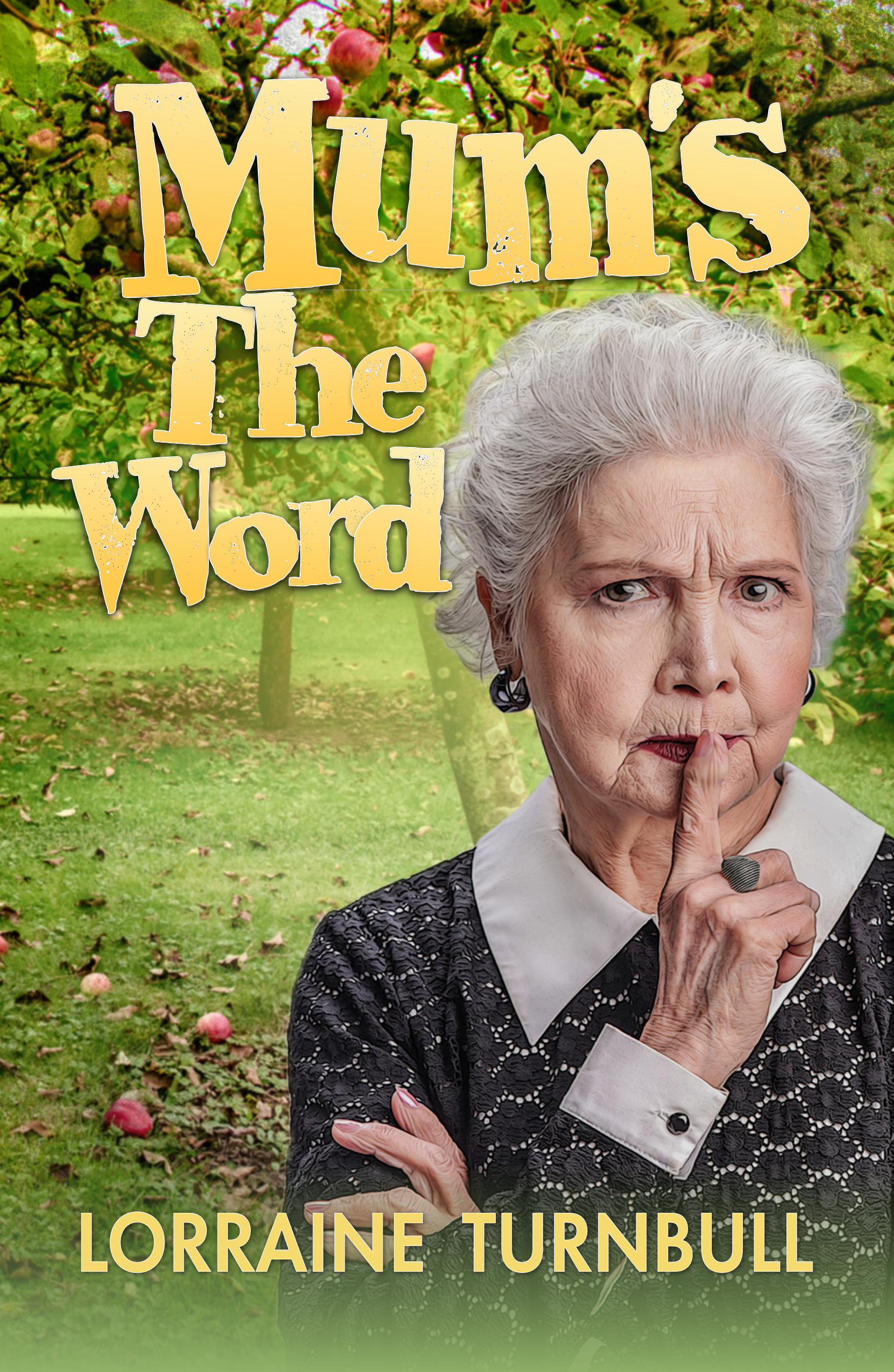
When Ann-Marie Ross murders her abusive husband and feeds him to the pigs, she thinks she’s got away with murder and secured the future of her Scottish cider farm. But she soon finds herself having to keep more than one deadly secret to protect those closest to her. As four women embrace their new-found independence, Ann-Marie is tormented by the threat of discovery. A darkly comic tale of murder, friendship and Love.
Lorraine Turnbull’s ‘Mum’s the Word’ will probably get listed under the cozy crime or black comedy genre. And this is fair enough. It is darkly comedic, Turnbull has a love of the contrast and ironies of living and it does have the sweet, “oh well, never mind,” aspect which can make cozy crime so easy to read.
What is also has – especially if you’re a reader in rural Scotland who also has to care for an ill, elderly parent – is a sense of dismay at the way that society has trapped the women in this novel.
“Used” is the word which keeps coming to mind: for their inheritances, for their cooking, for their patience, for their bodies. It is a darkly comic novel, but it is just dark in its view of human nature and how society has trapped people in dependency and misery.
This is not to make ‘Mum’s the Word’ sound depressing or po-faced. It is a romp of rare humour and entertainment, with a Glaswegian’s eye for the humour of the macabre detail. After all, there’s more fun at a Glasgow funeral than an Edinburgh wedding. Just ask Ann-Marie Ross…
Author Bio – Lorraine Turnbull was born in Glasgow where she lived until 2005 when she and her family moved to Cornwall to run a smallholding. She relocated to France in 2017 where she continues to make cider, writes books and learns French.
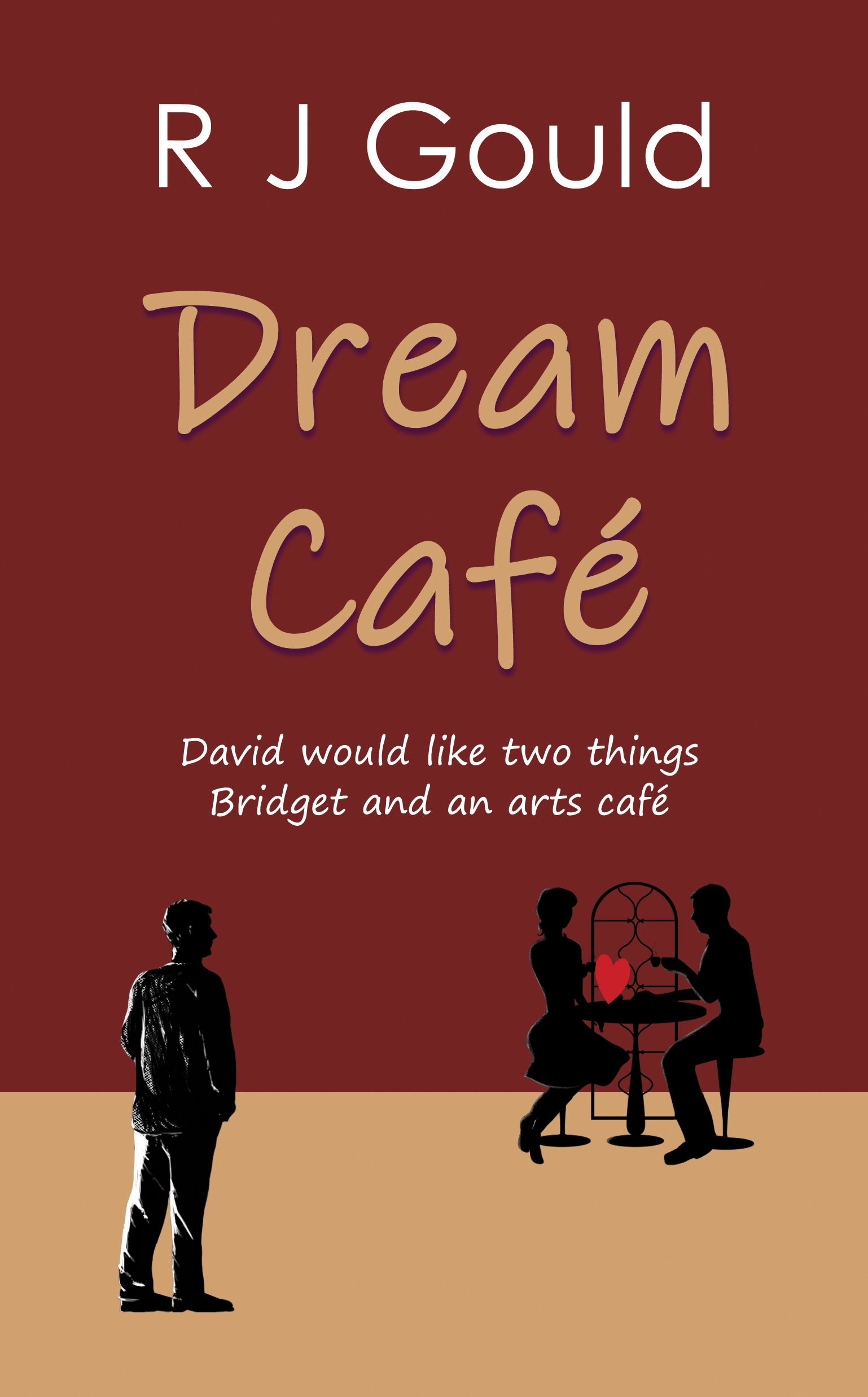
“Why on earth am I here?” David wonders as he observes the juvenile antics of ex-classmates at the twenty-five year school reunion. Then he sees Bridget.
David draws up a list of all that he hopes to achieve to kick-start a new life now that his wife has moved in with his best friend – his ex-best friend. A relationship with Bridget is top of the list, opening an arts café is a close second.
Formidable women – an unfaithful wife, a reckless teenage daughter, a boss from hell, a disapproving policewoman – seem like insurmountable obstacles.
But it’s still OK to dream, isn’t it?
I don’t think I’m giving too much away to confess that I have a birthday coming up in the next couple of weeks. A “big” one. One with a zero at the end.
As it happens, it is a “big” birthday which puts me in close proximity to David, the lead character of ‘Dream Café’. Having decided against attending my own school reunion (to paraphrase a friend’s response, he’d rather defecate in his hands and clap) I really felt for the character as half remembered school contemporaries lunge at him as the novel opens.
As the book progresses, we learn that poor David has quite the complicated back story, with all sorts of unpleasant behaviour having been dealt to this rather nice, if vague, protagonist.
Personally, I think a nice romantic comedy which nips along with ease of reading and light touch charm and ‘Dream Café’ has this in abundance. David is a hero we can root for and, even including the necessary ups and downs which must befall all characters in this genre, it is comforting to know that all will – up to a point – turn out right with the world.
Incidentally, I too have a secret dream to abandon my career and relaunch ala David – but perhaps I’ll have to wait until nearer his age to do so 😉
Purchase Links –
Author Bio –
Richard writes under the pseudonym R J Gould andis a (rare male) member of the Romantic Novelists’ Association (RNA). His first novel was shortlisted for the Joan Hessayon Award following his participation on the RNA New Writers’ Scheme. Having been published by Headline Access and Lume Books, he now self-publishes.
He writes contemporary literary fiction about relationships, loosely though not prescriptively within the Romance genre, using both humour and pathos to describe the tragi-comic journeys of his protagonists in search of love. ‘Dream Café’ is his sixth novel, following ‘The Engagement Party’, ‘Jack and Jill Went Downhill’, ‘Mid-life follies’, ‘The Bench by Cromer Beach’ and ‘Nothing Man’. [It is a rewrite of ‘A Street Café Named Desire’].
Ahead of writing full time, Richard led a national educational charity. He has been published in a wide range of educational journals, national newspapers and magazines and is the co-author of a major work on educating able young people. He lives in Cambridge, England.
This is the opening passage of Rat Island. It captures how I experienced the maelstrom of 1995 42nd Street in Manhattan and gives a pen-picture of the novel’s protagonist, Callum Burke, and his past.
For a review of John Steele’s ‘Rat Island‘ click HERE
Callum Burke was late for the Chinese taxidermist’s murder. He shoved a Camel between cracked lips and sparked his Zippo then leaned against the wall next to the subway entrance on 42nd. He lit the cigarette like a fuse. His watch read eight-twenty.
A handsome drunk black guy in khaki pants and a busted-up jacket caught his eye and sauntered over, flexing and weaving through pedestrians like the booze in his system had liquefied his bones.
‘Excuse me, man, you got thirty cents?’ Alcohol fumes seeped through Callum’s tobacco cloud.
‘No, I don’t have any change.’
‘Thirty cents, man. I just need thirty cents for my bus to Chester.’
‘Sorry. No change.’
‘Alright. God loves you anyway, man.’
The drunk lurched off as a Latino girl in a PVC miniskirt with a sweet face and glazed eyes strolled up.
‘Hey, baby. You all by yourself?’
‘Just like the song.’
‘You want some company? I got a half hour to spare.’
‘Not tonight.’
A wired, scrawny white youth made a move after the girl tottered away.
‘Hey, man, you got the time?’ His voice was drowned by the stream of traffic heading to and from 8th Avenue. Callum cocked his head toward the youth as a siren howled from somewhere behind Port Authority.
The youth leaned closer. ‘You got the time?’
Callum checked his watch. ‘Uh, it’s – ’
‘I got blow, speed, crack, H. What you need?’
‘No, I’m good.’
‘It’s aaaaall good, man’
Callum pinched the bridge of his nose. A cop was standing on the corner fifteen feet away working hard not to notice the wicked business going down on his patch. The buildings of midtown rocketed skyward, swallowed by low rags of cloud oppressing the early evening bustle of the streets. A tide of gossip, questions, information and bawdy profanity assaulted him. Before, in the other metropolis of Hong Kong, it had been just as raucous but most of it was Cantonese backwash, white noise he filtered out. Now it was rushing him, penetrating his skull and cannoning around in his head.
‘Thirty cents, man? Port Authority’s just across the street.’
The black man reappeared on his right, face bathed in yellow from a neon sign declaring, In the day of trouble the Lord delivers him.
‘I told you already,’ said Callum.
‘Hey baby, you busy?’
‘I’m fine.’
‘You wanna’ get high?’
‘You wanna’ fuck?’
‘What time is it, brother?’
‘Thirty cents?’
Callum dropped the spent smoke on the sidewalk and ground it out with his boot. He sparked up another and imagined himself through their eyes: the hustlers, the hookers and pushers. He looked younger than his twenty-nine years, despite the dark two-day growth on his face. A thatch of unruly black hair cut short and a nose skewed by a couple of prime shots in the ring. A wide mouth and a funny accent, maybe Irish but not like that comedy Top-O’-The-Mornin’ brogue people put on for St. Paddy’s. Heavy black brows over affective hazel eyes that were tender or playful or flinty at the whim of his moods.
Those eyes were his greatest tell.
The cop had crossed 42nd Street and disappeared downstream among the mass of citizens heading toward Penn Station on 8th Avenue. Callum took in the parking lot opposite, Port Authority Bus Terminal diagonal, the huge Camel mural across 8th to his right, and wondered how long he could live with this noise and fury.
Amid the chaos, a beautiful woman dragged a small child by the arm toward the subway entrance where Callum stood. Her hair was darker than shadow, her skin amber under the lights of the city, like she was sculpted from gemstone. She was East Asian but looked nothing like Irene Chu. Yet her face as she swept the child into her arms pulled Callum back to Hong Kong and his estranged wife. The child burrowed her head deep by her mother’s neck and Callum felt the memory leave a cold crater in his chest as he thought of his daughter, how Tara would do the same. Tara’s hands could barely meet as they encircled his neck back then.
The mother and child passed him by on 42nd and disappeared down the steps to the subway and he felt a part of him descend with them.
Callum pulled hard on the cigarette. That was his problem – he always went hard. Drank too hard. Gambled too hard. Maybe he loved too hard, now that his family was gone. He’d blown it with them and almost blown it with his job.
And now he was in New York.
He’d been here once before, a short trip with Irene but that had been the Empire State Building, Central Park and museums. This, tonight, was low cloud crawling through midtown, the buildings monoliths scattered with pinpricks of light. Rain was close. He dropped his smoke.
He scratched his head. No one likes to watch a man murdered but Callum couldn’t duck this one, so might as well get it over with. It wasn’t like he hadn’t seen plenty of bodies. But this time, he’d watch the Chinese taxidermist’s life snuffed out while he sat with a coffee and a cigarette. As he turned to enter the subway, he checked the change in his pocket and snorted.
Thirty cents.
PRAISE FOR RAT ISLAND AND JOHN STEELE:
‘A nonstop thrill ride… a lyrical, super read filled with plenty of intrigue, action and suspense and sent against an exotic and seldom explored corner of crime fiction’ Gerald Posner
‘RAT ISLAND speeds and thrashes with the dangerous energy of the Manhattan streets which are so vividly recalled’ Gary Donnelly
‘John Steele writes with grit, pace and authenticity’ Claire McGowan
Purchase Links
Author Bio –
John Steele was born and raised in Belfast, Northern Ireland. In 1995, at the age of twenty-two he travelled to the United States and has since lived and worked on three continents, including a thirteen-year spell in Japan. Among past jobs he has been a drummer in a rock band, an illustrator, a truck driver and a teacher of English. He now lives in England with his wife and daughter. He began writing short stories, selling them to North American magazines and fiction digests. He has published three previous novels: ‘RAVENHILL’, ‘SEVEN SKINS’ and ‘DRY RIVER’, the first of which was longlisted for a CWA Debut Dagger award. John’s books have been described as “Remarkable” by the Sunday Times, “Dark and thrilling” by Claire McGowan, and “Spectacular” by Tony Parsons. The Irish Independent called John ‘a writer of huge promise’ and Gary Donnelly appointed him ‘the undisputed champion of the modern metropolitan thriller’.
When Sam Dee moves to the beautiful Wiltshire village of Bishops Well, he expects a quiet life of country walks and pub lunches. OK, so his new neighbour, Maggie Kaye, is a little peculiar, but she’s very nice – and his old pal Richard Ruta lives just down the road.
But when Richard throws one of his famous parties, things take a sinister turn. Sam, Maggie and the rest of the guests are dumbfounded when Richard falls down dead. A horrible tragedy – or a cunningly planned murder?
With a village full of suspects – and plenty of dark secrets – just who exactly would want to bump off their host? Is there a connection to another mysterious death, nearly twenty years before?
Armed with her local knowledge, Maggie – with Sam’s reluctant but indispensable help – is soon on the case. But when the body count starts to rise, will sleepy Bishops Well ever be the same again?
I recently wrote glowingly of Simon Whaley’s novel ‘Blooming Murder’, describing it as “essentially, what would happen if Gardener’s World had an illicit love child by Midsomer Murders via the work of Tom Sharpe.
Anna Legat’s ‘Death Comes to Bishops Well’ has something of the same spirit but strikes me as more what would happen if ‘Midsomer Murders’ was crossed with ‘Escape to the Country’.
Here we have the obnoxious Richard bumped off – despite his boasts of eternal youth and his swimming pool – while new resident Sam is swept along in the investigation by his neighbour Maggie.
Legat has clearly worked at her writing craft and is an especially wonderful observer of human posture. Richard is described as “an old man, whether he cared to admit it or not: his frame was hollowed and his skin leathery and wrinkled, the hue and texture of tea-soaked parchment.”
Likewise, Sam is an, “ex-full back, he had a boxing-glove textured body, heavily padded with raw muscle.” The vivid nature of these descriptions offers a telling insight into the characterisation of Legat’s players.
‘Death Comes to Bishop Well’ is a straightforward cozy crime mystery set against the picturesque backdrop of the English countryside. Legat handles dialogue with a pleasingly assured hand, although the shift from a third person to first person narrator early in the book threw me at first.
However, as the opening instalment of what Legat is calling the ‘Shire Mysteries’ I hope that the unconventional pair of Maggie and Sam will be back thwarting murderers and struggling with ethical dilemmas in the near future.
Author Bio – Anna Legat is a Wiltshire-based author, best known for her DI Gillian Marsh murder mystery series. Murder isn’t the only thing on her mind. She dabbles in a wide variety of genres, ranging from dark humorous comedy, through magic realism to dystopian. A globe-trotter and Jack-of-all-trades, Anna has been an attorney, legal adviser, a silver-service waitress, a school teacher and a librarian. She has lived in far-flung places all over the world where she delighted in people-watching and collecting precious life experiences for her stories. Anna writes, reads, lives and breathes books and can no longer tell the difference between fact and fiction.
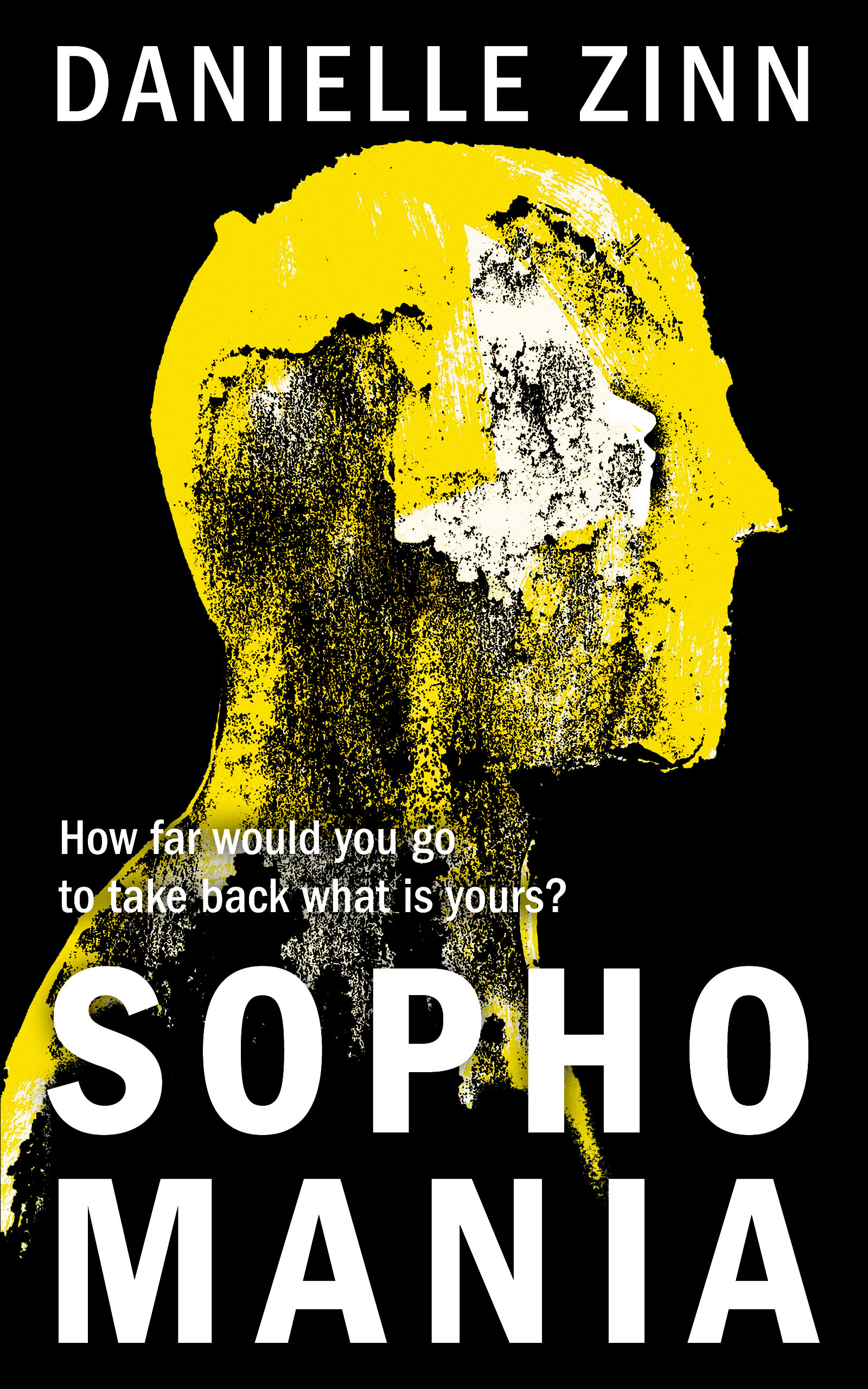
When Detective Inspector Nathaniel Thomas is presented with an anonymous letter and three unexplained deaths in less than twenty-four hours, he realizes that his idyllic home village Crottendorf masks a turbulent reality. Summoning his trusted colleague, DS Ann Collins, Thomas begins to unravel what quickly becomes an overwhelming mountain of conflicting evidence.
So many secrets. So many lies. So many attempts to cover things up.
All is not as it first appears and it proves a lot harder to pin down the killer who prides himself on being more than one step ahead of the DI.
A deeply rooted family tragedy, greed and vengeance are at the core of this crime novel. The twists and turns of Sophomania leave you wondering to the very end who the real murderer is—or if there may actually be more than one killer on the loose in the anything-but-sleepy village of Crottendorf.
I love crime fiction set outside the UK – and, after the last two years – the escapism of which my mother would have referred to as, “a nice murder” is of benefit to us all.
I’ve written in these pages of some of my favourites Martin Walker, Donna Leon and a pairing I’ve not written about as yet, the parents of Scandinoir, Maj Sjowall and Per Wahloo (who I will get to at some stage, honest)
But my knowledge of German literature – crime and otherwise to be honest – is scant. So, Danielle Zinn’s second novel Sophomania immediately appealed.
This synopsis driven attraction was soon rewarded by the arrival of a mummified thumb which sets our hero, Detective Inspector Nathaniel Thomas, off on the track of the rapidly expanding body count in rural German village, Crottendorf.
Zinn spins a pleasingly pacy yarn with a likeable, hulking 6ft 7 tall, detective just trying to get by in the world of murder and lingering trauma from past experience.
Oh, and a tip from a novice gardener to another, just be patient Nathaniel. The plum tree will be fine with patience.
Danielle Zinn is a German author, born and raised in a small village in the Ore Mountains, Germany where not only her debut crime novel Snow Light is set but also her second book, Sophomania.
She holds a BA (Hons) degree in Business and Management from New College Durham/UK and has settled down in Leipzig where she works as a Financial Controller at an IT Consultancy.
She was introduced to the world of English literature and writing from an early age through her mother – an English teacher. Over the last years, she circumnavigated the globe and loves visiting her friends scattered all over the world.
D.I. Fierce always gets his man, but can he get his woman?
Actor Leonard Lupine is sick of his life, both on and off-screen, so when his agent suggests a luxury villa holiday in Croatia he leaps at the opportunity to escape. What he doesn’t realise is that his greatest mystery of all is waiting to be solved on the tiny island of Brač.
Does he have what it takes to follow the clues to love? ♥
You know how it is: sometimes you pick up a novel because you think, “well, I need to read something and this will fill a space,” and your expectations aren’t high but it’s the holidays and what else you going to do?
So, full disclosure – this was the attitude with which I approached ‘Clueless in Croatia.’ Not dismissive or grumpy about needing to read it, but with a half-hearted distraction.
Well. Boy, do I love being surprised and delighted? Joy Skye has crafted a charming world, vividly conjured and one in which the prose is as enticing as the seas off Croatia which I now long to dive into.
Leonard Lupine is the sort of conflicted arse one might expect to find in a romantic comedy and Skye does a lovely job of lampooning and satirising the personas and absurdities of influencer culture.
Likewise, down to earth young widow Isabella is lovely counterpoint to Lupine. Her genuinely tragic backstory contrasting with his poor-little-rich-boy, but-Mummy-I-don’t-want-to-be-typecast-as-a-tv detective-with-only-all-my-money-to-count first world problems schtick.
So, we have an exotic location, a contrasting pair of confused but essentially loveable central characters and a smattering of supporting characters – the children primarily – who speak more sense than most of the adults put together. Which also adds a nice verisimilitude to the proceedings.
In short, ‘Clueless in Croatia’ was just what the post-lockdown Summer ordered – I’m off to dream of swimming in lagoons, eating an entirely cuisine from a country I’m yet to discover and also to research Joy Skye’s other novels.
I now feel less clueless about Croatia – and far more excited to visit. Joy is certainly an aptly named author. Bravo!
Joy lives on the seductive island of Corfu with her four dogs and an embarrassing number of cats.
Her many years working in the tourist industry on this sunny isle and her love of all things literary inspired her first novel Corfu Capers which recently hit the #1 spot in Parenting and Family humour much to her delight.
She loves to cook, dance and drink wine, usually at the same time, and is currently working on book number three, due to be released later this year.
She also loves to travel, absolutely anywhere, and is looking forward to jumping on a plane!
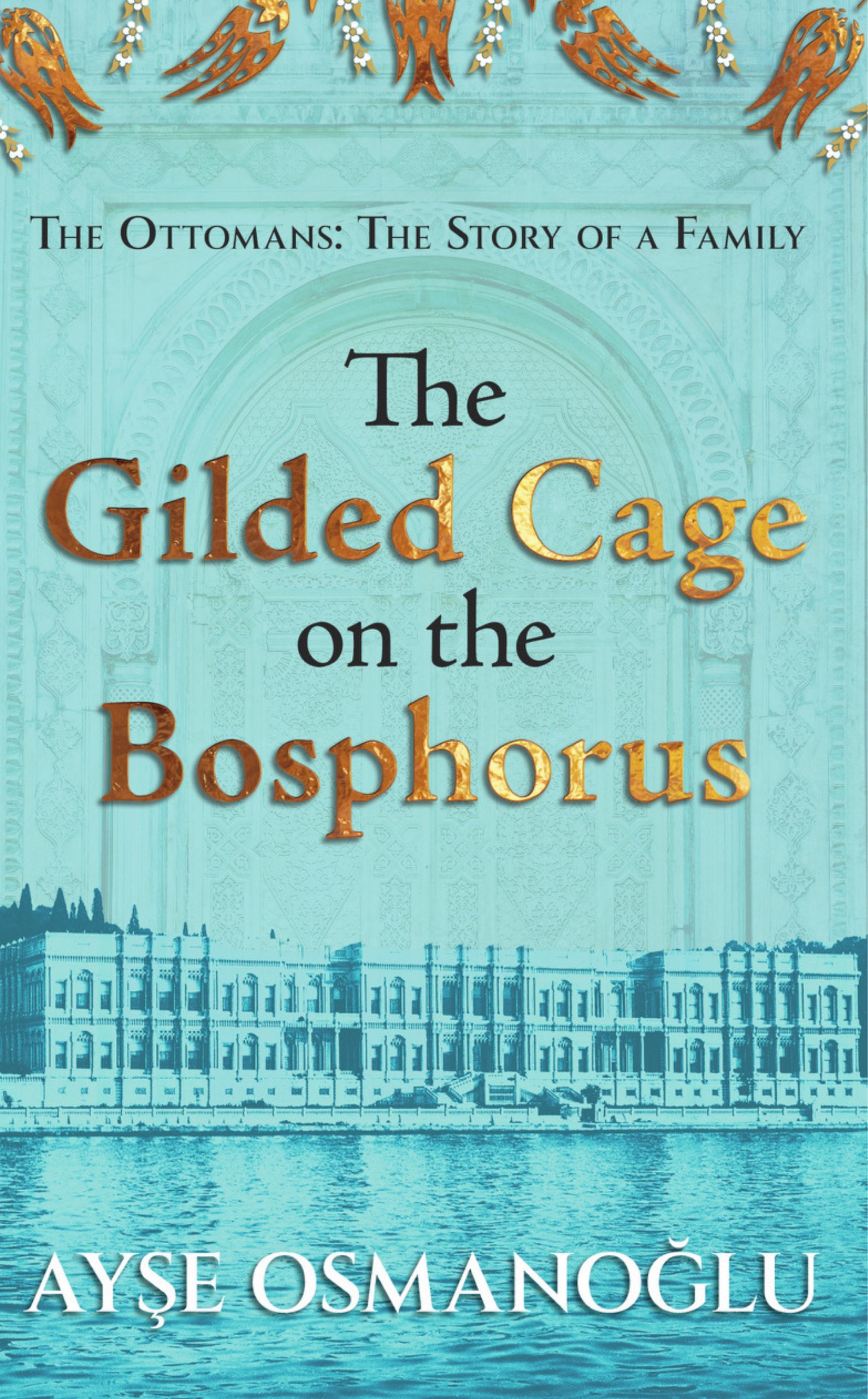
‘The Gilded Cage on the Bosphorus’ by Ayşe Osmanoğlu
Brothers bound by blood but fated to be enemies. Can their Empire survive or will it crumble into myth?
Istanbul, 1903.
Since his younger brother usurped the Imperial throne, Sultan Murad V has been imprisoned with his family for nearly thirty years.
The new century heralds immense change. Anarchy and revolution threaten the established order. Powerful enemies plot the fall of the once mighty Ottoman Empire. Only death will bring freedom to the enlightened former sultan. But the waters of the Bosphorus run deep: assassins lurk in shadows, intrigue abounds, and scandal in the family threatens to bring destruction of all that he holds dear…
For over six hundred years the history of the Turks and their vast and powerful Empire has been inextricably linked to the Ottoman dynasty. Can this extraordinary family, and the Empire they built, survive into the new century?
Set against the magnificent backdrop of Imperial Istanbul, ‘The Gilded Cage on the Bosphorus’ is a spellbinding tale of love, duty and sacrifice.
Evocative and utterly beguiling, ‘The Gilded Cage on the Bosphorus’ is perfect for fans of Colin Falconer, Kate Morton and Philippa Gregory.
I’ve never been to Turkey properly. I once went via Istanbul’s airport to transfer flights – it was the middle of the night and my main memory is of neon lights, 24-hour shopping and some beautiful marble floors.
But I have spent some time in the Islamic world and can tell you this: the history and culture of that religion, the misunderstandings of majority of the West and the complexity, beauty and the history which flows from the Ottoman Empire is well worthy of anyone’s time.
Ayşe Osmanoğlu has produced an absolutely fascinating account of a period which I didn’t know anything about. I love reading and learning and I particularly love it when it builds upon some scant knowledge I have of a complicated subject.
Osmanoğlu has picked a period just as the world pivots on its axis. Sultan Murad V is imprisoned by his brother in the eponymous gilded cage on the Bosphorus but what adds spice to this version of the true life event is that Osmanoğlu is writing about her own family.
This makes ‘The Gild Cage on the Bosporus’ unique, to the best of my knowledge. There are many historical novels, obviously, but there are few which blend fact with fiction and with emotive family issues woven through the narrative.
Osmanoğlu writes as though she is projecting herself back the 120 or so years to the crucible of a moment which will have profound effects on the geo-political map and her own familial destiny.
It is a journey I am grateful to have joined her on.
Author Bio – Ayşe Osmanoğlu is a member of the Imperial Ottoman family, being descended from Sultan Murad V through her grandfather and from Sultan Mehmed V (Mehmed Reşad) through her grandmother. After reading History and Politics at the University of Exeter, she then obtained an M.A. in Turkish Studies at SOAS, University of London, specialising in Ottoman History. She lives in the UK with her husband and five children.
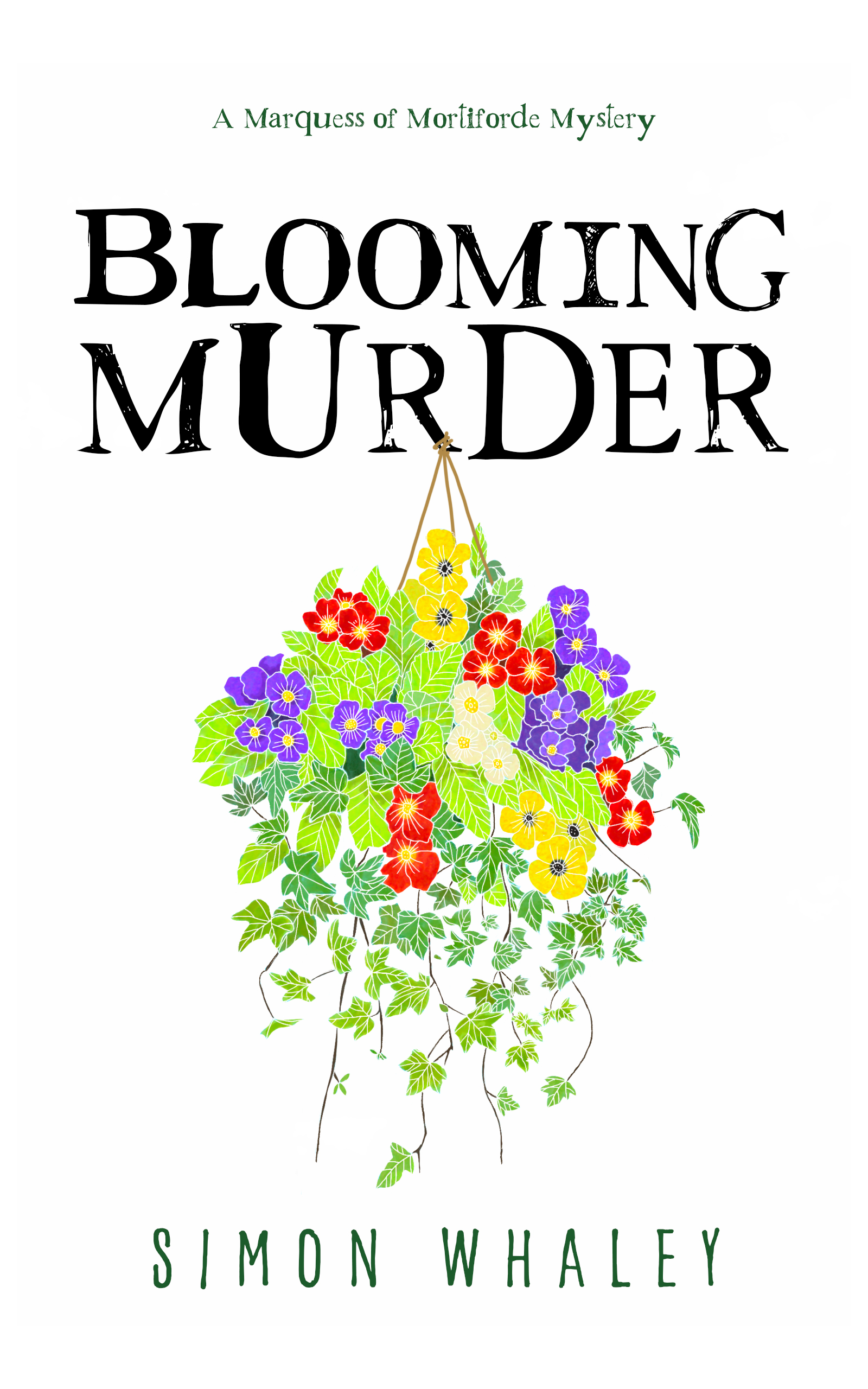
Lord Aldermaston’s having a bad day. A falling hanging-basket has killed the town’s mayor, and a second narrowly missed him. His wife wants him to build her new greenhouse in three days, and some nutter is sending him death threats.
This isn’t the quiet life he expected as the new Marquess of Mortiforde.
It’s the annual Borders in Blossom competition, and Mortiforde is battling with Portley Ridge in the final. But this is no parochial flower competition. The mayor’s mishap looks like murder, and there’s another body in the river. Someone desperately wants Portley Ridge to win for the fifteenth successive year.
So when a mysterious group of guerrilla gardeners suddenly carpet bomb Mortiforde with a series of stunning floral delights one night, a chain reaction of floral retaliation ensues.
Can Aldermaston survive long enough to uncover who is trying to kill him, and why? And can he get his wife’s greenhouse built in time?
My god, did I enjoy this novel. I like a cheeky cozy crime at times and I read the synopsis and thought, I have to get myself some of that. But it far exceeded my expectations.
Blooming Murder is, essentially, what would happen if Gardener’s World had an illicit love child by Midsomer Murders via the work of Tom Sharpe. And it’s all the better for it.
Whaley is clearly an accomplished writer and has a strong track record of non-fiction. His first foray into the fantastical has clearly given him licence to run wild. In the afterwards, he notes that there is a version of this nearly 40,000 words longer – he was right to cut and, in future, could potentially prune the buds of his ambition even further.
But this is a minor quibble – local mayors are being dunted on the head by descending hanging baskets, a newly appointed Lord of the Manor is struggling to come to terms with his new position in village life and his wife is chopping up his camouflage netting and disappearing at all times of the day and night.
With bodies dropping like flies, a competitive flower competition and sexually voracious horticultural judges parading around, Blooming Murder skips along reaching a crescendo of exceptionally entertaining mayhem.
I, for one, can’t wait to read any subsequent outings in the Marquess of Mortforde Mystery series as and when they come. If you like your aristocrats eccentric and your cottage cheese in a very unsual serving suggestion, this novel is for you.
Author Bio – Simon Whaley is an author, writer and photographer who lives in the hilly bit of Shropshire. Blooming Murder is the first in his Marquess of Mortiforde Mysteries, set in the idyllic Welsh Borders – a place many people struggle to locate on a map (including by some of those who live here). He’s written several non-fiction books, many if which contain his humorous take on the world, including the bestselling One Hundred Ways For A Dog To Train Its Human and two editions in the hugely popular Bluffer’s Guide series (The Bluffer’s Guide to Dogs and The Bluffer’s Guide to Hiking). His short stories have appeared in Take A Break, Woman’s Weekly Fiction Special, The Weekly News and The People’s Friend. Meanwhile his magazine articles have delighted readers in a variety of publications including BBC Countryfile, The People’s Friend, Coast, The Simple Things and Country Walking.
Simon lives in Shropshire (which just happens to be a Welsh Border county) and, when he gets stuck with his writing, he tramps the Shropshire hills looking for inspiration and something to photograph. Some of his photographs appear on the national and regional BBC weather broadcasts under his BBC WeatherWatcher nickname of Snapper Simon. (For those of you who don’t know, they get a lot of weather in Shropshire.)
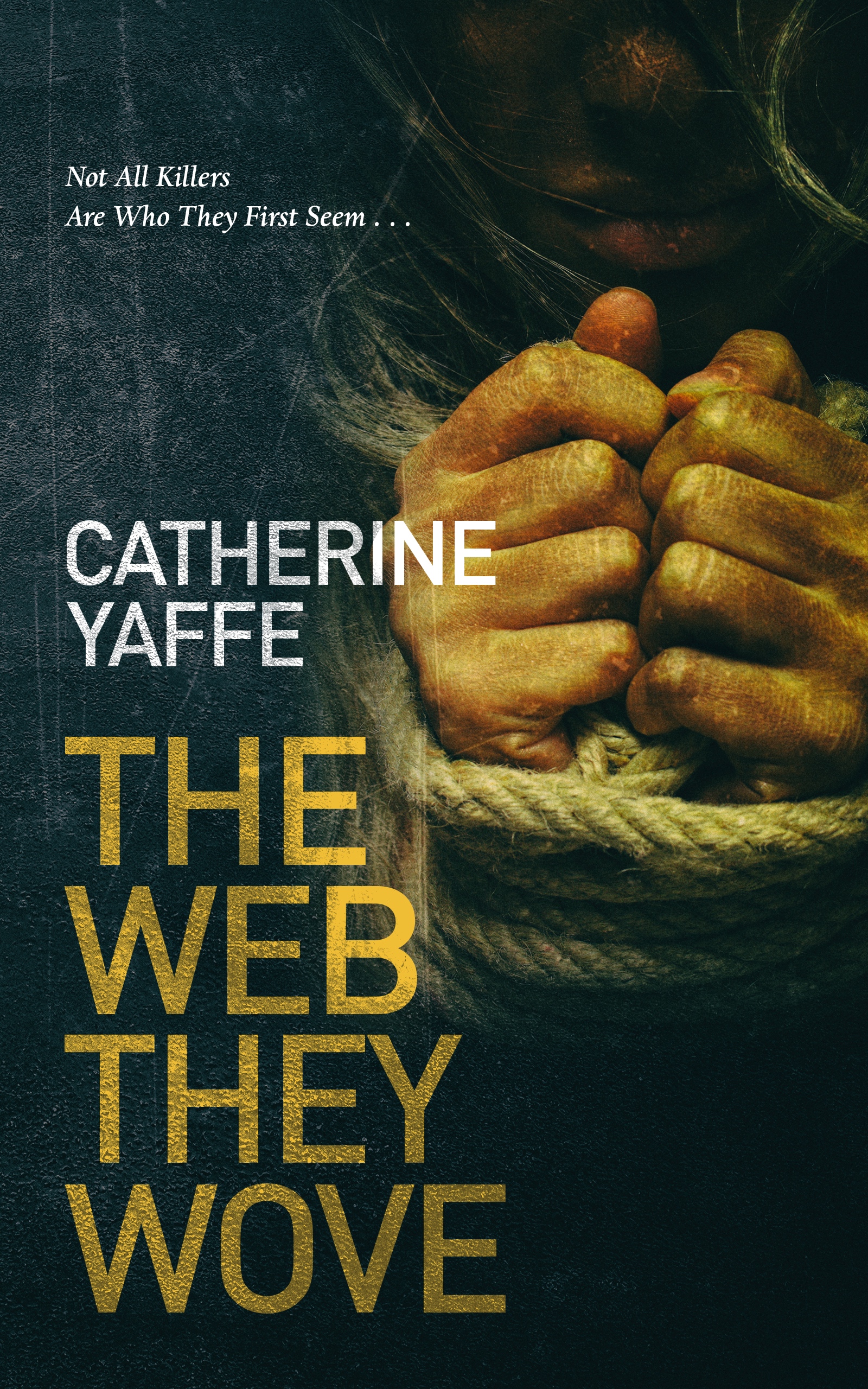
The mutilated body of a young female is found in a popular recreation ground in Leeds city centre. DI Ziggy Thornes and his team are at once assigned to close the case.
With little to no forensic evidence left at the scene at first Ziggy struggles to put the pieces together. When a second body turns up in the same place, Ziggy starts to feel the pressure from his bosses and the media as fear spreads through the city.
Realising that victims have been held captive prior to their deaths, Ziggy delves deeper and relentlessly chases down every lead, taking him close to breaking point.
When the investigation leads him dangerously close to home, will time run out before the tangled web of evil he’s uncovered destroys everything he holds dear?
I called the novel one in which “few people…are quite what they seem and motivations are as grey and murky as an autumn day in Gairloch… A psychological thriller which manages the powerful balance of nipping along at pace but also lingering in the reader’s minds…a psychologically complicated novel which doesn’t shy away from the pain that violence and its consequences causes.”
Which sounds about as verbose as I normally am.
The follow up, ‘The Web They Wove’ is both a standalone work perfectly capable of standing on its own merits, as well as expanding on the character of DI Ziggy Thornes, a comparatively peripheral character from the first book.
Here Thornes is on home turf in Leeds, leading an investigation which gets first professionally, and then, potentially, personally dangerous.
Yaffe is a talented writer who really does manage to produce prose which flows and moves the story along at the same time. She is clearly making moves to support other up and coming writers too and this branching out in police procedural novels promises more is going to be heard from the emerging psychological thriller writer.
Author Bio – Catherine Yaffe is a full-time writer of crime novels, based in the North of England. ‘The Web They Wove’ is Catherine’s second novel and continues the theme of questioning how well we know those around us. Her debut novel ‘The Lie She Told’ in October ‘20 was received with widespread acclaim, and so far, has gained over 50 five star reviews across Goodreads and Amazon.
Also featuring on ‘Bad Blood’ on their blogs today are Donna’s Book Blog and Baker’s Not So Secret Blog
If you can’t trust your family, who can you trust…?
Glasgow gangster Jamie Gray and his fellow Blood Brothers rule the Gallowburn Estate with an iron fist. No one messes around on their turf without consequences.
But when Jamie’s erstwhile dad, Jason Gray, reappears after many years away – some of them spent behind bars – the Blood Brothers are drawn into the murky and dangerous world of the toughest gangster of them all – The Queen of Glasgow, Toni McVay.
Toni is the head of the most powerful organised crime family in Scotland and, as the psychotic leader enjoys scooping out the eyeballs of those who displease her, Jamie has no option but to do her bidding.
With the love of his life Allegra still missing, his enemies closing in, and his family’s safety at risk, Jamie Gray faces the battle of his life. But with his father’s bad blood running through his veins, and the bravery and brains he has inherited from his mother Jackie, Jamie has all the tools he needs to survive.
When I wrote about Heather Atkinson’s first instalment in the Gallowburn series, ‘Blood Brothers’, last year, I pointed out that Scotland is “a country of contrasts.”
I felt that Atkinson displayed “an unpatronising affection for her street level protagonists. The characters are rendered as fully rounded humans with clear motivations and driving ambitions.”
It is my contention that these strengths continue in the sequel, ‘Bad Blood’. Here, from the opening assault of the first page – literally for some unruly locals, metaphorically for the reader – this is a visceral Scotland, with knee cappings, chains to the face and screwdriver-wielding toughs.
In fact, so tough is the environment, I kept expecting them to break out in Macbeth quotes, “But I am faint, my gashes cry for help,” said the ned as Jamie told the interlopers to fuck off.
“Will all great Neptune’s ocean wash this blood/Clean from my hand?” said Logan as he paused to scoop up the baseball bat studded with nails.
“Out, damned spot! Out, I say! . . . who would have thought the old man to have had so much blood in him,” said Digger as he wrestled with his conscience before returning to mock Jamie for being in love with a vicar.
Now, there’s a mash up I’d love to see!
Until then I shall continue to the enjoy the safe pair of hands which is Heather Atkinson with her fast paced plotting, exciting action sequences and realistically rendered locations.
Heather Atkinson is the author of over fifty books – predominantly in the crime fiction genre. Although Lancashire born and bred she now lives with her family, including twin teenage daughters, on the beautiful west coast of Scotland. Her new gangland series for Boldwood, set on the fictional Gallowburn estate in Glasgow began with Blood Brothers in December 2020.
















 PAJ Newman