The Mild Bunch

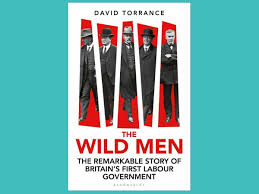
‘The Wild Men’ David Torrance

A Labour government elected on a promise of change – but without any closely thought out plans other than saying change – a Prime Minister seen as too focused on freebies and foreign affairs at the expense of domestic duties, an agenda beset by scandals pulling focus from essential matters, separatist movements in Ireland and Scotland being marginalised and potentially disastrous, an insurgent party destabilising the political status quo and a seemingly radical set of politicians proving to be tiresomely business as usual much to the frustration of their supporters.

It is not exactly difficult to see why David Torrance was struck by the historical parallels when he published his book, ‘The Wild Men: The Remarkable Story of Britain’s Labour Government’ in 2024.

And those parallels – less ringing a bell than clattering cymbals in their resonances I would suggest – certainly add a timely atmosphere to an historical exploration which rattles along and is never a chore to read.

Torrance takes the sensible approach of tackling the period of eleven months of the first Labour government which ran from January to November 1924, essentially department by department, using the minister as the route into both the achievements and the failings of the administration.

What this approach brings – detail, an appreciation of the diverse personalities and perspectives these (mostly) men brought to their roles – does, perhaps, come at the expense of a grand over-arching narrative.

In fairness, it is entirely possible that this is deliberate because one of the things which most clearly emerges is the total lack of a coherent narrative put forward by the government, plus ca change. Just to take office was the achievement and, to the disillusionment of their voters, much more seemed to be beyond these “wild” men.

Ironically, the aspect which seems least convincing is the “wildness” of these men. Compared to the derangement of Liz Truss, the debauched merry monarch-ing of Boris Johnson, the debacle of the Covid PPE procurement systems or even Keir Starmer and the world’s most expensive pair of spectacles, Ramsey MacDonald’s charmingly monikered “McVitie’s Share Affair” would even qualify for a -gate suffix these days. Although, surely, the best named scandal title still remains the Teapot Dome Scandal.

These “wild” men are certainly “mild” by modern manners.

I believe it was Karl Marx who said, “history repeats itself, first as tragedy, second as farce,” and it is difficult to conclude much else than that the current Westminster administration has achieved nothing except for stripping the humour away from a program of leadership which is to farce what Mr Bean is to word play.

None of that, however, is the fault of Mr Torrance who has written a timely, engaging and entertaining book of interest to anyone keen to learn more about how we got where we are – and quite possibly where we’re going.

Author
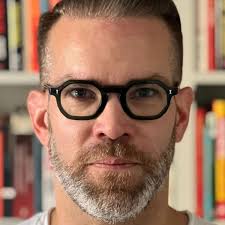
Author David Torrance

David Torrance is a constitutional specialist at the House of Commons Library. Prior to that, he was a freelance journalist, broadcaster and writer for almost 20 years. As a Herald columnist, he was one of the leading commentators on Scottish and UK politics during the 2014 independence and 2016 Brexit referendums, while as the author or editor of almost 20 books, he published unauthorised biographies of the SNP leaders and First Ministers Alex Salmond and Nicola Sturgeon, as well as the authorised biography of David Steel. (Biography adapted from https://www.northbanktalent.com/clients/current-affairs-business/david-torrance)

X: https://x.com/davidtorrance

Purchase Links:

Bookshop.org (Affiliate Link)
Amazon

Politicos

Toppings & Company

Waterstones

Here Comes the Hotstepper – Again

My podcast, ‘In the Footsteps of Politics’ has returned. I began the show during the General Election of 2024 when I was attempting to walk the entire constituency of Inverness, Skye and West Ross-shire. This strategy was ultimately foiled by Rishi Sunak going to market surprisingly early. So, the gambit failed – the podcast did not.

Now, we relaunch as an opportunity to speak to interesting people about interesting things – and the role of politics as it interacts with people’s lives.

Give the show a listen – we’ve already had some fantastic guests – including a football club chairman, a lady who set about defending county cricket and a former MI6 Intelligence author – and you can even watch us on YouTube if you feel so inclined.

https://www.youtube.com/@FootstepsofPolitics

Reposting: The Politics of ‘Poldark’

poldark

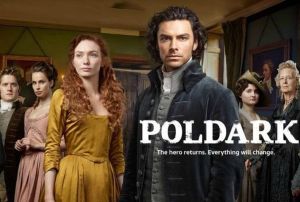
The smouldering cast of 2015’s BBC adaptation of ‘Poldark’

This post about the Politics of Poldark has proved consistently popular. Please note, this was originally written and posted in May 2015 after Season One and doesn’t deal with any later events in the show 

As with a great many of these sorts of things, I came to the 2015 adaptation of Winston Graham’s ‘Poldark’ novels late (i.e. after they had finished airing and we got them on DVD). I was not keen at first. “Oh good – another BBC costume drama about poncey aristos doing their best Colin Firth-impression” is not a phrase I’m likely to utter. However, I was delighted to be proved wrong. From early in the first episode, I was entranced. Not – in the way that apparently the middle aged cohort of Sunday night fantasists obsessed with Aidan Turner’s pecs are – but by the choice of subject at this particular juncture in political history. Brave does not begin to cover it. We’ve all heard the BBC criticised for bias – in Scotland for a pro-union stance, in England for its slavish adherence to Tory policy or for being the ‘Bolshevik Broadcasting Corporation’. I’ve always taken a neutral stance on this alleged bias – firstly, I’m sceptical that an organisation as Byzantine and disparate as the BBC is capable of maintaining a coherent party line (I struggle with believing in organisations to be that organised.) And, also, because I think if you’re being attacked for bias from all sides, then you’re probably on the right lines. But make no mistake – ‘Poldark’ is brave. In an age of austerity, with food bank usage topping 1 million people, (http://www.theguardian.com/society/2015/apr/22/food-bank-users-uk-low-paid-workers-poverty) for the nation’s broadcaster to produce an adaptation centred on a man of noble birth concerned with the survival of his workers to the extent that he will take on starving miners as farm hands and use his societal position to raise capital to put his people back to work is pretty ballsy.

Ross Poldark and serving wench Demelza

Ross Poldark and serving wench Demelza

The point of business is not just to make money is like a refrain for Ross Poldark and he outrages his contemporaries with this standpoint. He stands up for poachers and petitions not only the court for clemency, but also the owner of the pheasants, because of the context of the boy poacher’s circumstances. He is acutely aware of the hardships of subsistence living in his period for normal people. Poldark even tries to form what amounts to a Fairtrade workers’ collective to gain a fair price for the tin mined in the region. “I’m disgusted by my class,” he tells the lovely Demelza (another waif saved from a poor home life by Poldark at a time he can ill-afford to pay for another mouth to feed), “not all of them, but most.” In short, the character of Poldark is like a socialist hero of another age – one who actually believes that by working together we can all get richer. At a time when the top 1% are stretching away from the other 99% across the developed world, I can scarcely think of a more suitable hero than a man who is willing to see poverty and hardship as the result of circumstance rather than sloth and ingratitude and well done to the BBC (and Mammoth Screen who have undertaken the lavish production) for daring to offer the nation a compassionate hero – even if he does spends too long topless scything and staring out of the window in moody contemplation.

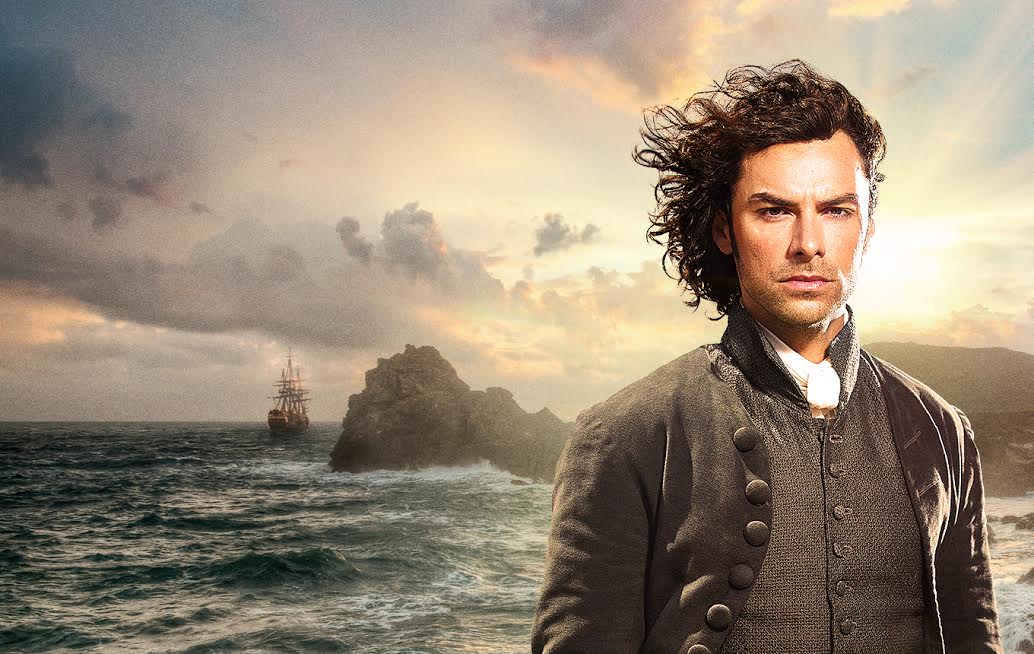
Aidan Turner as Ross Poldark - a socialist hero?

Aidan Turner as Ross Poldark – a socialist hero?