Chuffin’ Eck, This Boy Can Write

Simon Conway ‘The British Agent’

It is a truth universally acknowledged, at least by those of us who inhabit the shade of Tim Shipman, Shane Whaley and the other learned denizens of the Spybrary community, that we are living through a golden age of spy fiction unrivalled since the original espionage frenzy of the early sixties.

Some have bubbled through to the public consciousness in showy ways – Mick Herron and his humour rendered in technicolour by Apple TV springs to mind – but Charlotte Philby, David McCloskey, Paul Vidich, Jeremy Duns (currently on sabbatical) and Charles Cumming are all regularly producing work so good it must be sought out.

As in any movement, however coincidental and loosely affiliated, there are the second tier-dwellers selected either for their real world espionage experience, their existing celebrity or their superb prose.

In Simon Conway, however, we have a writer very much moving into Mount Rushmore territory: he’s the complete package. A real world background of derring do straight out of a Boys Own adventure story, prose which oscillates between swingeing, biting satire and punch you in the face exciting. 

He’s never been less than of the top tier – but here, his latest novel propels into the premier league.

He’s also consistent. ‘The British Agent’ may be his best yet, but ‘A Loyal Spy’, ‘The Stranger’ and ‘The Saboteur’ are also explosive spy stories of the very best.

In ‘The British Agent’, Conway arrives with a new publisher and an adapted writing style. 

Penguin’s Michael Joseph imprint have delivered a Conway with shorter chapters, even more globe trotting locations and action to keep you on the edge of your seat. 

The punchier chapters and the characteristic action ensure that Conway can weave his trademark political insights through this world of double crosses and bluffs.

In Chuff, Conway’s undercover British agent thrust undercover in a twisty turny American-made conspiracy the writer delivers an intriguing and hard nosed female hero who could happily break noses and rearrange testicles with McCloskey’s Artemis Proctor or Peter O’Donnell’s

Modesty Blaise (to name two outstanding spy heroines who span the two golden ages).

I’ve read a lot of novels this year for various reasons: few have been as engaging, as enjoyable or begin to compare with ‘The British Agent’ and I desperately hope a sequel is in the works.
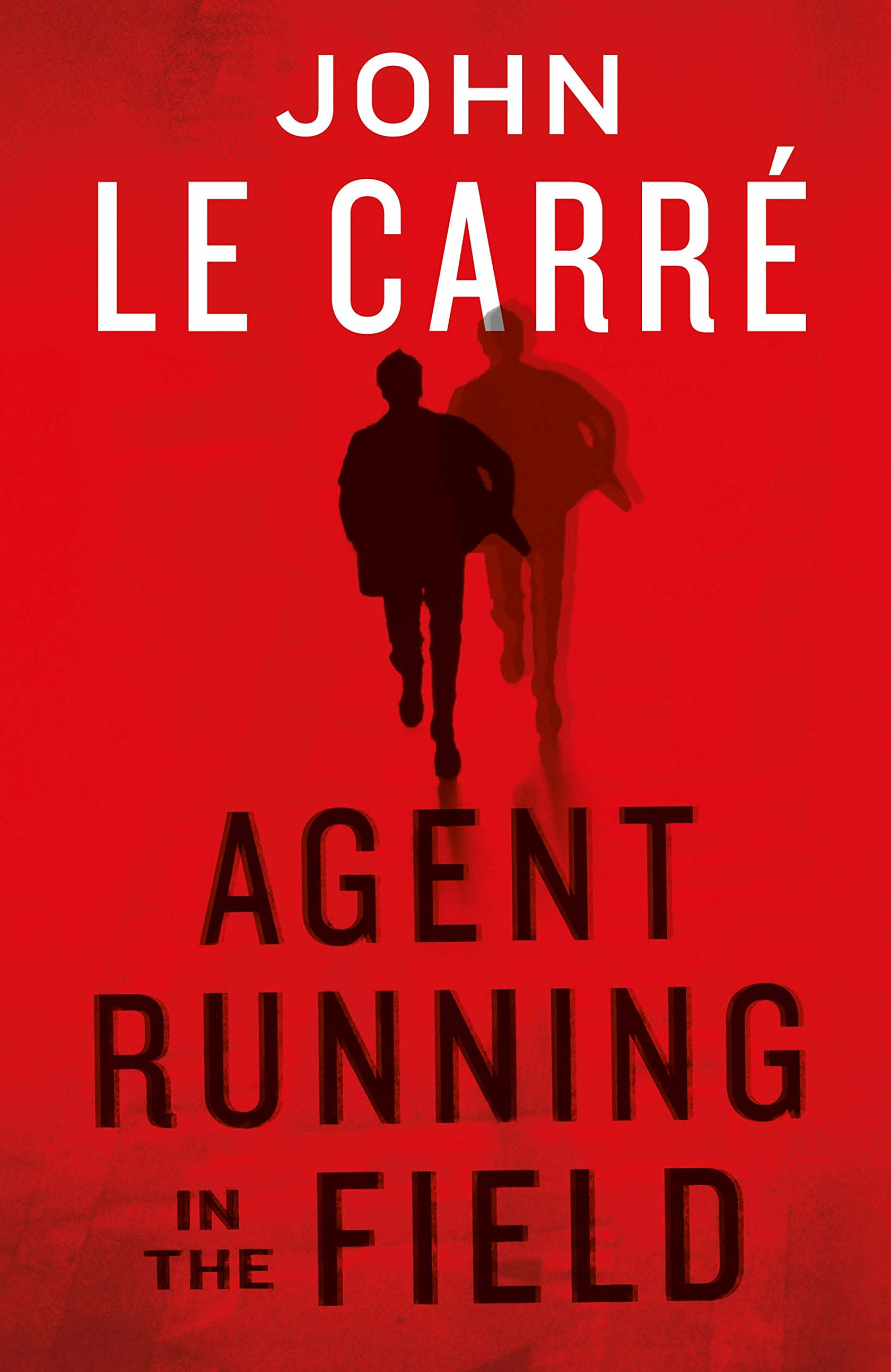
Agent Running Through Fields of Wheat?

“You know what Trump is?’

‘Tell me.’

‘He’s Putin’s shithouse cleaner.’

Which is as good a place as any to begin with John Le Carrè’s latest work, Agent Running in the Field. Rumoured to have angered his former employers, (according to one very put out spook at the Cliveden Literary Festival at least)

Mr Le Carrè’s somewhat classy retort in The Times was enough to generate some publicity for what is certainly a lower key release than 2018’s Legacy of Spies (which even got a session at the London’s Royal Festival Hall beamed to cinemas over the UK).

This was supposed to be his Brexit rant – his anti-Trump, reactionary wail of despair at UK national suicide, the world gone mad, manipulated by the kleptocratic, Tsarist spook-in-chief in Moscow. This was supposed to be his deconstruction of the British state and it’s Cambridge Analytica-altered, Putin fiddled with, Big Red Bus of Deceitful Propaganda opus. Hell, even the title sounds like a riff on our former Prime Minister’s childhood agricultural misdemeanours. And, at least in the character of Ed, the novel does reflect those emotions.

“It is my considered opinion that for Britain and Europe, and for liberal democracy across the entire world as a whole, Britain’s departure from the European Union in the time of Donald Trump, and Britain’s consequent unqualified dependence on the United States in an era when the Us is heading straight down the road to institutional racism and neo-fascism, is an unmitigated clusterfuck bar none.”

This, in fairness, is hardly an equivocal position. But, nor is it a radical stance so far out with the opinions of many of the people watching Brexit unfold and, in comparison to – say 2003’s Absolute Friends – this is a quiet and measured response.

And, really, that is my take away from the novel. It is a small story in a way that the absolute first rate Le Carrè pieces aren’t. The character of Ed is a graceless and, as a narrator in one of his novels might say, seems to have elevated gracelessness to an art form. Nat is an unreliable narrator, the seemingly happy marriage undermined by what everyone else sees in him apparently, although the influence of this on the plot seems slim.

Overall, it’s always better to read Le Carrè than others. There are the usual damning characterisations, the usual pithy descriptions and he does physical nuance just about better than anyone but, here, the plotting lacks surprises and the ending fails to pack the sort of punch that even a relatively minor novel of his latter period, Our Kind of Traitor or A Most Wanted Man for example, manage to produceAgent Running.