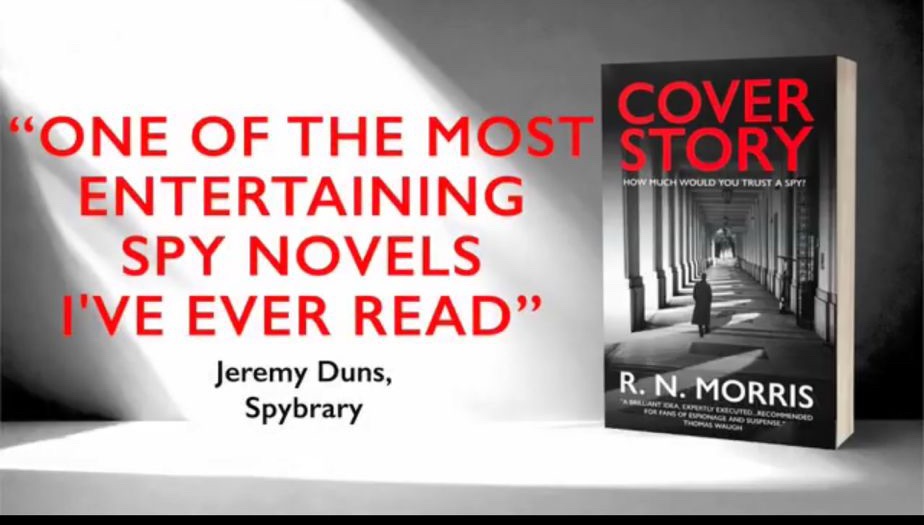
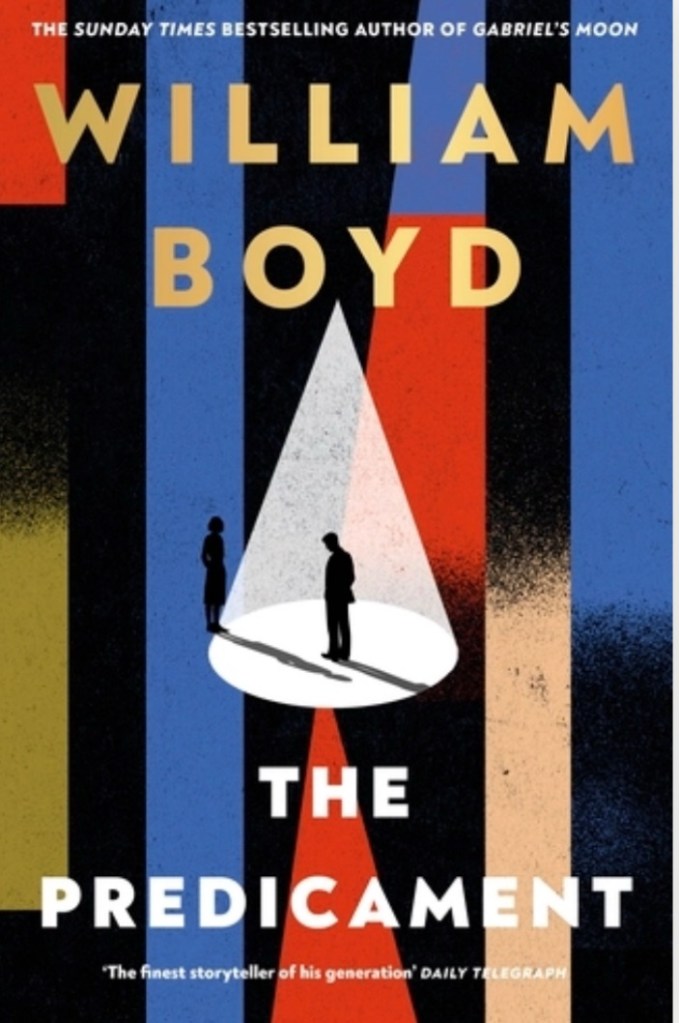
For nearly a decade, the best site on the internet, and the accompanying podcast, for fans of espionage books has been the mighty Spybrary.
I am not impartial, I was there from very early on and have appeared as a guest on a few episodes, but believe me when I say, it’s the friendliest, most informed and – frankly – expensive in terms of highlighting new books to read – place on the internet.
Control over there is the mighty Shane who had piloted both the pod and the Facebook group since day one.
Now, he’s revamped the website and made it easier to navigate as well even better for mobile.
He’s also recruiting agents to publish their reviews (if you have something give him a shout shane@spybrary.com
Two of writers who have given me the greatest pleasure over the longest period of time are John Le Carre and Martin Amis.
A quote from the latter’s autobiography, ‘Experience’ kept echoing through my head when reading this, the first in Nick Harkaway’s Smiley continuation novels, ‘Karla’s Choice’.
“I do it because my father is dead now, and I always knew I would have to commemorate him. He was a writer and I am a writer; it feels like a duty to describe our case — a literary curiosity which is also just another instance of a father and a son. This will involve me in the indulgence of certain bad habits. Namedropping is unavoidably one of them. But I’ve been indulging that habit, in a way, ever since I first said, ‘Dad.’”
And the parallels between Kingsley and Martin and David/John and Nick continued to resonate.
Both Amis junior and Harkaway are successful writers in their own right, both with big name fathers. Both with “big” personalities, certainly as presented in the media, and both with literary legacies which outlive them.
The introduction to ‘Karla’s Choice’ does the thing which must surely be the wisest: tackle head on why anyone, least of all the son, would take on what must surely be a thankless task.
Resurrect the beloved characters of your own father’s legacy defining work? Oh no pressure then…
One of the highest pieces of praise I can give is that all Harkaway’s literary skill is deployed to make this feel like ‘genuine’ Le Carre.
Phrases such as, “If she could not induce Smiley to stay by her side with her laughter, she absolutely declined to keep him with her tears,” are note perfect in style and execution.
Harkaway gives more time and colour to the secondary characters than perhaps his father would have, but there’s an element of an accomplished and skilful writer seeming to enjoy playing in the doll’s house stuffed with wonderful toys.
If there is one criticism, it may well be that Harkaway roots the narrative almost too exactly in time and space in order to appeal to the Marvel universe aspect of the leadership who want to make sure that chronology is exact in a way that his father, frankly, never bothered with.
And yes, people will be sniffy – but people always are.
Don’t let the sniffers put you off: this is a first class read, written by a writer who belongs in no one’s shadow.
Highly recommended.
Author Bio
Nick Harkaway is the author of eight novels including The Gone-Away World, Gnomon and Titanium Noir as well as the forthcoming George Smiley story Karla’s Choice. He has been described as “JG Ballard’s geeky younger brother” or “William Makepeace Thackeray on acid”, and compared with both Thomas Pynchon and Haruki Murakami. The Guardian said of him that “his great gift as a novelist is to merge the pace, wit and clarity of the best ‘popular’ literature with the ambition, complexity and irony of the so-called ‘literary’ novel” while NPR said he “makes you wonder why every book isn’t this smart and joyous and beautiful and heartbreaking.” Two of his novels – The Price You Pay and Seven Demons – were written under the pseudonym Aidan Truhen. Carl Hiaasen said of The Price You Pay “You’re mortified by the things you find yourself laughing at – and when you turn the page, there’s more. Guess what: you keep laughing…This novel has high-octane everything”.
Harkaway’s real name is Nicholas Cornwell and he is the fourth son of the David Cornwell (who wrote as John le Carré) and his second wife Jane Cornwell. He was born in Cornwall in 1972 and moved to London while he was still a child. He was educated at Clare College, Cambridge before working in the film industry. He is married to Clare Cornwell (Clare Algar), who was the Executive Director of the human rights charity Reprieve before working at Amnesty International and the Sigrid Rausing Trust, and who is now managing director of John le Carré Ltd.
In 2021, after the death of John le Carré, Harkaway took the writer’s role in bringing the final unpublished le Carré novel, Silverview, to publication. He said then that the point of the exercise was that he be as invisible as possible. In 2022 he was called upon to do the final necessary work on A Private Spy, the collected edition of his father’s letters, after his older brother Tim Cornwell, who was editing the work, sadly died. His other brothers Simon and Stephen Cornwell are the founders of The Ink Factory, the film and TV mini-studio behind The Night Manager TV show. He lives in London with Clare and their two children, and a very needy dog.
[Hi. Nick here. The above is my current official bio. It obviously reads like exactly what it is, and it’s a bit impersonal and yes, it’s also in the third person which is weird. There is however a real person behind this website, usually quite a long way behind, under a blanket, writing a novel. That would be me. Hello. If you want to get in touch, please reach out to Patrick Walsh for professional inquiries. If you just want to chat, I’m on Bluesky because, for the moment, it is the least horrible social network I know of. You can find the Bluesky link at the bottom of the main page of this site.]
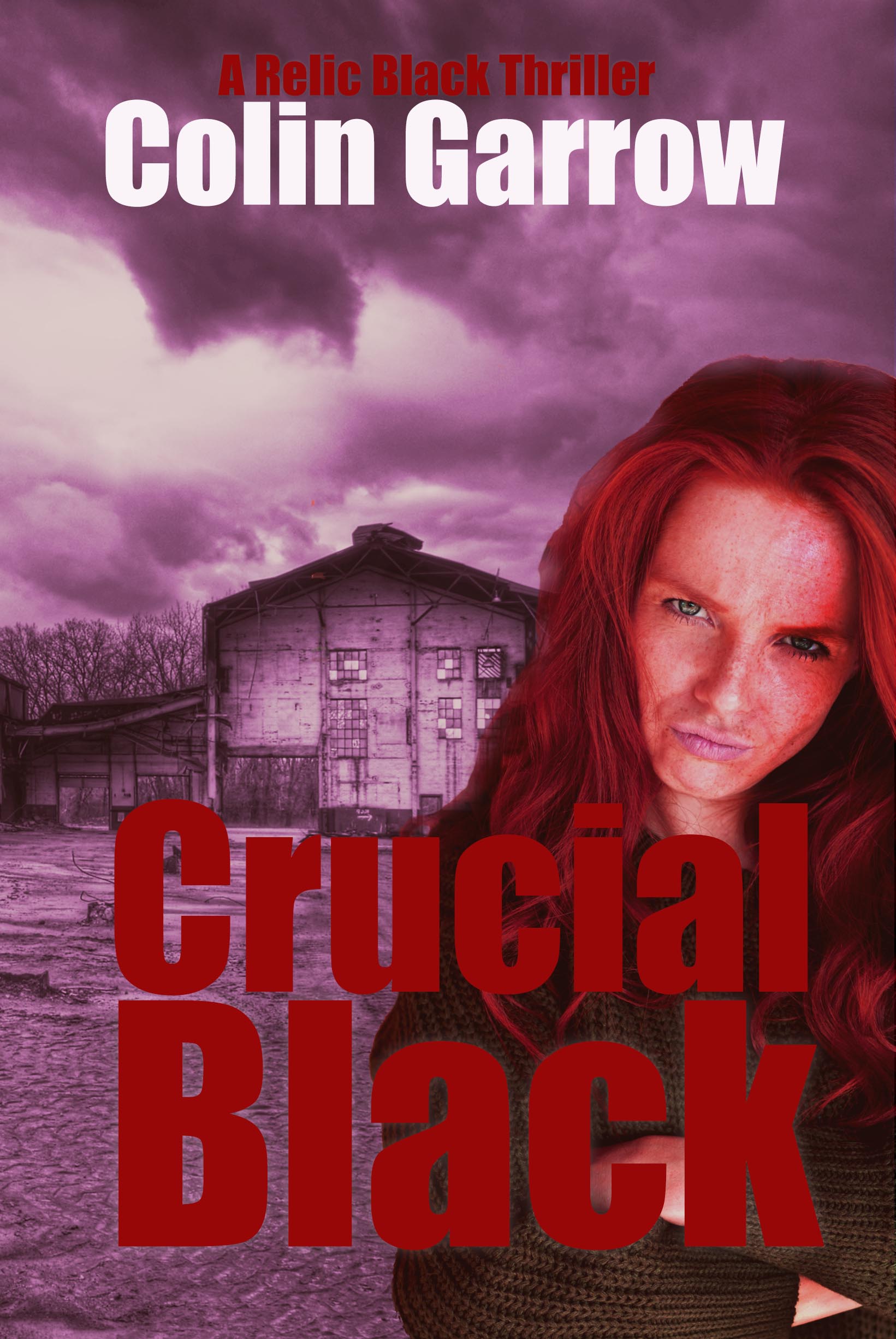
A brace of corpses. A bone-crunching machine. A new recruit.
Now employed by an Inverness organised crime gang, former petty thief Relic Black is teamed up with hitman Ali McKay, the man he almost killed a few weeks earlier. As the team tidy up the loose ends after the shooting, gang member and bent cop DI McKenzie must investigate the disappearance of two people, knowing Relic and Ali have already disposed of the bodies.
Meanwhile, Rebecca’s unpopular colleague DI Swinney, suspects her of involvement in the shooting. Knowing one of the bodies currently taking up space in the mortuary remains anonymous, he discovers the man’s identity. Can Swinney uncover the truth, dig the dirt on McKenzie and regain his former status with the DCI, or will the gang step in to stop him?
Warning – strong language and adult situations throughout.
Crucial Black is book #2 in the Relic Black Thriller series set in Inverness, Scotland.
NB book #2 is not a standalone – the series must be read in order.
Over the last few years, there has been a move to build upon some of the pioneers of so-called “tartan noir” and the international success of the genre has seen a variety of regional variations spring up.
Inverness, with its highland locations, its tourism draw and its mix of city with genuine rurality on its doorstep has featured in several of these types of novels before. ‘Terminal Black’, Colin Garrow’s 2020 novel introduced into the city the jauntily-named character Relic Black and, here, the low level criminal returns in book 2 of the series, out of his depth and in with the big dogs.
Garrow has something of the JD Kirk about his work. The vernacular is street-based, the action suitably bloody and the narrative shot through with Scots, both in humour and language. He also does pace: there is no hanging aboot for any of the characters here.
The character of DI Swinney has also taken on something of a contemporary resonance with recent Scottish political events as well. Something which can only be in Garrow’s favour promotion and sales-wise.
Not for the faint of heart – I’d advise readers to take the warning note seriously – this is a novel which packs a punch and, for those of us based up here and who know the area – reads like a map of the city.
Colin Garrow grew up in a former mining town in Northumberland. He has worked in a plethora of professions including taxi driver, antiques dealer, drama facilitator, theatre director and fish processor, and has occasionally masqueraded as a pirate.
His short stories have appeared in several literary mags, including SN Review, Flash Fiction Magazine, Word Bohemia, Every Day Fiction, The Grind, A3 Review, 1,000 Words, Inkapture and Scribble Magazine. He currently lives in a humble cottage in Northeast Scotland where he writes novels, stories, poems and the occasional song.
Marnie is stuck. Stuck working alone in her London flat, stuck battling the long afternoons and a life that often feels like it’s passing her by.
Michael is coming undone. Reeling from his wife’s departure, increasingly reclusive, taking himself on long, solitary walks across the moors and fells.
When a persistent mutual friend and some very English weather conspire to bring them together, Marnie and Michael suddenly find themselves alone on the most epic of walks and on the precipice of a new friendship.
But can they survive the journey? (Synopsis courtesy of Hachette)
I am told that there is a concept in Silicon Valley known as Fail Fast. I’m not 100% sure what this means in practice – something to do with not paying enough in taxes one presumes – but I think the core idea is that you should be comfortable and confident to move on as quickly as possible when you realise that things are not going to work out as best they can. A similar idea is epoused by Steve Levitt, of Freakonomics-fame, who is a huge advocate of quitting, and quitting early.
David Nicholls is, I think, becoming the Wordsworth of characters who do not quit early enough, and probably when they should.
‘You Are Here’, is Nicholls’ sixth novel and the one which feels like his most middle aged – and I do not intend this as a criticism. The characters of Marnie and Michael feel real and like they have forgotten to give up. There’s little doubt that this feels like a novel born of that pandemic hangover period.
The role of loneliness – its long-term health implications, it’s role in mental health seemed to pop up around the pandemic – and then disappear along with stockpiles of toilet paper, face masks and hand sanitizer. The popularity of novels like Eleanor Oliphant is Completely Fine by Gail Honeyman and Meredith, Alone by Claire Alexander join, in my mind, Hotel Milano by Tim Parks as novels who deal with characters disorientated and sent spinning by a lack of connection to other people and the difficulty of re-establishing contact with the ocean floor after being set adrift from others. (Caveat: Tim Parks was pretty clear that he did not view Hotel Milano as a pandemic novel.)
If that makes this novel sound dull, or worthy or sombre, this is the fault of your reviewer, not the novelist. Good lord it is funny. Anyone who has ever resentfully trudged up a hill will delight in Marnie’s dismay, rendered in rhythmical joy by the author as he incredulity builds.
“What was it like inside a cloud? The answer, it transpired, was fucking shit and, no, a cloud wouldn’t catch you because clouds were treacherous bastards and so were rocks and so was rain, and the mountain streams weren’t babbling: they were taking the piss and so was everything outside, the whole of nature.”
Some people will buy this novel because ‘One Day’ is having a renaissance on Netflix. Some people will buy this novel because they like ‘Starter for 10’, some, because a new novel by Nicholls does not come along every day.
This book propels Nicholls, for me, into that club of writers who I can no longer read with moderation. I’m afraid I drank ‘You Are Here’ down greedily. As with Mick Herron it is just too moreish. The review copy arrived Friday, I finished it Monday. Because, be in no doubt: Nicholls’ is an assassin with language.
Characters are drawn with delicate flicks of language which conjure them as though in the room and, as with all of Nicholls’ work, are funny, delicate, heart breaking and charming in measures realistic enough for them to stick with them.
I did have one caveat: Nicholls keeps writing characters the exact same age as me. I often get irritated by school pupils who refuse to engage with characters in texts because “they can’t see themselves in them.” Well, that’s the point of fiction to experience other people’s opinions and points of view. As a 42-year-old teacher who just undertook the first stage of a long walk, it feel like one’s conceit will know no bounds if writers keep writing him into fiction (I think this may be coincidence. Even I’m not that self-important.)
What I do know for certain is that while these characters would certainly have been forgiven for giving up, I’m extremely grateful that David Nicholls continues to ply his trade – and that neither Michael nor Marnie feel the need to channel their inner tech bros and quit early.
Other purchase options are available here: Hachette
Author Bio
David Nicholls trained as an actor before making the switch to writing. His TV credits include the third series of Cold Feet, Rescue Me, and I Saw You, as well as a much-praised modern version of Much Ado About Nothing and an adaptation of Tess of the d’Urbervilles, both for BBC TV. David has continued to write for film and TV as well as writing novels, and he has twice been nominated for BAFTA awards.
David’s bestselling first novel, Starter for Ten, was selected for the Richard and Judy Book Club in 2004, and David has written the screenplays for film versions of both Starter for Ten (released in 2006, starring James McAvoy) and The Understudy (not yet released).
David Nicholls’ third novel, One Day, was published in hardback in 2009 to extraordinary critical acclaim, and stayed in the Sunday Times top ten bestseller list for ten weeks on publication. It has since gone on to sell over five million copies and has been translated into forty languages. One Day won the 2010 Galaxy Book of the Year Award. David wrote the screenplay for Lone Scherfig’s film adaptation starring Jim Sturgess and Anne Hathaway, which was released in 2010. (Bio from https://www.curtisbrown.co.uk/client/david-nicholls)
Also on the blog tour today, Booklymatters and Rogue Book Reviews
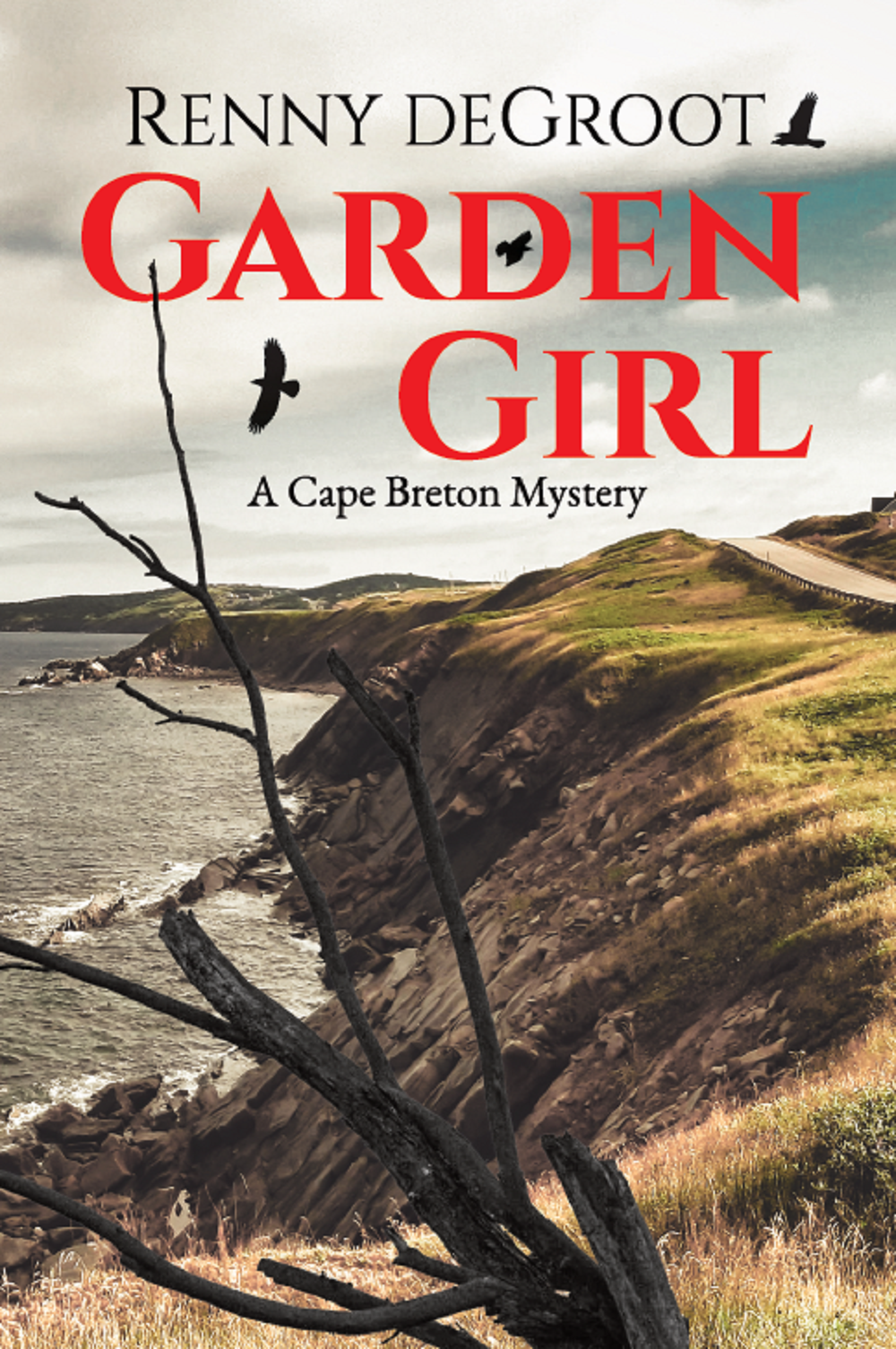
Gordie MacLean, a 53-year-old bachelor detective is content minding his own patch of Cape Breton Island with its rugged coastal landscape and low crime rate. When the remains of a missing person are discovered though, he’s in the right place at the right time to be lead on the case. MacLean battles his sergeant’s scorn and his own demons to prove that he can hunt down the killer; a killer who will stop at nothing to protect their long-buried secrets.
I’ve never been to Canada. All I really know about the Great White North is that they people like ice hockey and they’re notoriously polite. I associate Canadians with that same attitude that the Portuguese have to the Spanish or the New Zealanders to the Australians: the quieter neighbours, all the better for slipping under the radar and given themselves the space to value decency and openness.
Basically, cliches.
I suspect that lack of firsthand knowledge was what drew me to Renny deGroot’s novel, Garden Girl. Well, that and Taz the dog. Gordie is an engaging central protagonist, a man in middle age heading his first murder case with a dubious superior and a new partner to break in.
All of which, when rendered into black and white, sounds a little cliché itself. But deGroot has managed to craft a collection of characters – bi and quadraped alike – with whom it is no hassle to spend time. Gordie may be taciturn but he’s a fundamentally good guy, wants to welcome his new partner and look after his hound, even as a new love interest enters the picture.
In fact, this charming atmosphere and friendly set of characters also accounts for the slightly uneven tone which the novel sometimes has. It feels, sometimes, that there was an earlier draft of this book where Gordie was a worse man or where there was a backstory to why a clearly capable crime fighter like Gordie is so stalled in his career.
As it is, I think if deGroot wants to make this a series, she could channel Martin Walker or Donna Leon and lean into the camaraderie between her cops and her decent, nuanced characters because she can write an engaging plot and people. As a reader I want to spend time with them.
Overall, this is a good, honest detective tale, simply and competently told, sprinkled with (what feel like authentic) location details and narrated with aplomb by artist Nathan Foss. I’m just looking forward to the team’s next outing!
Renny deGroot was born in Nova Scotia, Canada, a first-generation Canadian of Dutch parents.
Her novels have been shortlisted for the Kobo Emerging Writer Prize and a Whistler Independent Book Award. They have been awarded several readers’ awards from the U.K., Canada, and the U.S. She has published mystery, historical fiction, short stories and non-fiction
Renny has a BA in English Literature from Trent University and studied creative writing at Ryerson University. She lives in rural Ontario with her Great Pyrenees and Golden Retriever, and vacations at her cottage in Nova Scotia.
Nathan Foss is a professionally trained and working theatre, film and voice actor who has appeared in film, television and theatre productions. He was a lead actor in Budai with Xiao Sun, as Romeo in the Montréal Shakespeare Theatre Company’s Romeo and Juliet and as a lead in the film Avant Que Tu Part which was an Official Selection of the 2020 Cinema On The Bayou Film Festival. He acted, directed and produced numerous plays and short films including In Loving Memory and commercials for Bios Medical.
Nathan graduated from the Neptune Theatre School and participated in workshops with Tom Todoroff, Scott Brick, Peter Dickson and Marc Graue. He studied voice and singing with Janice Isabel Jackson of Vocalypse Productions. Nathan trained in jazz, ballet and modern dance with the Leica Hardy School of Dance and the Joseph Wallin School of Dance. He performed in improv and attended numerous workshops for the performing arts.
Originally from Dartmouth Nova Scotia, Nathan is bilingual and is now located in Montréal Québec. Versatile by nature, Nathan is excited about the opportunity to expand his onstage repertoire into the fascinating medium of audiobooks and voice work. This allows him to successfully integrate his three passions of direction, production and acting into one form.
Also on the #blogtour for #TheSpyAcrosstheWater today is MJ Porter
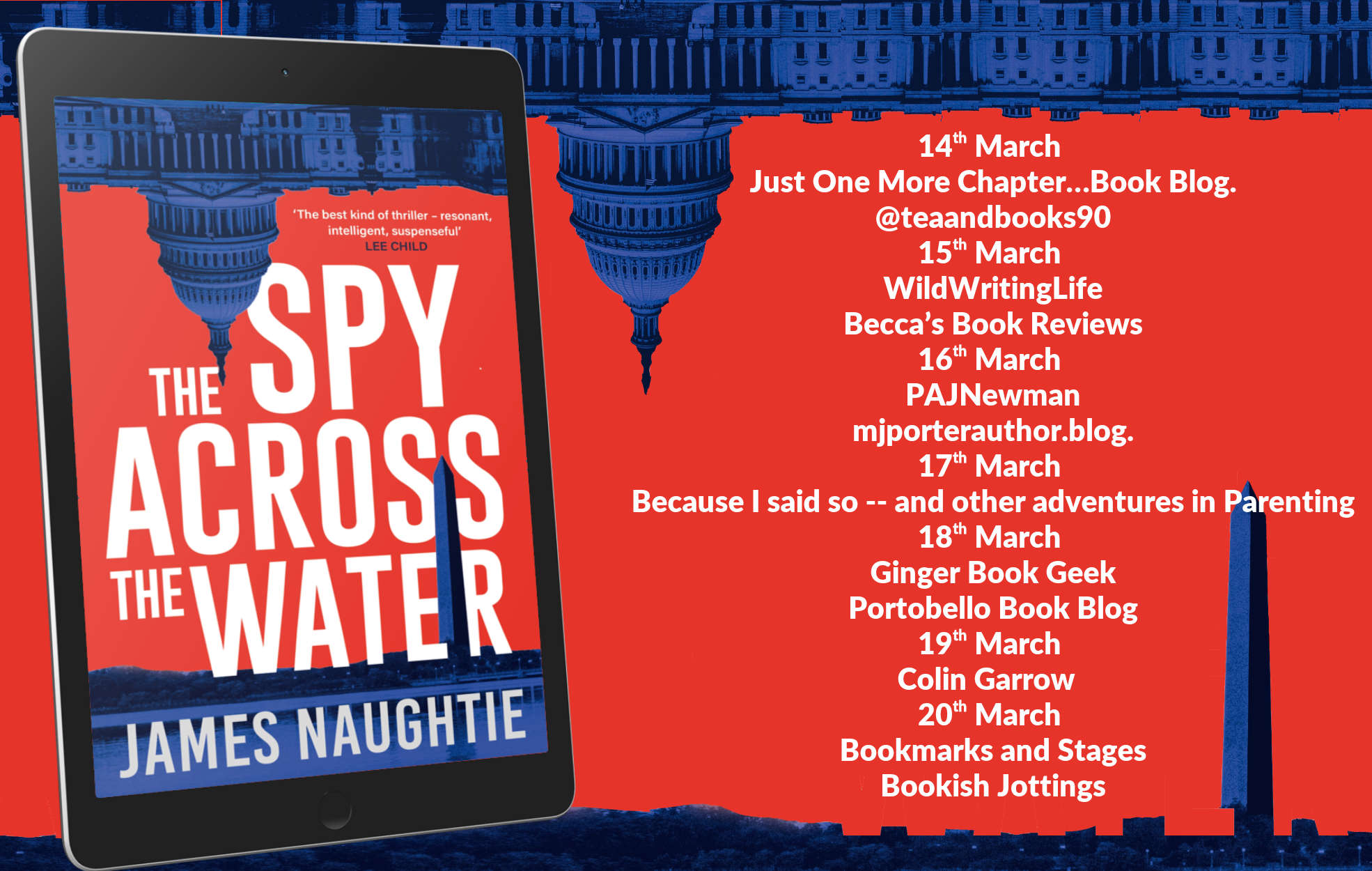
From one of our most treasured BBC broadcasters, The Spy Across the Water is the third instalment in James Naughtie’s brilliant spy series, woven around three brothers bound together through espionage.
We live with our history, but it can kill us.
Faces from the past appear from nowhere at a family funeral, and Will Flemyng, spy-turned-ambassador, is drawn into twin mysteries that threaten everything he holds dear.
From Washington, he’s pitched back into the Troubles in Northern Ireland and an explosive secret hidden deep in the most dangerous but fulfilling friendship he has known.
And while he confronts shadowy adversaries in American streets, and looks for solace at home in the Scottish Highlands, he discovers that his government’s most precious Cold War agent is in mortal danger and needs his help to survive.
In an electric story of courage and betrayal, Flemyng learns the truth that his life has left him a man with many friends, but still alone.
Is James Naughtie the most under the radar national treasure ever? If, like me, you grew up with his honeyed tones on Radio 4’s Today programme – and miss them still – then perhaps you might think he is. Reading The Spy Across the Water, made me feel really quite nostalgic for this man who’s voice is like a warm bath for the brain.
And Naughtie’s prose flows as seemingly effortlessly as his voice. Our central protagonist, Will Flemyng, is at the opening of the novel, US Ambassador under Thatcher’s government. One of the strongest aspects of the text is the way Naughtie does not fetishize those period details. Increasingly, one finds authors determined to insert their extensive research of their chosen historical milleau into their readers as though we were feeding to become fois gras and them the farmers. Naughtie does little to none of this.
Flemyng: good genre adjacent name; unobtrusively achieved by selection of spelling – and here, let us take a moment to appreciate what that particular spelling must have meant for poor JN’s typing and autocorrect functions on his word processor – is an attractive and debonair hero. A man of slick and accessible charm who can be a little prickly but always working towards the best available outcome.
This inner calm of the character clashing with the storm cloud building of the external events galloping towards him is mirrored by Washington setting intruding on the “Highland” rural idyll of the Flemyng family seat in Perthshire.
All in all, this is a fine spy thriller. It is smooth and slick without being showy or flashy. The cover wins points for me by not leaning on the “silhouette man” cliché which bestrides this genre like a colossus, but loses them again for the seeming cheapness of the design.
Overall, a literary thriller which wears its learning lightly and makes spending time with the hero a delight. Rather like discovering your childhood heroes are still thriving and working on their national treasure status.
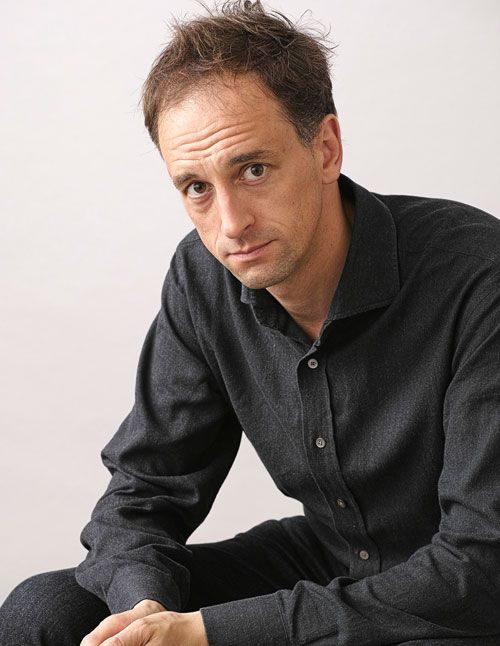
James Naughtie is a special correspondent for BBC News, for which he has reported from around the world. He presented Today on BBC Radio 4 for 21 years. This his third novel, and his most recent book is an account of five decades of travel and work in the United States – On the Road: American Adventures from Nixon to Trump. He lives in Edinburgh and London.
There’s a book written for every one of us… Carl may be 72 years old, but he’s young at heart. Every night he goes door-to-door delivering books by hand to his loyal customers. He knows their every desire and preference, carefully selecting the perfect story for each person.
One evening as he makes his rounds, nine-year-old Schascha appears. Loud and precocious, she insists on accompanying him – and even tries to teach him a thing or two about books.
When Carl’s job at the bookstore is threatened, will the old man and the girl in the yellow raincoat be able to restore Carl’s way of life, and return the joy of reading to his little European town?
‘THE DOOR-TO-DOOR BOOKSTORE’ is a heart-warming tale of the value of friendship, the magic of reading, and the power of books to unite us all.
Translated by Melody Shaw
Sometimes one comes across a novel so simple in its artistry, so clean in its articulation and so charming and comfortable in its own skin that it deserves to be shared far and wide.
Carsten Henn’s ‘The Door-to-Door Bookshop’, lovingly translated by Melody Shaw is one such novel. Its setting and characterisation feels almost like a novelisation of a Wes Anderson film. The characters are charming and the plot matters less than the relationships between them and the pure joy of books, reading and friendship.
Like a love of literature – this deserves to be shared with the ones you love.
Purchase Links
Author Bio – Carsten Henn has worked as a radio presenter, wine and restaurant critic, and has published a number of successful novels. He lives in Germany.
Charles Cumming has long, rightly, been regarded as one of the top two or three working in the espionage genre at the moment.
Emerging around the same sort of time as the impressive Jeremy Duns and Simon Conway, Cumming has managed the difficult task of longevity – Duns remains on hiatus and missed by readers, if not by charlatan sub-editors.
Cumming has also managed that still more difficult task: reinvention. He has produced several multi-volume series and moved on without alienating readers who allowing quality to diminish.
Oh and, for good measure, he’s also produced at least three of the best modern-era standalone novels of the genre in ‘Typhoon’, ‘Trinity Six’ and ‘The Man Between’, the latter a 21st century Eric Ambler – and all the better for that comparison.
And so here we have ‘Kennedy 35’, the latest in the Lachlan Kite series of stories.
These books, beginning with 2020s ‘Box 88’ are both simple in conception and classy in their execution.
By running a duel storyline, an historic case involving Lachlan as young man, juxtaposed with a modern day story and examining the repercussions across years, combined with the heavy lifting of personal details from youth woven through the text, Cumming has made his own narrative niche.
Now, even one’s own vanity does not run to consider this an especially significant observation, but it did mean that I snorted out loud with laughter in an early chapter when a character said, “Now if somebody puts a guava in front of me, or if I taste or smell the brine of tinned food, I throw up.’ In French he added: ‘It’s like an inversion of Proust’s fucking madeleines.”
And it is this slightly self aware tone which permeates the text. A French character name drops Camus and Kafka within a thin spread of pages and Kite acknowledges this and chuckles.
Likewise, Cumming keeps the reader rooted in period detail “London was Oasis and Blur. It was Friends and Don’t Forget Your Toothbrush.” A lovely turn of phrase, although one unlikely to resonate much outside the UK?
At one stage I had fretted that these novels would become a conceit. After all, how many life changing experiences can one character have which includes formative experiences and be naturally tied into contemporary life?
I’m delighted to report the answer is… at least three and it better be four!
Here, Kite is embroiled in a scenario related to the Rwandan genocide and brought to life by the reappearance of an old friend.
This actually ties into the one strand which concerns me on Cumming’s behalf. If I’d been asked previously, I’d have placed the character of Kite as a “small c conservative”. In this novel, the obvious contemporary overtones related to HMG’s Rwanda deportation scheme are striking as is a recognition of where the UK now stands internationally now we have “taken back control.”
Our villains “will launder and provide cover for whoever pays their 20 per cent fee. In this they are not ethical of course. Boko Haram. Allied Democratic Forces. Al-Shabaab. It doesn’t matter. They are interested solely in the accumulation of money and the power which goes with it… She parties with Tory donors and Conservative MPs here in London, attends the sort of events that make their way into the pages of Tatler and Daily Mail online. She has blood on her hands but she also has money. The people who want that money are entirely without moral scruple. They turn a blind eye.’
‘It’s a modern disease,’ Kite observed.”
Or take this exchange between Kite and a French intelligence officer. “I don’t mean to be disrespectful to your wonderful country, Lockie, but you know as well as I do that the UK has been enabling the likes… for years. Your lawyers prepare their tax returns, your PR firms polish their images and if any journalist wants to write about them, their editor knows that a seven-figure libel action is waiting just around the corner.’
‘It’s much worse than that,’ Kite replied with an air of amused fatalism. ‘Successive British governments have actively encouraged anyone with a large enough chequebook to get it out in London and start spending. Dirty money washes through the construction sector, the hospitality industry, car dealerships, football clubs, you name it. Without it, the British economy would probably go into freefall.’”
Why would I say this worries me when a) these are opinions of fictional characters and b) objectively verifiable facts? Mainly because the world appears to have run mad and authors don’t seem to be free to express obvious truths without people weaponising them for their own ends.
I’m hoping that ‘Kennedy 35’s inclusion on The Times Autumn books to read means, perhaps, CC has slipped under the culture wars radar. I do hope so.
This is neither a Vince Flynn bombastic bullets ahoy nor a Le Carre-esque disaffection with the state of espionage in the modern world. This is, quite simply, a novel by a top class performer, performing at the head of the pack.
I was concerned that it actually marked the end of the series, so confident, so accomplished and so self-assured it appeared.
But, it is fair to say, with an ending which leaves well loved characters physically and emotionally up in the air, ‘Kennedy 35’ is a triumph of a novel about which I can only say: read it. You will not be sorry.
Charles Cumming was born in Scotland in 1971. He was educated at Eton and graduated from the University of Edinburgh in 1994 with First Class Honours in English Literature. The Observer has described him as “the best of the new generation of British spy writers who are taking over where John le Carré and Len Deighton left off”. In the summer of 1995, Charles was approached for recruitment by the Secret Intelligence Service (SIS). A year later he moved to Montreal where he began working on a novel based on his experiences with MI6. A Spy By Nature was published in the UK in 2001. (Biography courtesy of Harper Collins)
In that 2021 review I wrote: “I listened to both the original and the sequel in audiobook form read by Lesley Manville. I listened on long car rides alongside a mother who has dementia and doesn’t take that much pleasure in long form stories these days. Both Manville’s performance and Osman’s writing delighted her, amused her and kept her entertained and, for that, they were cheap at twice the price and I shall be ever grateful to them for their work.”
This little personal revelation is not especially insightful or interesting but it links to the lack of a review of the third novel in two ways.
Firstly, Manville had been replaced by Fiona Shaw as narrator in a move I’m yet to find anyone to approve of, and secondly, my Mum’s health deteriorated so far, so fast, that by 2022, listening like that was no longer an option at all.
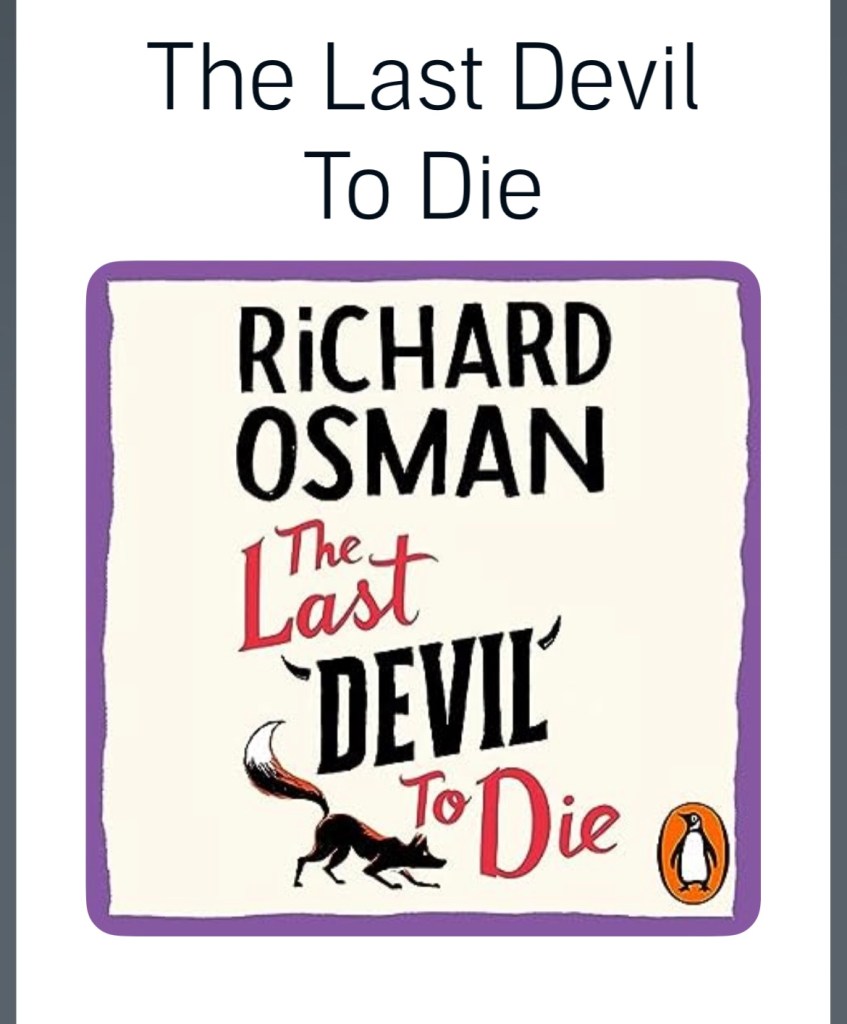
That makes me sad. It may also account for why I reacted so strongly to ‘The Last Devil to Die’.
This third outing for our aging sleuths is a quieter novel. And, a sadder and more moving one for it.
If anything, Osman has truly established himself the Amanuensis of the Home Counties middle classes. The world of KitKats, slow traffic on the A26 and parking problems in Petworth – will be familiar to those of us raised in the area. Eat your heart out more “serious” novelist. Don’t tell me that bloke off ‘Pointless’ doesn’t do social realism!
I would say this novel is significantly better than the last, which was a much lower key book for me.
This latest caper has got lovely growth for the characters (especially Joyce and Ibrahim – surely the most crowd pleasing of characters to reward) and is both touching and much sadder than some of the previous ones.
Caveat: Steven’s dementia is a major factor in this tale and Osman has done a great job rendering the experience of dementia. It’s very well done but it made me cry. I suspect I’m not very objective on the topic.
As narrator, Shaw was a lot less jarring this time around- although in the interview which follows between her and Osman they reference the loss of Lesley Manville and what a big set of shoes it was to step into (although fail to explain why, grr).
However, she does quite literally the WORST scouse accent I’ve ever heard by a professional actor.
In conclusion, the gang remain in safe hands and it feels like Osman has grown as a writer taking his audience to darker, more moving places even while retaining his beloved milleau.
Richard Osman is an author, producer and television presenter. His first three novels, The Thursday Murder Club, The Man Who Died Twice and The Bullet That Missed were multi-million-copy record-breaking bestsellers around the world. The Last Devil to Die is his fourth book. He lives in London with his wife, Ingrid, and their cat Liesl. (Biography courtesy of https://www.penguin.co.uk/authors/141792/richard-osman?tab=penguin-biography)
Clive Thompson heads for Whitley Bay caravan park to finish writing his novel. He’s never had a caravan holiday before and is warmly greeted by the manager, Liz Mathews, who lives on the park. She is single and cares for her ninety year old mother who has Alzheimer’s Disease. Clive meets the people in neighbouring caravans and has an amazing view from his veranda over the sea to St. Mary’s Lighthouse. However, Audrey goes missing during the night and Liz is beside herself with worry. The police are out looking for her, but disillusioned by their efforts, Clive begins his own investigations.
Caravans are weird. Perennial irritant of motorists, bete noire of old school misogyny Top Gear, they don’t really get the best press. When I was a kid, they were the destination of choice of my parents -my father needed disabled access, we needed somewhere which would take a dog and we needed it to be in the UK because there wasn’t the money for exotic foreign travel. Caravans were the answer. Ooh, the glamour of Paignton, Taunton and Formica-fringed world of 80s caravan parks.
Considering that caravan parks are by their design pretty anonymous, often secluded in rural spaces near beaches and contain a large number of transient and semi-permanent people in varying mixes, it is a wonder they do not act as the milieu of more crime stories – this is certainly the first I’ve read.
Susan Willis does a great job of weaving the sort of characters one encounters in caravan parks with a nicely structured first person narrative. Her lead, albeit somewhat startled, detective Clive talks us through the story and is a gentle and entertaining guide to events. Willis is particularly good at dealing with the issues which people go through on a daily basis – the Alzhiemer’s mother, the complicated family relationships – which do distract the every day.
Zipping along, confidently written and rooted in the real world, ‘Death at the Caravan Park’ would be an asset in any Sprite, static or twin axle tourer you care to name.
Susan is a published author of eight novels and six novellas with short stories published in Women’s Weekly magazines. She is now retired from Food Technology and scribbles away in County Durham. Writing psychological suspense and cosy-crime novels with strong, lovable North East characters, is her passion. Last year, she brought us ‘Clive’s Christmas Crusades’, set in York. Following the Harrogate Crime Writing Festival, Susan wrote six Curious Casefiles which is now published by Northodox Press. She has incorporated up-to-date issues: poor mental health in a kidnap scene, the perils of social media, and an intruder on Skype.