Dark Sides to Beautiful Places

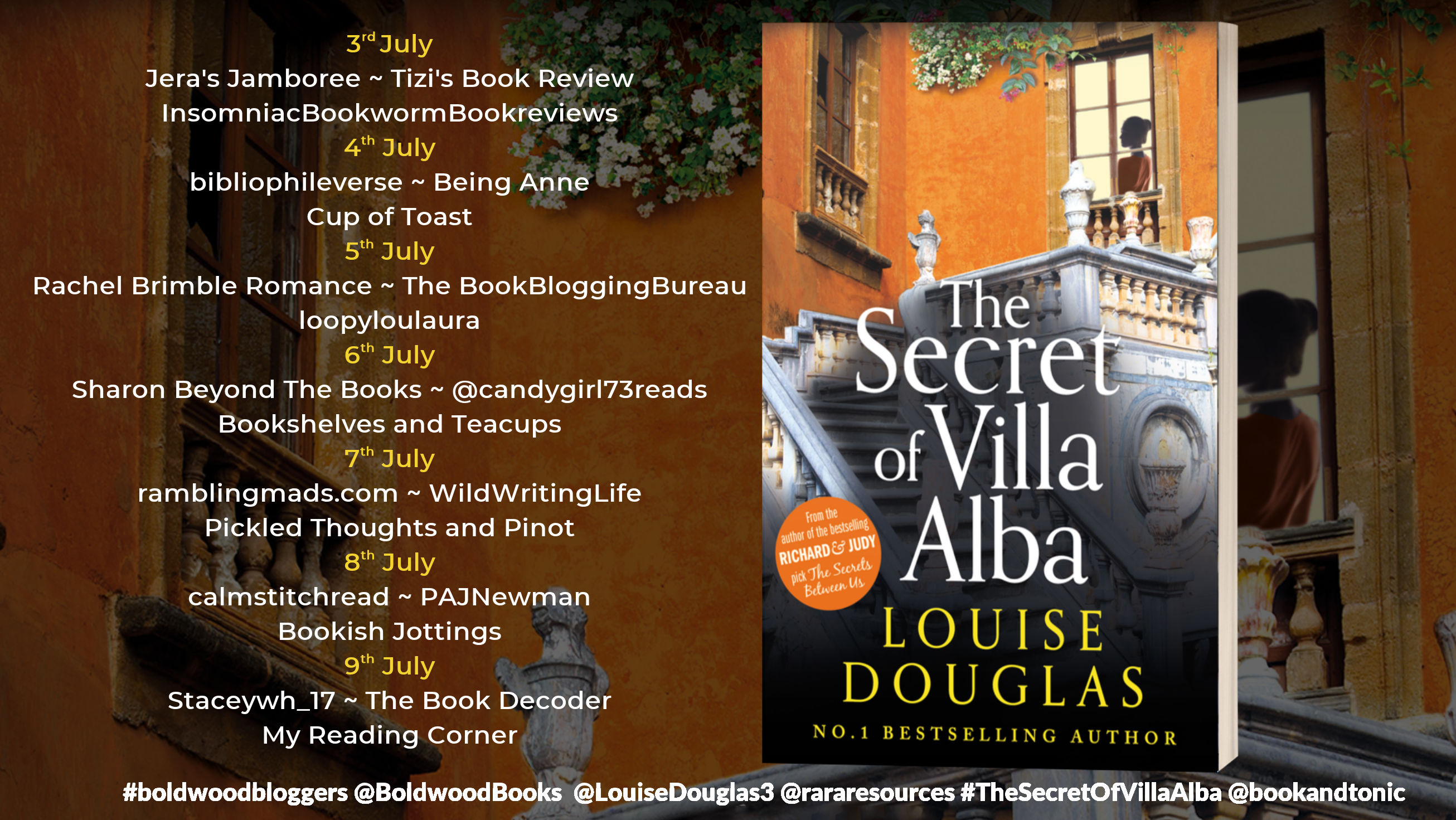
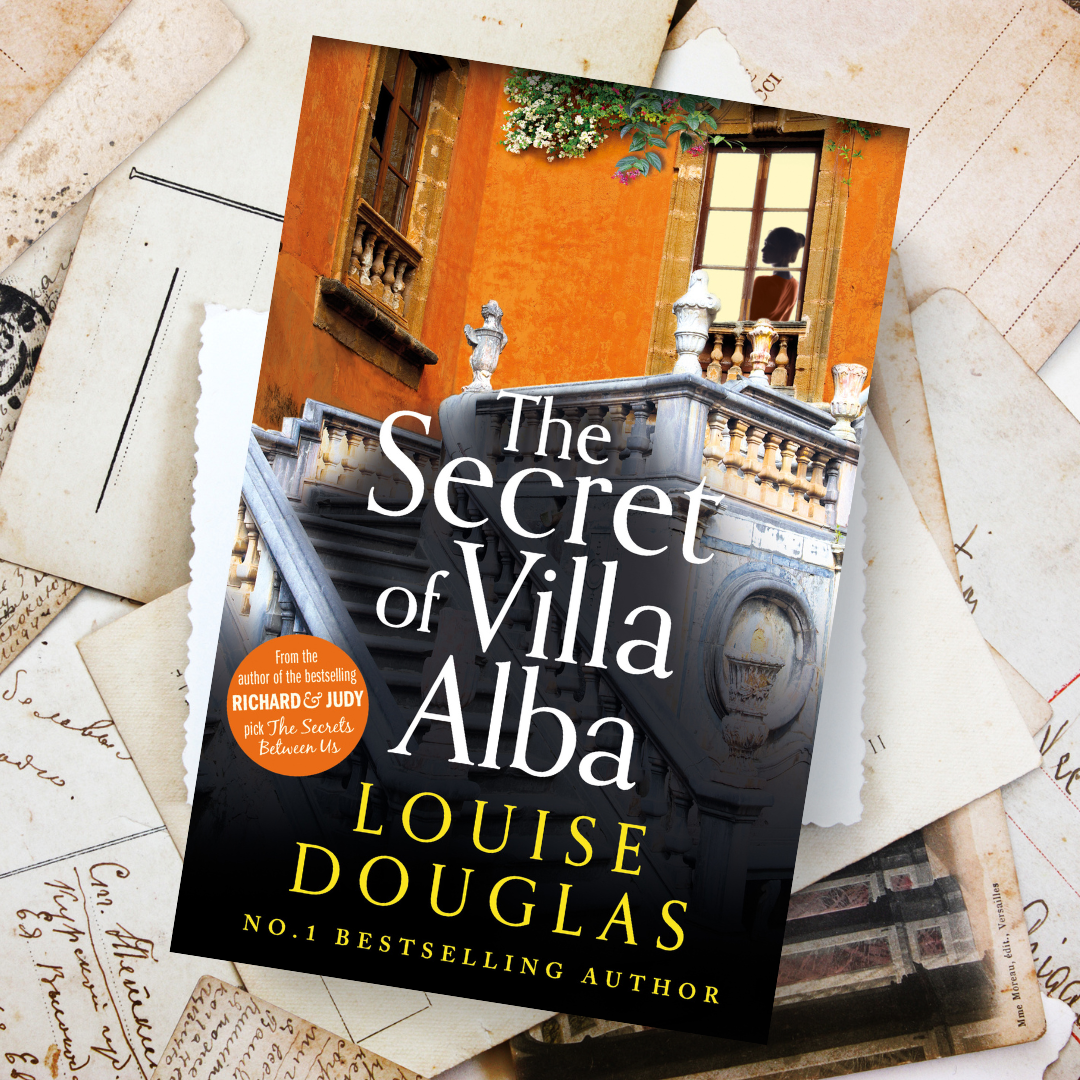
‘The Secret of Villa Alba’ by Louise Douglas

1968, Sicily.  Just months after a terrible earthquake has destroyed the mountain town of Gibellina, Enzo and his wife Irene Borgata are making their way back to the family home, Villa Alba, on roads overlooked by the eerie backdrop of the flattened ghost town.  When their car breaks down, Enzo leaves his young wife to go and get help, but when he returns there is no trace of Irene.  No body, no sign of a struggle, nothing.

2003. TV showman and true crime aficionado Milo Conti is Italy’s darling, uncovering and solving historic crimes for his legion of fans. When he turns his attention to the story of the missing Irene Borgata, accusing her husband of her murder, Enzo’s daughter Maddi asks her childhood friend, retired detective April Cobain, for help to prove her father’s innocence. But the tale April discovers is murky: mafia meetings, infidelity, mistaken identity, grief and unshakable love.  As the world slowly closes in on the claustrophobic Villa Alba, and the house begins to reveal its secrets, will the Borgata family wish they’d never asked April to investigate? And what did happen to Enzo’s missing wife Irene? 

Bestselling author Louise Douglas returns with an irresistibly compelling, intriguing and captivating tale of betrayal, love, jealousy and the secrets buried in every family history.

When I went to Sicily, the bus which transferred us from the airport to the hotel had a stereotypically loquacious guide on board. As we travelled along the autoroute, he pointed out where the craters were where Judge Giovanni Falcone had been blown up by the Corelonesi crime family. As we passed through the city of Palermo, he highlighted the buildings high on the hills: begun; developed; abandoned; unfinished. Part of a Mafia concrete scam.

It is a volcanic island. It is an island of great wealth alongside great poverty. Kindness and historical violence, welcome and malevolence. Stunning beaches, parched inlands. It is beauty and beast. And it definitely has an aura and character all of its own.

I wanted to review Louise Douglas’ latest novel because of that background. The blending of historical reality and fiction and the contrasting time periods begins to take on something of that Jekyll and Hyde status of the setting.

A reluctant investigator, with his own personal connection to the mystery, there is something in Douglas’ writing style which brings to mind the doyen of the Mediterranean crime novel, Patricia Highsmith – and I can pay no higher compliment to her than that.

I finished the novel with a glass of our homemade limoncello. I can highly recommend both.    

Purchase Link – https://mybook.to/secretvillaalbasocial

Author Bio –

Louise Douglas is the bestselling and brilliantly reviewed author and an RNA award winner. The Secrets Between Us was a Richard and Judy Book Club pick. She lives in the West Country.

Social Media Links –  

Facebook: https://www.facebook.com/Louise-Douglas-Author-340228039335215/

Twitter https://twitter.com/louisedouglas3

Instagram https://www.instagram.com/louisedouglas3/

Newsletter Sign Up: https://bit.ly/LouiseDouglasNews

A Tasty Treat

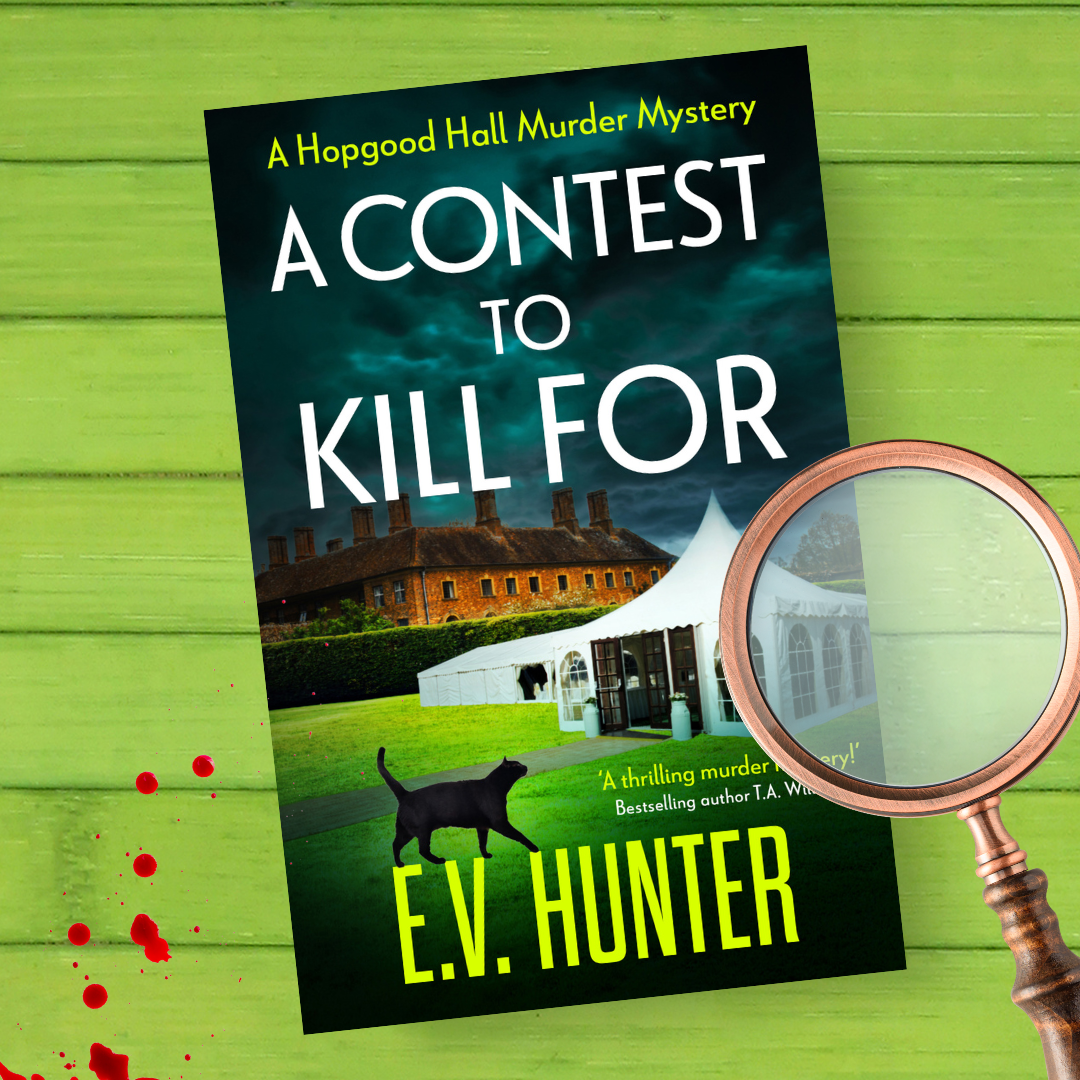
‘A Contest to Kill For’ by Evie Hunter

The competition is fierce….

Desperate to try and rebuild the reputation of Hopgood Hall, owners Alexi Ellis and Cheryl and Drew Hopgood agree to host a realty TV baking show, spearheaded by their arrogant but enigmatic head chef Marcel Gasquet. Hopefully the ratings will bring in bookings to the struggling hotel and Cosmo, Alexi’s antisocial feral cat, is hoping to get a starring role too!

The temperature is high…

Fiery and hot-headed, Marcel’s antics makes for brilliant television, but off-screen trouble is brewing. One of the contestants, femme fatale Juliette Hammond, makes it clear that she will do anything to secure the winning prize – even if it means sweetening up the prima donna chef.

The results are deadly!

So when Juliette is found dead, all eyes turn to Marcel. Has his fiery French temper got the better of him or has someone else fallen victim to Juliette’s devious ways?

With the reputation of the hotel in tatters and Marcel’s liberty on the line, Alexi needs answers and fast.  And the only person she can turn to for help is her old friend and private eye Jack Maddox.  Jack’s working his own case, but he can’t refuse Alexi and he knows more than anyone that this murder could cost them everything!

Purchase Link – https://mybook.to/ContestToKillForsocial

In my other life I have, this year, been teaching Home Economics. Because, well I said I’d help out and that is how small schools are staffed. So, English teacher to donning the chef’s whites I went. Hardly my natural zone, but needs must when the devil vomits in your kettle. In order to facilitate this, I have watched a quite simply Herculean quantity of Masterchef episodes. UK edition? Completed it, mate. Celebrity incarnation? Tick. Professional? I-Player rung dry. Singaporean, New Zealand, Australian and Celebrity Australian for a little international flavour: I have watched a lot of Masterchef.

And, I’m not going to lie, I understand the temptation to bump off some of the “characters” who present this format internationally.

So, apart from the fact that I had very much enjoyed Evie Hunter’s opening instalment in this series, ‘A Date to Die For’ this latest outing for Alexi, her dilapidated country house owning chums Cheryl and Drew and her chunky monkey sleuthing feline companion Cosmo really appealed for the opportunity to take out any lingering frustrations with celebrity chefs from my in-depth cooking research.

And Hunter, of course, does not disappoint. Her characters have texture – since the debut of the protagonists the world has moved on – they have changed and grown and are dealing with new arrivals. What Hunter maintains is the easy of interaction between them as well as a plot which zooms along reaching a nice rolling boil before satisfyingly concluding like a well-paced meal.

This is another successful outing for the Hopgood House crew and I look forward to dining at their table again in the future.

Author Bio –

Evie Hunter has written a great many successful regency romances as Wendy Soliman and is now redirecting her talents to produce dark gritty thrillers for Boldwood. For the past twenty years she has lived the life of a nomad, roaming the world on interesting forms of transport, but has now settled back in the UK.

Social Media Links –  

Facebook https://www.facebook.com/wendy.soliman.author

Twitter https://twitter.com/Wendyswriter

Instagram https://www.instagram.com/wendy_soliman/

Newsletter Sign Up: https://bit.ly/EvieHunter

Bookbub profile: https://www.bookbub.com/authors/evie-hunter-572c1816-05f2-47c2-9c13-6d10a229670b

Historical Resonance

‘The Body at Carnival Bridge’ by Michelle Salter

How deadly is the fight for equality?

It’s 1922, and after spending a year travelling through Europe, Iris Woodmore returns home to find a changed Walden. Wealthy businesswoman Constance Timpson has introduced equal pay in her factories and allows women to retain their jobs after they marry.

But these radical new working practices have made her deadly enemies.

A mysterious sniper fires a single shot at Constance – is it a warning, or did they shoot to kill? When one of her female employees is murdered, it’s clear the threat is all too real – and it’s not just Constance in danger.

As amateur sleuth Iris investigates, she realises the sniper isn’t the only hidden enemy preying on women.

Purchase Link – https://mybook.to/CarnivalBridgesocial

I very much enjoyed the opening instalment in Michelle Salter’s novels involving Iris Woodmore, Murder at Waldenmere Lake

I described Salter’s novel as being in the “best traditions of the cozy crime genre” and I still stand by this judgement with Iris’ return in ‘The Body at Carnival Bridge’. I understand why, in these divisive times, there are people who have issues with contemporary novelists inventing characters who buck the trend of their historical periods and so we have a world of women and people of colour powering through social divides at a time in history when this was a significant barrier.

However, I’ve always been of the view that this is a distraction and distortion. One of the big issues is that you can often find real historical people who broke the moulds and have been written out of history and so fictional counterparts getting the airtime these pioneers deserved is rather charming.

Secondly, I think watching these characters interacting in their worlds and overcoming their challenges is entertaining.

These thoughts were pootling along in my head while I read this. Iris Woodmore might have found the real world even more stacked against her than she does in the novels but I particularly enjoyed the dynamic between her and potentially under fire industrialist, Constance Timpson.

This is yet another Golden Age-style romp from an author with the historical cajones to back up her lively world of deception and murder and a protagonist of suitable charm and nosiness to get herself into – and out of – plenty of entertaining trouble.

Author Bio –

Michelle Salter is a historical crime fiction writer based in northeast Hampshire. Many local locations appear in her mystery novels. She’s also a copywriter and has written features for national magazines. When she’s not writing, Michelle can be found knee-deep in mud at her local nature reserve. She enjoys working with a team of volunteers undertaking conservation activities.

Social Media Links –  

Facebook: https://www.facebook.com/MichelleSalterWriter

Twitter: https://twitter.com/MichelleASalter

Instagram: https://www.instagram.com/michellesalter_writer/

Newsletter Sign Up: https://bit.ly/MichelleSalterNews

Bookbub profile: https://www.bookbub.com/authors/michelle-salter

Without This, Nothing Else Matters

‘Caring Conservationists Who Are Changing Our Planet’ by Kate Peridot.

Travel around the world and discover the stories of 20 conservationists and the endangered animals they are helping to save, including the orangutang, blue whale, Indian tiger, rhino, honeybee, Komodo dragon and sea turtle. Positive, uplifting and packed full of information, with 20 fun activities for children to try, this book will show children no one is too small to make a difference.  

When I was about nine years old, my Mum took me to London Zoo. We didn’t really do things like that very often and London was big and far away and expensive and a rare luxury.

I’ve never forgotten that trip. It was the late 80s and Zoos were moving away from being the preserve of manically depressed gorillas staring mournfully out of inadequate cages and towards being research and conservation centres, the way the public want them to be today.

Something was awoken in me for sure. And I badgered my Mum to sign me up to the World Wildlife Fund (the original WWF) right there in the park. I suspect that we could scarcely afford this but she acquiesced because, well, she is my Mum and she was/is lovely and I was spoilt.

I moved quite far from an interest in nature as I grew up but, in the last 10-15 years, that interest has come back with a passion. Children – of all ages, classes, and background are interested in the natural world but we lose it so quickly.

In this lavishly illustrated book, Kate Peridot aims to introduce to some of the most famous conservationists who have tried to make a difference and increase awareness. There’s a beautiful breadth of figures featured and a range of activities which could act as excellent introductory tasks for inquisitive young minds.

A full colour delight for the eyes, I have a couple of young nephews who will be getting this for their birthdays. Without their engagement in these issues, nothing else is going to matter anyway.

Purchase Links

Author Bio –

About Kate

Kate is an author of both fiction and non-fiction children’s books. Originally from London, she now lives with her family in the South of France. She writes wild and adventurous stories about animals, people and STEM that encourages a can-do spirit, a quest for knowledge and a sense of adventure. 

Caring Conservationists (Walker Books) is her first non-fiction children’s books. A further nine books are in production launching between 2023-2025. Find out more about Kate and her books at www.kateperidot.com .

Social Media Links –

https://www.instagram.com/kateperidot/

https://www.facebook.com/kate.peridot.7/

No Sign of a Damp Squib Under Cloudy Tuscan Skies

‘Murder in Florence’ by TA Williams

Also on the tour today, Being Anne and Chick Lit Central

A brand-new cozy crime series set in gorgeous Tuscany…It’s murder in paradise!

A glamourous film star…

Life as a private investigator in the suburbs of Florence isn’t always as glamourous as Dan Armstrong imagined it to be, until he is asked to investigate a recent spate of violent attacks on a Hollywood movie set in Florence. The star of the show, movie-star royalty Selena Gardner, fears her life is in imminent danger…

Foul play on set…

As Dan investigates, he discovers secrets and scandals are rife within the cast and crew. But with no actual murder, Dan believes these attacks could simply be warnings to someone…until the first body is found.

A dangerous killer on the loose.

Now Dan and his trusty sidekick Oscar are in a race against time to catch the murderer. But the more Dan uncovers, the more the killer strikes and Dan finds himself caught in the line of fire too! Is this one case Dan and Oscar will regret?

A gripping new murder mystery series by bestselling author T.A. Williams, perfect for fans of Lee Strauss and Beth Byers.

Purchase Link – https://amzn.to/3YyhANi

I previously wrote in positive terms about the first in this series of books featuring Armstrong and Oscar, Murder in Tuscany.

If, like me, you like Italy and dogs – especially Labradors – then TA Williams has certainly hit upon a winning formula. As it happens, I do like both of these things so colour me delighted.

This is further accentuated if you happen to enjoy narrators with wry, lightly humorous voices, which Mr Williams again delivers on. What’s not to like from a protagonist who observes, “I’m sure Philip Marlowe never had water soaking his underpants.”

This neatly encapsulates what is so strong about Williams’ work – the characters are grounded and real in the ways they interact with the world while the metanarrative is in dialogue with the influences of the author, so Raymond Chandler meets Donna Leon who interacts with Agatha Christie and Michael Dibden.

Spring is definitely springing as I write this and, of course, poor Armstrong begins the novel exposed to the less picture postcard aspects of Tuscan weather, but this is a novel which will hold off even the heaviest April shower and spread some good cheer.

Bellissimo!

Author Bio –

T A Williams is the author of over twenty bestselling romances for HQ and Canelo and is now turning his hand to cosy crime, set in his beloved Italy, for Boldwood. The series will introduce us to retired DCI Armstrong and his labrador Oscar and the first book, entitled ‘Murder in Tuscany’, was published in October 2022. Trevor lives in Devon with his Italian wife.

Social Media Links –  

Facebook: https://www.facebook.com/TAWilliamsBooks

Twitter: https://twitter.com/TAWilliamsBooks

Newsletter Sign Up: https://bit.ly/TAWilliamsNews

An Iris Wading in Deep Water

‘Murder at Waldenmere Lake’ by Michelle Salter

A murder shocks the small town of Walden. And it’s only the beginning…

Walden, 1921. Local reporter Iris Woodmore is determined to save her beloved lake, Waldenmere, from destruction.

After a bloody and expensive war, the British Army can’t afford to keep the lake and build a convalescent home on its shores yet they still battle with Walden Council and a railway company for ownership. But an old mansion used as an officer training academy stands where the railway company plans to build a lakeside hotel. It belongs to General Cheverton – and he won’t leave his home.

When the General is found murdered, it appears someone will stop at nothing to win the fight for Waldenmere. Iris thinks she can take on the might of the railway company and find the killer. But nothing prepares her for the devastation that’s to come…

Purchase Link – https://amzn.to/3vDssgr

There’s a lot of water which has flowed under a lot of bridges in the name of progress and development, especially in Hampshire and the south east.

What attracted me to reviewing this novel? Well, I grew up around those parts. The protagonist is a small town, provincial newspaper reporter and I’ve written my share of those kind of pieces for local rags. There’s a nice little historical parallel as we move one hundred years beyond the period setting and encounter the same problems continuing.

And I’ve had my share of “experiences” with local authorities and their particular delights.

Michelle Salter has written a novel in the best traditions of the cozy crime genre. The heroine is engaging, the first person narration allowing you to sit alongside her as she uncovers her clues and moves towards the thrilling denouement.

If you are in the market for a warming beverage of a book which will sweep you along like streams flowing to Hampshire lakes, then Murder at Waldenmere Lake is a perfect choice.

Author Bio –

Michelle Salter is a historical crime fiction writer based in northeast Hampshire. Many local locations appear in her mystery novels. She’s also a copywriter and has written features for national magazines. When she’s not writing, Michelle can be found knee-deep in mud at her local nature reserve. She enjoys working with a team of volunteers undertaking conservation activities.

Social Media Links –  

Facebook: https://www.facebook.com/MichelleSalterWriter

Twitter: https://twitter.com/MichelleASalter

Instagram: https://www.instagram.com/michellesalter_writer/

Bookbub profile: https://www.bookbub.com/authors/michelle-salter

Date for Your Diary: Hunting for a Reading Pleasure

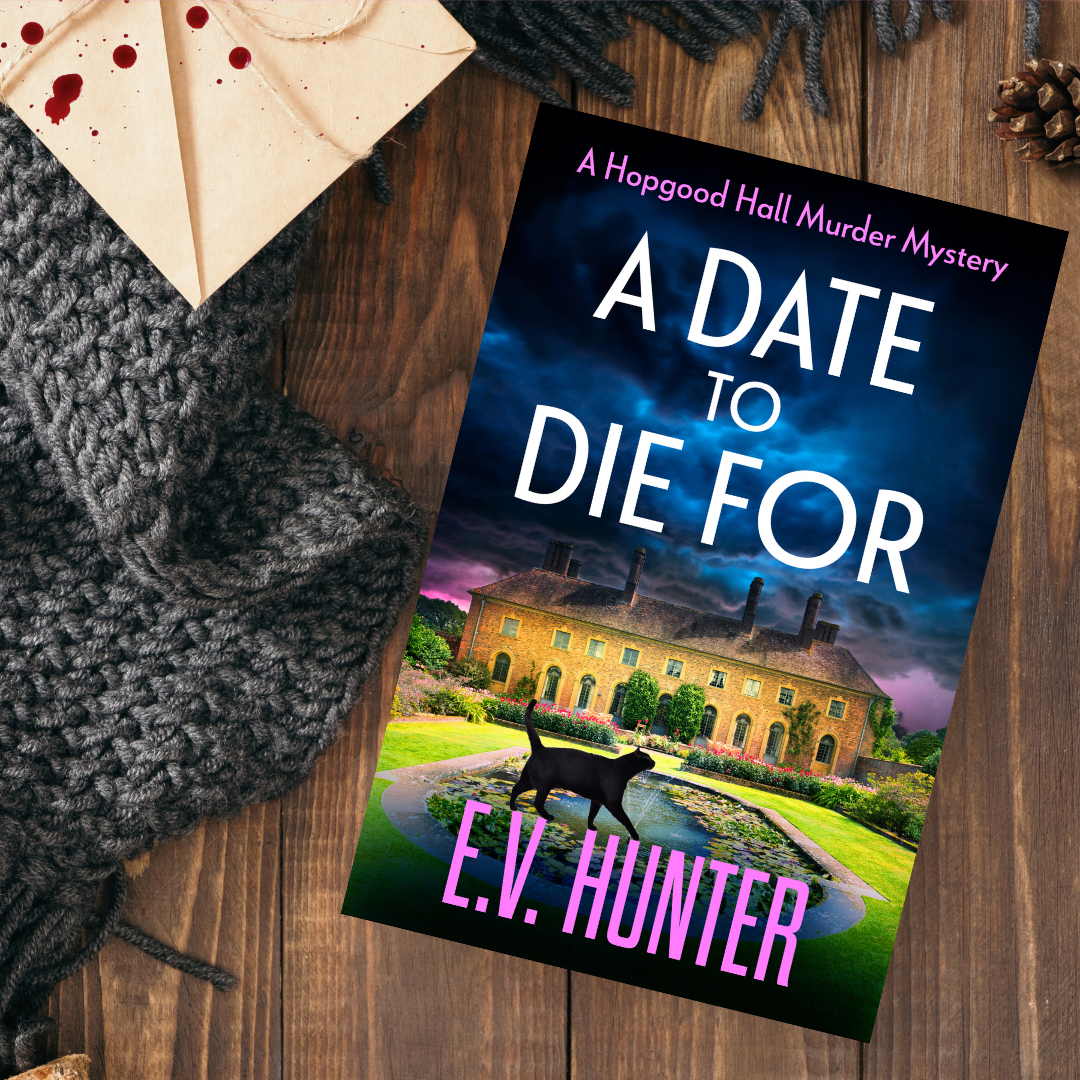
‘A Date To Die For’ by Evie Hunter

The start of brand-new Cozy Crime series! Welcome to Hopgood Hall.


An unlikely duo…

When investigative journalist, Alexi Ellis, falls victim to cutbacks, she and Cosmo, her anti-social feral cat, head for beautiful Hopgood Hall, where they plan to lick their wounds in the boutique hotel run by her old friends, Cheryl and Drew Hopgood.

A missing woman…

But when she arrives Alexi discovers Cheryl and Drew both distraught. Their close friend, Natalie Parker, who recently settled in the area, has gone missing. Alexi’s sure the woman has just taken a trip somewhere, but she still has a nose for a story and agrees to look into it.

A case to solve!So too does ex-Met Police detective turned private eye, Jack Maddox. Natalie Parker had been using his sister’s online dating agency and Jack needs to find her before his sister’s business is ruined.

Reluctantly, Alexi, Jack – and Cosmo! – join forces to find out what happened to Natalie. But soon they discover secrets that someone desperately wants to make sure are never revealed!

Perfect for fans of Faith Martin, Frances Evesham and Emma Davies.

Purchase Link –  https://amzn.to/3UF1kYy

I think most of us have been there, haven’t we? Escaping to the metaphorical arms of friends when our business or personal life has gone the way of all things?

And there’s something especially true with journalists: fat can twist on a dime and what was once pearls can become swine overnight with little in the way of warning.

When that happens to Alexi in Evie Hunter’s ‘A Date to Die For’, there is at least the comfort of having a mysterious disappearance to investigate, alongside her protective giant cat and private eye, Jack Maddox.

All good clean fun. I’ve read some of Evie Hunter’s work for Boldwood before, https://pajnewman.com/2022/06/06/best-forelock-forward/ and she is a writer with real talent. Hunter weaves her tales with satisfying twists and turns and, although on the face of it this novel has a fairly traditional structure: mysterious disappearance, lovely rural location, small-ish cast of suspects, Hunter handles her ingredients like the competent authorial chef she truly is.

If you like a modern turn on traditional fare, then ‘A Date to Die For,’ will leave you pleasingly sated and is an excellent novel for this time of year as the gloom of winter is lifting, let Hunter take you on a tour.

Author Bio –

Evie Hunter has written a great many successful regency romances as Wendy Soliman and is now redirecting her talents to produce dark gritty thrillers and cozy crime for BoldwoodFor the past twenty years she has lived the life of a nomad, roaming the world on interesting forms of transport, but has now settled back in the UK. 

Social Media Links –  

Facebook https://www.facebook.com/wendy.soliman.author

Twitter https://twitter.com/Wendyswriter

Instagram https://www.instagram.com/wendy_soliman/

Newsletter Sign Up: https://bit.ly/EvieHunter

Bookbub profile: https://www.bookbub.com/authors/evie-hunter-572c1816-05f2-47c2-9c13-6d10a229670b

@rararesources

Boldwood’s IG account – https://www.instagram.com/bookandtonic/

Questions and Answers with Tim Parks

You can read a review of Tim Parks’ latest novel, ‘Hotel Milano’ here: https://wp.me/p4pQjs-pB

You can buy Tim Park’s latest novel Hotel Milano – and support the blog – by purchasing the book from Bookshop.org https://uk.bookshop.org/a/10526/9781787303409

PAJNewman (PAJ): ‘Hotel Milano’ tackles Coronavirus head on and is set in a very specific time period. Yet, most novelists I’ve spoken to recently, say they have decided to try and skirt the pandemic. When did you know you were going to base your latest work so directly in this time frame and, I suppose, what was the thing which drew you to it as a topic?

Tim Parks (TP): Well, I’d beg to differ. Neither Coronavirus nor Covid are mentioned in the book. Nor does the word lockdown occur. Yes there is an epidemic, yes people find their movements drastically restricted. But the only thing that interested me was the dramatic situation that this circumstance allowed me to explore: an older man, who doesn’t follow the news, suddenly finds himself isolated, then forced into a relationship with people of a different ethnic community whom he would never otherwise have met, in a drama that immediately presents itself as crucial for their survival. It was this existential drama that interested me. Not a grand novel about the pandemic. It’s too soon for that I suspect and anyway it wouldn’t be my kind of novel.

PAJ: How was your own pandemic? Did you adapt fairly well to lockdown?

TP: Like everyone else I hate being shut in the house. But for the purposes of the book, what mattered was understanding just how fragile normality is, how swiftly the circumstances of your life can change.

PAJ: In terms of the novel, it has a first person, stream of consciousness narrative. Do you begin from a position of wanting to write in that form or, for you, does the story dictate the narrative?

TP: For many years, Frank, an ageing journalist, has refused to follow the news in whatever form. Newspaper, radio, TV, internet. He’s isolated and he’s sought isolation. Hence what happens is an even greater surprise to him. Given this situation, the first person seemed the way to go. I imagined it this way. A person locked in their own private world. It is not a ‘stream of consciousness’ in the Joycean sense. Joyce wrote in third person and includes a lot of passive perceptions that waft through the mind. The first person in ‘Hotel Milano‘ is very much a man debating with himself. What we get is what he consciously articulates. But I always have fun playing with the way the voice works. It’s one of the pleasures of writing.

PAJ: Based on reading some of your previous, non-fiction works, it appears to me like there are a number of biographical parallels with your own life. Are those resonances important for you as a novelist?

TP: For sure one can imagine things more easily when there are parallels with your own experience. One can play with turns your life might have taken and so on. It’s rare to find a good novel where the author doesn’t have some intimate knowledge of the places and people in the story.

PAJ: It seems like a novel of the now, encompassing loneliness, the migrant crisis, the role of the news in the narratives of our lives, grief and the virtue of caring for others. Were these threads you planned to explore or is there a more organic discovery as you were writing Frank’s journey?

TP: My novels aren’t essays. Perhaps they dramatize phases in the arc of a life. In this case old age. One of the things that most perplexes me in Milan is how separate the various ethnic communities are, how little we meet each other or know about each other. We presume this or that about the lives of others, but it’s another thing entirely to be forced to engage with people in dramatic circumstances. Frank suddenly finds himself in a position to do something noble, but dangerous, this when he’d presumed his active life was over. What would a situation like this feel like? How will Frank respond?

PAJ: You have a varied career as a man of letters, encompassing roles as a university professor, translator, reviewer, writer of non-fiction and celebrated novelist: do you have a favourite role and what dictates your next project?

TP: My ambition was always to be a novelist. Then I realized that it’s much more fun to write a range of things, and to teach and translate, though I’ve given up teaching now. Life is richer if one keeps it varied. And all these professions feed into each other. Generally what determines the next project is the requirement that it be refreshingly different from the one before. You could think of some kind crop rotation. I leave the novel field fallow for a year or two, then come back to it. But novels remain ‘the ambition’.

PAJ: Following on from this, do you have a “typical” writing day?

TP: Write in the morning. Go to the gym at lunch or early evening. Other stuff in the afternoon. But nothing’s fixed. There are times when I’ll write all day and others when I’ll drop it for a week.

PAJ: What advice do you have for aspiring writers?

TP: I know so little about the situation for a first-time writer these days. What matters above all, I think is a profound sense of vocation, a determination to keep learning and improving and trying. I had written five or six novels before I was published.

PAJ: Obviously at least two of your non-fiction books – ‘A Season with Verona’ and ‘The Hero’s Way’ have required enormous time and commitment just in order to complete gathering the raw material for. Were they enjoyable and are they artificially dreamt up or things which you would have done organically without the objective of a book at the end?

TP: I have never done anything in order to write a book about it. But when I decide to write a book about things I’ve planned to do anyway, I might start getting more deeply involved than I would have done anyway. In the end, the thought, Perhaps I could write a book about this walk (‘The Hero’s Way‘), allows me to engage in the whole adventure much more intensely. In the same way, I read more excitedly and carefully when I know I’m going to write a review about a book, or an essay on its author. Life and writing are wonderfully mixed up for me.

PAJ: On the subject of ‘A Season with Verona’, to a certain subset of readers, this is still perhaps the work you are best known for in the UK. Now 20 years old, I was wondering do you still support the club and are you still able to make it to games? Do you ever re-read your older work?

TP: I live in Milan now, so I’m hardly a regular at the Bentegodi. But I certainly keep my eye on Hellas and watch anxiously for each result. A melancholy habit this year. Only very rarely do I pick up an old book of mine and look at a couple of pages. Perhaps because I have to mention it in an interview or at a presentation. I like to stay focused on what I’m doing now.

PAJ: Books like ‘Italian Neighbours’ and ‘An Italian Education’ can now seem like postcards from the moon to UK-based readers post-Brexit. As a long-standing Brit-abroad, how do you reflect on the changes to your country of origin?

TP: I’m not sure I understand this question. There was no free movement of people in Europe when I arrived in Italy. I had to fill out endless forms, apply for permission every three months. Today, I see plenty of people around me in Milan who have come from non-EU countries, Britain and the USA included. The days of travel are not over. Nor is my affection for Britain, though I wouldn’t claim to ‘understand’ the place, having been away so long. It’s always a great pleasure to me when I go back for a few days.

PAJ: What is the question you wished interviewers and readers would ask but never do?

TP: Really, I have no such wishes. One hopes readers will find one’s books a pleasure. The aim is always to intrigue, to establish an intimacy, to keep the reader guessing about what the story is most deeply about. Perhaps because the greatest pleasure for me as a reader is the book that stirs the greatest activity of mind. As for interviewers, they must ask what they want to know. Fortunately it’s not a police interrogation and I don’t have to make sure my answers are consistent.

Purchase Links:

Amazon: https://www.amazon.co.uk/gp/product/1787303403?tag=prhmarketing2552-21

Blackwells: https://blackwells.co.uk/bookshop/product/9781787303409?a_aid=prh

Bookshop.org: https://uk.bookshop.org/books/hotel-milano-booker-shortlisted-author-of-europa/9781787303409

Foyles: https://www.foyles.co.uk/witem/fiction-poetry/hotel-milano-booker-shortlisted-author,tim-parks-9781787303409

Waterstones: https://www.waterstones.com/book/9781787303409?awc=3787_1674129005_63eef2c281426cf980e912f281ae1c8f&utm_source=117976&utm_medium=affiliate&utm_campaign=Penguin+Books

Biography:

Born in Manchester in 1954, Tim Parks grew up in London and studied at Cambridge and Harvard. In 1981 he moved to Italy where he has lived ever since. He has written nineteen novels including Europa (shortlisted for the Booker prize), DestinyCleaverIn Extremis and, most recently, Hotel Milano.

During the nineties he wrote two, personal non-fiction accounts of life in northern Italy, Italian Neighbours and An Italian Education, books that won acclaim and popularity for their anthropological wryness. These were complemented in 2002 by A Season with Verona, a grand overview of Italian life as seen through the business and passion of football, and Italian Ways, on and off the rails from Milan to Palermo. 

A regular contributor to the New York Review of Books and the London Review of Books, in recent years he has been publishing a series of blogs on writing, reading, translation and the like in the New York Review online.

Aside from his own writing, Tim has translated works by Moravia, Pavese, Calvino, Calasso, Machiavelli and Leopardi; his book, Translating Style, which analyses Italian translations of the English modernists, is considered a classic in its field. (Biography adapted from www.timparks.com)

Social Media:

Facebook: https://www.facebook.com/Tim.Parks.Author

Instagram: https://www.instagram.com/timparksauthor/

Twitter: https://twitter.com/TimParksauthor