Revisiting… The Sweeney (1975)

article-0-0A55C5D4000005DC-393_468x286

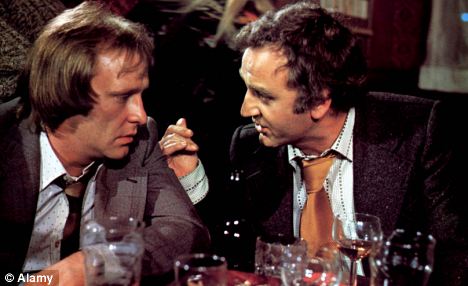
Dennis Waterman, left, as George Carter and John Thaw as Jack Regan in The Sweeney

January 2nd 1975 saw a show debut which was so unlike anything to come before it that it has been loved, parodied, referenced and adored for now over 40 years. It was Euston Films and Thames Television’s, The Sweeney.

Some shows take their place in the canon from a steady evolution of a genre and some just punch through as though out of nowhere – The Sweeney is definitely – defiantly – one of the latter.

From the opening of the first episode, ‘Ringer’, we are catapulted into a London not previously seen on British television. Famously filmed on 16mm, it’s like Ken Loach had decided that police dramas were his true metier. A villain seated in a car, smoking a cigarette, lowers a copy of The Sporting Life newspaper to reveal a green flat cap and natty sideburns. We cut to a point of view shot of a van – is it an ambulance? – speeding across an industrial wasteland.

Oh, the sky might be blue, the trees verdant green – but they frame nothing more than a concrete scar in the landscape, fringed by abandoned buildings with shattered windows. As the cars pull off, we get another point of view shot from inside the car’s cabin as now a mounted camera position allows us to feel the speed generated by the vehicles.

After a conversation, in which we are treated to handheld over the shoulder shots and sweeping nausea-inducing sweeps, we have revealed to us the gas masks and guns these gangsters are planning to use. There’s more conversation, more handheld camera antics, a light dash of humour with the villain who can’t count.

Then, and only then, do we cut to the title sequence.
These titles explode for the viewer – trumpets blaring over a thumping soundtrack as a Ford comes haring towards the camera with a staccato movement created in the edit. This is the most literal arrival of the boys in blue one could envision.

Opening titles: This wasn't your Daddy's police force.

Opening titles: This wasn’t your Daddy’s police force.

All of which presents a stark change from the world of Dixon of Dock Green, which (unbelievably) was still running when The Sweeney made its debut, (and, indeed, would run for another year afterwards, till 1976). One thing was for sure: this wasn’t your Daddy’s police force.

The origin of the series can be found in the one-off drama called – not with sparkling originality – Regan written by Ian Kennedy-Martin for ITV’s Armchair Cinema strand of programmes as a vehicle for John Thaw, with whom he had worked in Redcap.

The relationship between Thaw, playing Jack Regan, and the young Dennis Waterman as George Carter is the central heart of the series. The older colleague mentoring the youngster, whilst they both have to overcome their professional and personal vulnerabilities remains as powerful as when, albeit in a very different form, it was repeated in the more cerebral Inspector Morse (1987)

However, what concerns one now is the way that The Sweeney has come to be seen as a beacon for reactionaries who mythologise its perceived homophobia, racism, casual sexism and other areas now seen as attractive to the unreconstructed. This is simplistic to say the least. The show does have elements of all of these, it is after all an historical document of a particular time, but to say that it is more, vastly more, sophisticated than this suggests is to dance a quick step with understatement.

The character of Regan is not that guy. He wrestles with dilemmas; he is straight in a corrupt world. These are characters that inhabit a bleak world – both at work and at home – and who have to regularly make choices which are unpalatable. Thaw is a cut above the average actor in showing the self-determination wrecking his soul as he torments himself with his self-disgust, whilst Waterman was never better at playing the enthusiastic conscience for his damaged mentor.

All of which makes both the simplicity of the Gene Hunt character in Ashes to Ashes and the humourless, clod-footed Ray Winston reboot The Sweeney debacle all the more disturbing for the viewer who appreciates the importance of what this show tried to do in the period.

The poster for the humourless, clod-footed 2012 Ray Winston reboot

The poster for the humourless, clod-footed 2012 Ray Winston reboot

There’s a lot been written about the show – the bust up between creator Ian Kennedy-Martin and Ted Childs (which Kennedy-Martin discusses in a blog post) – means that the show has been subjected to a lot of analysis. There are the movies, Sweeney! (1977) and its likeable, if at times harrowing, sequel Sweeney 2 (1978) but, at the end of the day, for humour, action, emotion and drama – there’s rarely been anything better on UK television and it deserves to be revisited.

Farewell Jackie C…

Revisiting…Jackie C

Jackie Collins' Chances

Jackie Collins’ Chances

Yesterday (Sunday 19th September) I had an unusual experience. I found out that a writer I had loved and read voraciously had died. Nothing especially odd in that, I hear Enid Blyton isn’t exactly going strong these days. Except that, it was a writer from so long in the mists of my own reading life, that I had forgotten I ever read her, enjoyed her, been influenced by her.

I can’t really pinpoint when I first discovered the Jackie Collins canon, but I know I was in primary school, probably about 10 years of age. I also can’t remember how I came across a doorstop-sized bonkbuster aimed at grown women, suffice to say that I have a dim memory of being into gangster films around this time and being attracted to what, I now know to be, the first of her books about Lucky Santangelo, Chances.

But I do remember reading and re-reading that book. I do remember the yellowed pages, the smell of cheap paperback glue disintegrating and the pencil written 25p jumble sale price tag.

Oh, and the sex. I remember the sex as only a little boy in a pre-internet age could. Jackie Collins taught me anatomical details hitherto unmentioned in south coast Church of England primary school education and hinted towards untold riches for the gainfully exploratory. A lesson stored for the (all too distant) future, I remember thinking even then…

I remember action, gangster stories told with brisk clarity and swift violence. This was The Godfather but with more sex. A heady brew for the time. So much so, that I went on to read Lucky, the sequel, and – memorably startling the wee Reading Assistant who came into hear the year 6s read – Lady Boss the third instalment.

It occurs to me now, I was probably quite an odd child. But, no one really seemed concerned in the late 80s that what I was reading was probably vastly inappropriate. They just liked that I was reading at all.

I drifted away from Jackie. I dipped back in during my mid-teens but I never really took up the habit again – like smoking in reverse. I remember seeing her face on the back of the novels and being a bit alarmed (I don’t know what her stance on plastic surgery was, but all I can say for decorum sake is I found her disturbing).

Anyway, as I said, I drifted away from Jackie. But in her genre she could write. Effectively, efficiently and – I know realise – she did things for women readers (and, clearly, some men too) that stuffier ‘artsy’ writers couldn’t.

So, I’m sorry she went out of my mind for all this time. She deserved better. Now, I wonder if I can get hold of her back numbers on my i-pad…

If you are interested, you can find her work here:
http://www.amazon.co.uk/Jackie-Collins/e/B000APZA96/ref=sr_tc_2_0?qid=1442865014&sr=8-2-ent

And there’s a lovely obituary here:
http://www.theguardian.com/books/2015/sep/20/jackie-collins

48 Hours in… Leicester

48 Hours in… Leicester

‘Let’s go to Leicester on holiday’ said no one, ever. Certainly not me, anyway. I’d never previously been to this compact Midlands city but, a friend’s wedding and the chance to explore a place my partner, Miss Pretty Shoes knows well, meant that I was delighted to be introduced to the myriad attractions of this under-rated destination.

The main attraction is that it is a vibrant city. Small enough to walk around comfortably, there are really only two main shopping streets, criss-crossed at regular intervals by lanes which gives it the feeling of Brighton without sea.

You can find all of the things we associate with modern Britain – Nandos, a plethora of Subway franchises, tanning shops, betting emporia and soulless chain drinking dens – but don’t be put off. Just around the corner will be a cutesy independent store selling original t-shirts, bookshops or antiques priced at a sensible level. And, in fairness, even one of the ghastly chain boozers is named The Last Plantagenet which is a quality pub name anywhere.

A replica of the skeleton of King RIchard III

A replica of the skeleton of King RIchard III

The big attraction is definitely history and Richard III in particular. Since being rescued from the less than celebratory location of a city centre car park in 2012, the city has gone Dick mad. The King Richard III Visitor Centre (www.kriii.com) is spread over two floors and allows you to learn the basics of his reign before heading upstairs to cover the details of the discovery of his final resting place and the science behind it. It is a beautiful venue, all the more impressive that it opened only two years after the discovery. It caters to people of all ages, incorporating interactive exhibits, multimedia presentations and displays throughout. I was particularly taken with the archaeology dig pit filled with iron filings to allow you to uncover pieces found at the gravesite – but that’s because I’m a big child. You can also see the actual location of where the body was found and – if you must – walk on top of it, (I’m afraid I must. And I did.) The guides were friendly and knowledgeable and took the time to answer questions and debate historical events with Miss Pretty Shoes, which pleased us no end. The visitor centre isn’t cheap – around £25 for two adults and a gift book – but if you’re interested in this most maligned monarch then it is money well spent.

The tomb of the newly interred King RIchard III within Leicester Cathedral

The tomb of the newly interred King RIchard III within Leicester Cathedral

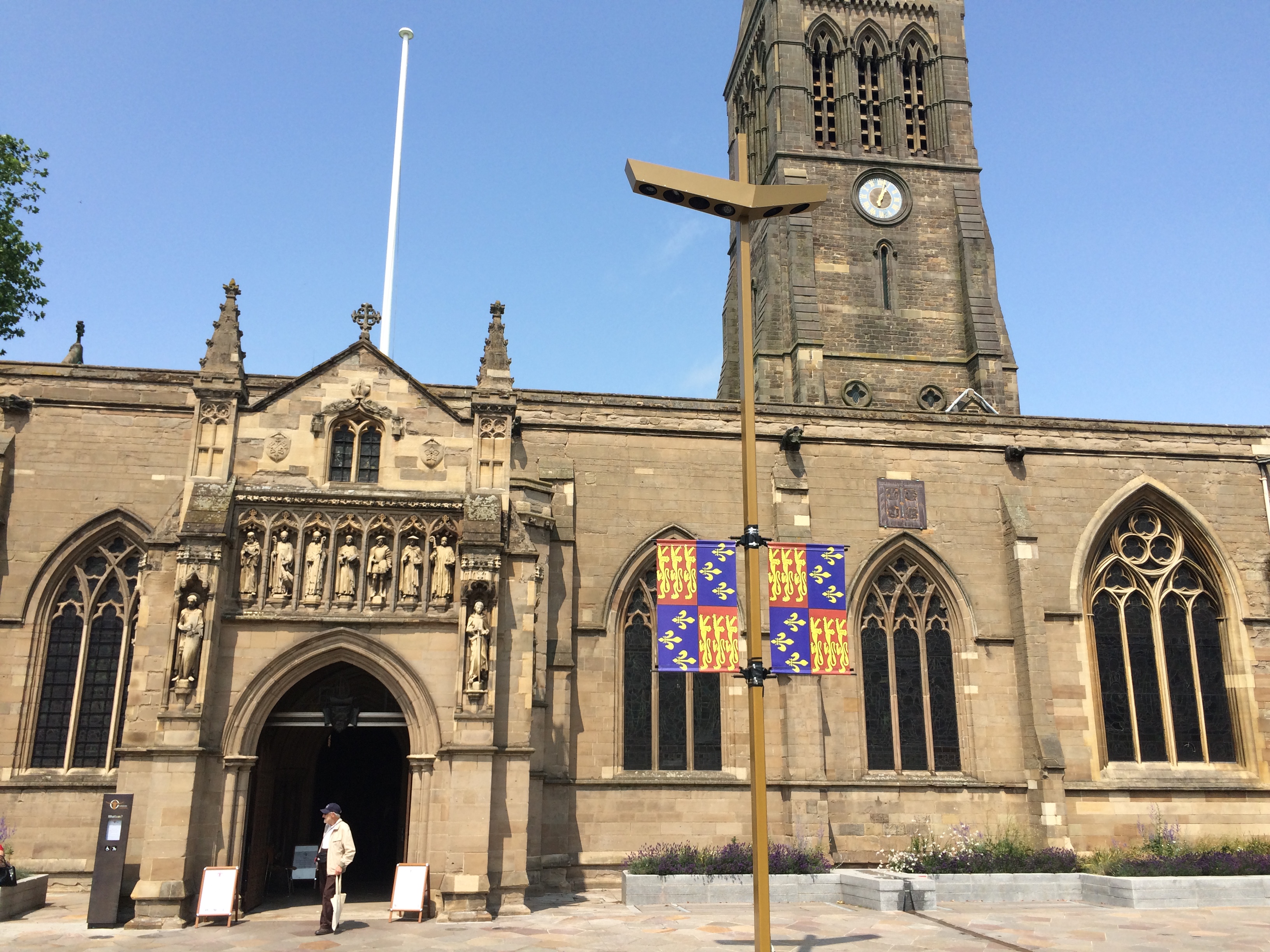
Across the road – past the statue of the man himself wielding a crown and, as in popular mythology, presumably crying out for a horse – is the charming Leicester Cathedral (www.leicestercathedral.org). The day we visited was a Sunday so a distinct balancing act between people coming to engage in a normal service had to be offset by church officials against the large crowd of visitors looking to see the site of the newly interred monarch. The Cathedral is free, but donations are suggested and with the volunteers offering a guide to the building and the constant stream of visitors, the suggested £3 is not outrageous, if for no other reason than the upkeep of the fabric of the building. There has definitely been a bit of Dicky III fever in the city indeed, but almost all the cashing in seems to be in a vein of quiet, respectful bandwagon jumping, so good on them!

The outside of the compact, but cute, Leicester Cathedral.

The outside of the compact, but cute, Leicester Cathedral.

We walked. Leicester is one of those small cities which just beg you to explore on foot. We walked up New Walk past beautiful architecture from the Georgian era, the Victorian Age as well as past the loveliest Art Deco-style fire station I’ve ever seen. Then we walked to the University of Leicester which Miss Pretty Shoes had previously graced with her presence. (www.le.ac.uk) The main attraction for her – then and now I reckon – was that Richard and David Attenborough had been brought up on the campus as their father – Frederick Attenborough – was the Principal of University College and instrumental in the conversion to University status with the award of the Royal charter in 1957. Their house remains on the grounds and a tower was built in his honour.

The Attenborough Tower at the University of Leicester

The Attenborough Tower at the University of Leicester

Leicester has one of the most multi-cultural populations in the UK and this is most abundantly clear in the wide variety of food available. Leicester’s Market (www.leicestermarket.co.uk) is a wonderful place to stroll around, packed with high quality fruit and veg (as well as t-shirts, DVDs and second hand TVs) including one Lineker’s stall which hosts beautiful strawberries and also produced a former England captain many will have heard of.


Kayal is an Indian restaurant specialising in healthy seafood with a South Indian origin. The food is delicate – superbly filling and has been promoted by guests such TVs The Hairy Bikers and The Times. The fish platter starter alone is enough for a main course and comes heaving with delicately battered calamari. The service is gentle, knowledgeable and considerate and it is a place I can no recommend highly enough for an evening meal. (www.kayalrestaurant.com)

On our last day, we stopped for lunch at the adorable Kuru Kuru Sushi (www.kuru-kuru-sushi.com) which offers a wide variety of sushi and sashimi at really affordable prices. The food is delicate and the service is kindly and efficient. It is not large – four seats at a breakfast-style bar – but the mint-infused tea and the quality of the fish should persuade you to go early. Take-away – both in person and over the phone – is available for those who don’t want to sit next to strangers.

A rocket at the National Space Centre

A rocket at the National Space Centre

Our final destination was the National Space Centre (www.spacecentre.co.uk) which is situation two miles outside the town centre. Here you can visit the Patrick Moore Plantetarium and watch a documentary (aimed at children really) called We Are All Stars narrated by Andy Serkis. From here you can explore rockets, see real moon rock and lose yourself in a wide variety of activities covering pretty much everything to do with space. It’s an absolute knock out venue which, especially with children, I would heartily recommend.

So, that was my 48 hours in Leicester. A vibrant city of multi-cultural influences, gorgeous food and a surprisingly wide array of activities I never thought I’d find in the middle of England. ‘Let’s go to Leicester on holiday,’ said no one ever. Except me, next time, I reckon.

*Myself and Miss Pretty Shoes stayed at the Premier Inn Leicester City Centre. None of these venues knew I would be writing about them, nor paid for any endorsements.


The Corsican Caper

Peter Mayle's latest south of France delight

Peter Mayle’s latest south of France delight

The Corsican Caper In the UK, Peter Mayle is still best known for his non-fiction account of life in France, A Year in Provence. Nearly 30 years old, the book recounted Mayle and his wife’s move to a broken down house in the countryside and his struggles to work with the builders and locals.

In terms of epoch-defining work, this was definitely an under-the-radar success but the result was an glut of Brits shelving the rat race and heading to the sun at the earliest opportunity. The book also created an entire new genre of works by a range of authors with similar stories to tell. Some are excellent – Chris Stewart and Driving Over Lemons – some are rot.

But, what people are perhaps less aware of, is Mayle’s latter career as a novelist. He has been turning out a range of work – both fiction and non-fiction – since his big successes of the early 90s and the novels are of an infinite lightness and charm.

I’m never really comfortable with work being described in the ‘guilty pleasure’ category. Either you like the work or you don’t and Mayle, I’m sure, pours all his efforts into producing the work. They have a formula – charming, handsome English male with enough money to do what he pleases gets sucked into solving crime in the south of France, whilst dalliancing with a beautiful local girl and stopping for lashings of Provencal cuisine and gallons of rose wine.

So far, so parfait. However, over the last few novels, there appears to have been an evolution in the formula. The lead characters are now American and there is definitely a move to try and tap into a wider international market.

The Corsican Caper is the third in a series – preceded by The Vintage Caper and The Marsaille Caper and the first time Mayle has tackled a series of fiction titles – and is centred around the character of Sam Levitt, a former criminal turned adventurer for hire, who has, over the course of the books, been involved in wine heists, kidnapping and art theft. The gorgeous Elena Morales and his billionaire chum Francis Reboul, owner of a sumptuous Gatsby-esque mansion overlooking the Mediterranean near Marsaille, join Sam in his quest for a profitable life.

This latest novel actually centres around the house itself, when an unscrupulous Russian business man – Oleg Vronsky – who, when not indulging in standard Russian oligarch behaviour as prescribed by Mayle, such as purchasing a football club, tries to acquire the luxurious property by a series of increasingly desperate methods. This, inevitably, involves kidnapping, assassination attempts, the Corsican mafia and Sam saving the day. And lunch. Lots of lunches.

The charm of the novels is in the descriptions of the food and the wine. I’m guessing that Peter Mayle has had to dredge out his old thesaurus across the span of his writing for new ways of describing rose wine – but that’s OK because I like the vicarious experience of eating and drinking in sunny climes, especially when I’m stuck in a wintry Highlands.

The Corsican Caper is not high art. It’s not going to lecture you on the human condition or tell you anything about human nature which had slipped your attention previously. But, the novel nips along, the plot twists and turns without apparent effort on Mayle’s part and the man can write about wealthy people, enjoying the good life, like few others.

I can only offer a wholehearted recommendation for this as a first class beach book.

The Corsican Caper in Five Words: Crime and Wine in paradise

http://www.amazon.co.uk/Corsican-Caper-Peter-Mayle/dp/0345804562/ref=sr_1_1?ie=UTF8&qid=1433683461&sr=8-1&keywords=the+corsican+caper

Reposting: The Politics of ‘Poldark’

poldark

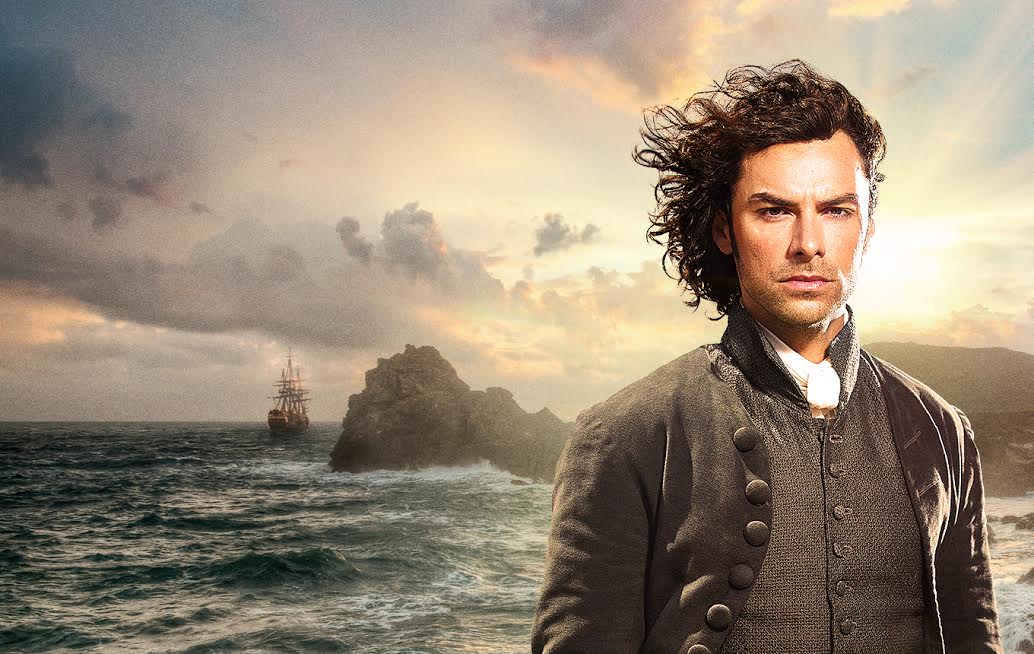
The smouldering cast of 2015’s BBC adaptation of ‘Poldark’

This post about the Politics of Poldark has proved consistently popular. Please note, this was originally written and posted in May 2015 after Season One and doesn’t deal with any later events in the show 

As with a great many of these sorts of things, I came to the 2015 adaptation of Winston Graham’s ‘Poldark’ novels late (i.e. after they had finished airing and we got them on DVD). I was not keen at first. “Oh good – another BBC costume drama about poncey aristos doing their best Colin Firth-impression” is not a phrase I’m likely to utter. However, I was delighted to be proved wrong. From early in the first episode, I was entranced. Not – in the way that apparently the middle aged cohort of Sunday night fantasists obsessed with Aidan Turner’s pecs are – but by the choice of subject at this particular juncture in political history. Brave does not begin to cover it. We’ve all heard the BBC criticised for bias – in Scotland for a pro-union stance, in England for its slavish adherence to Tory policy or for being the ‘Bolshevik Broadcasting Corporation’. I’ve always taken a neutral stance on this alleged bias – firstly, I’m sceptical that an organisation as Byzantine and disparate as the BBC is capable of maintaining a coherent party line (I struggle with believing in organisations to be that organised.) And, also, because I think if you’re being attacked for bias from all sides, then you’re probably on the right lines. But make no mistake – ‘Poldark’ is brave. In an age of austerity, with food bank usage topping 1 million people, (http://www.theguardian.com/society/2015/apr/22/food-bank-users-uk-low-paid-workers-poverty) for the nation’s broadcaster to produce an adaptation centred on a man of noble birth concerned with the survival of his workers to the extent that he will take on starving miners as farm hands and use his societal position to raise capital to put his people back to work is pretty ballsy.

Ross Poldark and serving wench Demelza

Ross Poldark and serving wench Demelza

The point of business is not just to make money is like a refrain for Ross Poldark and he outrages his contemporaries with this standpoint. He stands up for poachers and petitions not only the court for clemency, but also the owner of the pheasants, because of the context of the boy poacher’s circumstances. He is acutely aware of the hardships of subsistence living in his period for normal people. Poldark even tries to form what amounts to a Fairtrade workers’ collective to gain a fair price for the tin mined in the region. “I’m disgusted by my class,” he tells the lovely Demelza (another waif saved from a poor home life by Poldark at a time he can ill-afford to pay for another mouth to feed), “not all of them, but most.” In short, the character of Poldark is like a socialist hero of another age – one who actually believes that by working together we can all get richer. At a time when the top 1% are stretching away from the other 99% across the developed world, I can scarcely think of a more suitable hero than a man who is willing to see poverty and hardship as the result of circumstance rather than sloth and ingratitude and well done to the BBC (and Mammoth Screen who have undertaken the lavish production) for daring to offer the nation a compassionate hero – even if he does spends too long topless scything and staring out of the window in moody contemplation.

Aidan Turner as Ross Poldark - a socialist hero?

Aidan Turner as Ross Poldark – a socialist hero?

Revisiting… Mallrats (1995)

With Kevin Smith have recently taken to Twitter to confirm a sequel to this slacker comedy of the mid-90s, currently titled MallBrats, now seemed like an excellent opportunity to revisit the original for the second in a series of posts Revisiting works worthy of reconsideration.

Mallrats - Returning to the Mall at a cinema near you.

Mallrats – Returning to the Mall at a cinema near you.


The story follows a day in the life of two listless buddies in an unnamed American suburb, Brodie (played by Jason Lee in his first starring role after a career as a skate boarder) and TS – Jeremy London (before the legal difficulties).

The movie opens with these two “heroes” being dumped by their respective partners – Renee (Shannon Doherty in spikey form throwing off the Beverly Hills 90210 shackles) ditching Brodie for his total lack of drive or ambition and addiction to Sega ice hockey games (retro!) and Brandi (the picturesque Claire Forlani) ditching TS because his sage wisdom has lead to a girl dying in a freak swimming pool accident. The loveable idiots retreat to the mall where they indulge in sulking, introspection, discussion of the practicalities of comic book character sex and retail therapy.

Full disclosure: I’m a Kevin Smith fan. There are not many people I can actually write that about and I’m not blind to his faults – as a filmmaker or in any other area of his public life, but truth be told, I’ve drunk the Kevin Smith Kool Aid.

I am embarrassed to admit how many hours I have spent listening to him and Scott Mosier on Smodcast, or Smith and Ralph Garman on Hollywood Babble On, or Smith with guests on the Fat Man on Batman podcast or… You get the idea. I sincerely believe, that there is an argument to be made that Smith is, in fact, one of the most creative and important directors working today, for, for example, having shifted the expectation of how much ‘inside baseball’ you share with the audience, but that’s another article for another time.

But, one of the reasons for my fan-dom is that I have a penchant for art that tells stories and creates universes out of multiple parts. Knowing that the Rick Darris who Rene cheated on TS with is the same Darris who tells the ‘Finger Cuffs’ story in Chasing Amy is an ‘Easter Egg’ for the viewer which pleases. This is true in the Parlabane-era work of Christopher Brookmyre too, in writing, and I think is a gift for the careful audience member.

Either way, what is undeniable is that the movie was panned on release – Smith has spoken about this too in other sources. However, he has also said that he has lost count of the amount of people who say that Mallrats was their introduction to his work – the gateway drug to his other work like Chasing Amy or the other View Askew titles and this was certainly true for me. Like a great many people, I was introduced to this flick by friends (friends who bore a striking resemblance to Jay and Silent Bob (or maybe Cheech and Chong) truth be told) on home video and fell in love.

Rewatching it now, Mallrats definitely has the feel of an updated teen comedy like Porky’s for the Gen X’ers. Smith has written about this at some length (you can read the thoughts of the man himself here: http://viewaskew.com/mallrats/kevmall.html and, on this level, the film really starts to make a lot of sense. In the credits, Smith thanks the two Johns – Landis and Hughes for inspiring and entertaining him as a teenager and it is clear that Mallrats was his attempt to make that kind of a film. But, you can see why it might not have connected with an audience that was – in that year alone – enjoying Get Shorty, and released in the year of Empire Records, Dangerous Minds and The Usual Suspects – the tone just didn’t fit for the times.

However, it has now found its niche and these days, is – I think – regarded with affection. I’m fairly certain that American Pie, the whole of Judd Apatow’s career and, even The Inbetweeners would not exist without Mallrats. Now, there’s a claim to juggle with.

It has some jokes that are still pretty solid within the genre – the carpet store in the mall called Rug Munchers, the intertextual references to The Godfather, Batman (Michael Keaton, not Christian ‘The Gruffalo’ Bale) and Jaws, as well as Smith’s usual litany of fast paced, whip smart characters all pondering at pace like dime store Sartres. The stink palm and the chocolate covered pretzels scarred a generation. There is also a great turn from Ben Affleck as the sleazy store manager. Affleck plays the unsympathetic role with a strutting insouciance and you realise what a big man he is when he goes toe-to-toe with Lee.

Interestingly, Affleck is also key to one of the scenes that does jar the viewer 20 years on. The scene where he attacks Lee in a corridor and explains his nefarious plan for Doherty has a gritty realism which actually makes the punches stark and aggressive. It really takes the audience aback, especially as mere moments before there have been comedic punches and kicks to the groin galore. It’s a shift which is uncomfortable.

There are other gripes, Jason Mewes is not as comfortable an actor here as he would go on to be, and some of the scenes have strange moments and pauses which I can’t help but think an editor as accomplished as Smith would now remove, but these are minor quibbles.

Smith has confirmed via Twitter, Instagram and the like, that the bulk of the cast have agreed to return, which is a huge boost. He’s also spoken about including the man of, like, 7 voices, Ralph Garman in the movie which is a massive boost for those of us who have marvelled at his dynamic performances and fury fuelled diatribes as point man on the tremendous Hollywood Babble On. The man will be a huge addition to the ensemble.

Mallrats shines on as movie which, if you have seen it, lives with you. I don’t know if it’s the simplistic tale of lovers spurned and returned or because no movie with a three-nippled fortune teller can be all bad, but it has a sweetness which resonates and which means that 20 years on, I think we’d all like to see what happened to Brodie, TS et al.

But, before you see the sequel, go back to mall – it’s worth it.

Train Ride

The 17:15 had one seat left. Tattered, and coloured in the paint factory explosion beloved of rail company liveries, it was tucked against the wall with an embarrassed air.

Tinny music leaked from cheap headphones seeping from behind her; an old woman tutted. A mother could be heard explaining why the train hadn’t moved. Two men in expensive suits spoke in incongruous accents about West Ham’s defeat.

Her shoes were off, balancing on the hardened edge of the seat. The must rose through her tights and she took off her glasses and massaged her temples in a clichéd pose.

She looked at the window. The smear of forehead grease, the nicks and scratches of countless tree branch scrapes and dashes. There was mould around the loosening putty of the frame and a creeping fog of condensation between the two glass sheets in need of replacement.

She scrabbled through the detritus of her bag for a book and she clutched at the bag as it nearly slipped, threatening to scatter tampons, lipstick, pocket book and purse onto the floor.

She heard the automatic door and began shuffling her feel, trying to tuck them back into her slip-ons.

He was tall. Tall, like he had to duck to move through the door, tall.

He raised an eyebrow of permission.

She opened her book at the same moment as the bells pinged. There was the three ring blast of closing doors and the train began to chug out of the station. She was self conscious now. He had wonderful eyes. She opened the chubby novel and shifted in her seat. She chanced a glance up from her page and saw this he was reading his newspaper, casually folded in on itself.

‘If it’s the Daily Mail, I’m giving up on men once and for all and visiting Sapphic island, that’s all there is to it’ she thought.

The newspaper was a curve ball. She had hoped for The Guardian – at best – at worst The Independent, if one really must take a newspaper fashioned in a dolls house. Obviously no one took The Times now it only came in comic size. But the International Herald Tribune was a surprising selection. American? Possibly.

The train ambled on. The motion not soothing enough for sleep, nor uncomfortable enough for complaint. She looked out the window. Darkness had drawn in whilst she’d been indulging her taste for amateur media analysis and now she was back to the harshness of her reflection, backlit by the firefly strength bulbs of the carriage.

She knew that he was watching her. Is it an animalistic, danger signal left over from prehistory that makes us sense being watched? Whatever, he was watching her so it would pay to check that her nose was clean and that her blouse hadn’t unwittingly fallen open.

She shuffled her eyes to the left and met his eyes in the reflection. They glistened even in the smudged reflection of the South Central service window.  She risked a look directly across at him. He still held her gaze. Smiled.

It was a good smile. Well judged. Not sleazy or louche nor honed and practiced to the point of confidence. His teeth were white enough to be attractive without speaking of masses of expensive cosmetic dental treatments and evenly spaced enough to be right, but not so regulation as to speak of teenage anguish and slurred sibilance.

She held his eye for a flirtatious fraction too long and went back to her book. When next she peeked up, he was sunk in his crossword. Yet she knew he was looking up too. A mating dance of apprentice peacocks. She wanted to fan herself like Elizabeth Bennett and be witty and coy, yet seductive at the same time. But wit, coyness and Jane Austen never feature highly on public transport so she, once again, returned to the novel.

As the adenoidal voice of the announcer gibbered the imminent arrival of the train into South Ruislip, she realized with horror that he was preparing to get up. He was fishing for his battered briefcase and pedantically clipped the lid back onto his fountain pen.

He caught her eye, stood and ducked as he moved through the panting of the automated door to wait for egress. Continuing on to West Ruislip, and the end of the line, she went back to her novel. From across the carriage, she watched the tall man bob his head as he walked briskly along the platform.

Idly, she reached across for the orphaned Herald Tribune which lay lazily folded on his still warm seat. She wondered how well he’d got on with the crossword. She frowned. He wasn’t as methodical as she’d have liked. Words were in the boxes but no clues had been scored through to denote completion. Very ill disciplined.

In the boxes, block capitals spaced evenly between horizontal and vertical, were the words:

“YOU’RE BEAUTIFUL. I SHALL NEVER FORGET YOU”

I Think, Therefore I Play by Andrea Pirlo

51L+3vvkfbL._BO2,204,203,200_PIsitb-sticker-v3-big,TopRight,0,-55_SX278_SY278_PIkin4,BottomRight,1,22_AA300_SH20_OU01_

I Think, Therefore I Play – Andrea Pirlo with Alessandro Alciato (translated from the Italian by Mark Palmer)

Oh good, another footballer’s autobiography one hears the book buying public exclaim at this BackPage Press publication. However, this small Scottish publishing house is building a reputation as nothing if not surprising, innovative and imaginative in both its list choices and its execution of what ought to be standard fare.

All of us interested in football know that Pirlo can play. He has been the de rigour hipster football man crush since he scurried onto the scene at Brescia in the late 1990s.

Few people can control a game, caress a pass or steer a free kick, like the man.
If you’re not familiar (a, shame on you and b, why are you reading this?) have a look here:

However, he also appears to have a way with words hitherto unexplored. Sometimes, this can be quite moving in its simplicity, such as when he explains to team mate Alessandro Nesta that he will be leaving AC Milan, saying simply, “I kept him up to speed with everything: step by step, tear by tear… I cried and I wasn’t ashamed to do so.” Not the sort of phrases one can imagine in the memoirs of a contemporary British footballers. Or even past British footballers if it comes to that.

There is remarkably little in the way of ‘the gaffer told me to go out and do that so I did.’ Instead, Pirlo seems to view himself as an almost metaphysical embodiment of Italy and – by extension – of calcio itself. The “wandering gypsy” on the pitch is translated into words with wit and insight by both Alessandro Alicato and the translator Mark Palmer who both do a superb job.

To be sure, Pirlo has got a healthy dose of self-confidence. “I would never have got to feel like just another guy. A normal person… The Pirlo I could have been but instead never became. They treated me like I was nothing special.” These are big words for any man and, in less skilfully written texts, can make a reader feel queasy. However, Andrea Pirlo gets away with it for a couple of reasons. Firstly, he really is one of the all-time greats and, secondly, there are lashings of humour.

An already oft-cited example is the chapter on Milan’s signing of much-maligned Dutch forward Klass-Jan Huntelaar which is a comic master class from the writer interspersing his thoughts on the club at the time with the occasional exclamatory – “Huntelaar!” – to make the point that this really didn’t meet the standards of our Andrea. This chapter is worth the £9.99 admission price alone.

Perversely, the only real criticism I have of the autobiography is that it strays too far from the conventional. I learned that Pirlo is a cultured man, a fragile man and a vastly more interesting and intellectual man that we seem capable of producing in our own home grown sports men. But there was sometimes too little of the back story. I know almost no more about his growing up, his relationship with his parents or his wife than I did at the beginning.

It would appear that Pirlo’s beguiling obfuscations and sleight of hand are not restricted merely to his feet.

I Think Therefore I Play in Five Words
He Thinks. You Should Buy.

If not now…

If not now…
He was sitting in his chair reading when the doorbell rang. He closed the book; put it on the side table, stood and went into the hall.
Weak late evening sun shone through the stained glass inserts. He brushed his arm against fabric of the over-crowded coats and pulled the door open. “Evening, George,” he said extending his hand. They shook. “Come on in,” he added. “Do you want a cup of tea? Or would you prefer coffee?”
“Coffee would be great, thanks.” They made their way down the hall to the kitchen. He got out two espresso cups and their effete saucers and placed them on the table. They sat on the wooden chairs.
“What’s the news, George?” George seated himself opposite him. “Nothing with me.” He took a sip of the espresso. “We’ve missed you at High Table, you know. Is it true? Are you really going to go ahead with this?” He grinned. “Of course. Quite excited actually. Nearly all packed and everything.” He drained his espresso and put the cup back on the saucer.
“If you say so, old boy. I was just wondering if this was the right time…”
“I think it’s the perfect time. I’ve always wanted to work out there. The position is an enticing one, Providence has more coffee and doughnut shops per head of population than any other city in the US.” He smiled. “Got to be the perfect time.”
George thought for a minute. “But without Sophia, I was just –“
“Sophia’s not here, George. There’s nothing I can do about that now, to misquote Willie Nelson. No, no, Providence, Rhode Island, it is for me, I’m afraid.”
“Well, at least you’ll be able to indulge in your bizarre country music taste over there. I’m still not convinced that you can satisfactorily be a professor of history in a country younger than this cottage.”
He gathered the cups and set about getting out a bottle of iced water from the fridge. “Stuff and nonsense, George. We’ve just been working in this cloistered community too long, that’s all. I’m looking forward to it, I really am. Besides, I can’t help thinking that Professor James Pearce, Chair of the Joukowsky Institute for Archaeology and the Ancient World at an Ivy League university has a nice ring to it. Now, do you want a real drink?” George nodded. Pearce went to the fridge and pulled out a bottle of wine. “Last one we’ll share of these for a while, unless you and Sara want to come out and visit me.”
“I’m not sure that Sara is really a doughnut and coffee shop type of lady, I’m afraid.” He drank. “How long is it going to take you to settle in? Surely you’re giving yourself a long lead in time?”
“Brown have set me up with somewhere in an area called College Hill, which sounds appropriate, if nothing else. But I’m not going straight there anyway. I’m meeting an old friend and taking a trip to Alaska.”
“Alaska? You truly have lost your mind. Since when have you been a mountain man? Do you even own any tools?” James laughed. “None whatsoever; just some welly boots and a pair of gardening gloves. But… Well. Sophia and I had planned the trip and I thought, what the hey. I’ll go anyway… Changed days or not.” They sat in silence for a moment and regarded their glasses. Pearce coughed. “I’m flying to Fairbanks, meeting my friend and then renting a, what do they call it? An “RV”, I believe. Driving up the coast to a charming destination called “Deadhorse”. We shall be fishing in the Arctic Ocean, camping in the woods, avoiding Sarah Palin-alike ‘soccer moms’ and driving back after three weeks to take a flight to Seattle. From there, I will be driving in my own quiet way to arrive in Rhode Island after a lazy 2,500 miles give or take.” James nodded. George reached across the table and wrapped a hand around the wine bottle. He poured a healthy glug. Then he took out his pipe and tobacco and began filling the bowl. “What will you be fishing for?”
“I can’t say I know really. Largemouth bass, I expect.” George puffed at the pipe. He ran a hand through his whitening beard.
“Isn’t the Largemouth bass found only in southern states such as Georgia and Florida?” James grinned at him. “That will teach me to gently mock a don of Marine Biology, won’t it?” George laughed. He pushed the bottle back across the table. James said, “Actually, I have no idea what I’ll be fishing for. Lucinda hasn’t specified what fish are available up there. I think the trip is more important than the destination. Her husband recently died and I think, by the sound of it, she’ll just be grateful for the company.” Now it was James’ turn to re-fill his glass. “Will there be many Pleustonic organisms for me to investigate while I’m freezing to death in the frozen wilds of the north?”
“Shouldn’t have thought so. They don’t many Portugese Man-o-wars up that way.” His pipe had gone out. Pearce bustled off to get an ashtray from the back of the cupboard. George said, “Who’s Lucinda?”
“A college friend of mine and Sophia’s. Was anyway. I haven’t seen her in a long time.”
“Is she American?”
“God no. She’s from Basingstoke. An environmental scientist, as far as I know. How she ended up getting stationed in Alaska to track hectograms of animal feed or some other such ghastly project, is just something I shall have to discuss with her during the hours on the road. I’m certain it will be a fascinating tale.” George looked skeptical. “Was Lucinda coming on the trip with you and Sophia?”
“Of course she was, George.”
George busied himself with packing away his pouch and pipe. George coughed, “What’s your first topic of research when you get there?” Pearce brightened. “Ancient History of China 101. Paleolithic carbon dating, the use of fire by homo-erectus and the history of the Xihoudu in Shanxi Province right through both the Yellow River and the Yangtze River valleys in the Neolithic era. Not a bad start to the semester for drunken undergrads and credit seeking miscreant sophomores, I wouldn’t have thought.”
The wine was finished and George rose and pulled on his coat. James got up and placed the glasses on the sink and the bottle in the recycling bin.
“And you’re sure this is the time, James?” Pearce bowed his head and looked at his feet. He straightened and moved the glasses into the sink. “I’m sure. Thank you. Tempora mutantur nos et mutamur in illis, and all that. Now is the perfect time, I think.”
They walked down the hallway to the door. The streetlamps had replaced the sun. At the door, George turned to say something. Instead, he put his hand out. James shook it.
“Take care, George. I’ll see you soon.” George nodded and headed out into the night.
James turned and headed back to his armchair and book.