The Mild Bunch

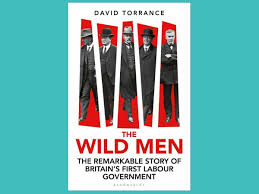
‘The Wild Men’ David Torrance

A Labour government elected on a promise of change – but without any closely thought out plans other than saying change – a Prime Minister seen as too focused on freebies and foreign affairs at the expense of domestic duties, an agenda beset by scandals pulling focus from essential matters, separatist movements in Ireland and Scotland being marginalised and potentially disastrous, an insurgent party destabilising the political status quo and a seemingly radical set of politicians proving to be tiresomely business as usual much to the frustration of their supporters.

It is not exactly difficult to see why David Torrance was struck by the historical parallels when he published his book, ‘The Wild Men: The Remarkable Story of Britain’s Labour Government’ in 2024.

And those parallels – less ringing a bell than clattering cymbals in their resonances I would suggest – certainly add a timely atmosphere to an historical exploration which rattles along and is never a chore to read.

Torrance takes the sensible approach of tackling the period of eleven months of the first Labour government which ran from January to November 1924, essentially department by department, using the minister as the route into both the achievements and the failings of the administration.

What this approach brings – detail, an appreciation of the diverse personalities and perspectives these (mostly) men brought to their roles – does, perhaps, come at the expense of a grand over-arching narrative.

In fairness, it is entirely possible that this is deliberate because one of the things which most clearly emerges is the total lack of a coherent narrative put forward by the government, plus ca change. Just to take office was the achievement and, to the disillusionment of their voters, much more seemed to be beyond these “wild” men.

Ironically, the aspect which seems least convincing is the “wildness” of these men. Compared to the derangement of Liz Truss, the debauched merry monarch-ing of Boris Johnson, the debacle of the Covid PPE procurement systems or even Keir Starmer and the world’s most expensive pair of spectacles, Ramsey MacDonald’s charmingly monikered “McVitie’s Share Affair” would even qualify for a -gate suffix these days. Although, surely, the best named scandal title still remains the Teapot Dome Scandal.

These “wild” men are certainly “mild” by modern manners.

I believe it was Karl Marx who said, “history repeats itself, first as tragedy, second as farce,” and it is difficult to conclude much else than that the current Westminster administration has achieved nothing except for stripping the humour away from a program of leadership which is to farce what Mr Bean is to word play.

None of that, however, is the fault of Mr Torrance who has written a timely, engaging and entertaining book of interest to anyone keen to learn more about how we got where we are – and quite possibly where we’re going.

Author

Author David Torrance

David Torrance is a constitutional specialist at the House of Commons Library. Prior to that, he was a freelance journalist, broadcaster and writer for almost 20 years. As a Herald columnist, he was one of the leading commentators on Scottish and UK politics during the 2014 independence and 2016 Brexit referendums, while as the author or editor of almost 20 books, he published unauthorised biographies of the SNP leaders and First Ministers Alex Salmond and Nicola Sturgeon, as well as the authorised biography of David Steel. (Biography adapted from https://www.northbanktalent.com/clients/current-affairs-business/david-torrance)

X: https://x.com/davidtorrance

Purchase Links:

Bookshop.org (Affiliate Link)

Amazon

Politicos

Toppings & Company

Waterstones

Wise Words From the Workers

Is Hattie Crisell the nicest person in writing?

I ask because she certainly seems to be. 

The host of the ‘In Writing’ podcast, the freelance journalist has just published her first book.

Also called ‘In Writing,’ the reductionist description of the work is that it is a compendium of words of wisdom gathered from the interviews she has conducted for the show.

And it is that. But, Crisell’s debut is actually something more than that and builds upon this sense of her as one of life’s good guys.

I can’t imagine what it takes to be a woman in the public eye, (an infinite tolerance for taking shit springs to mind) but Crisell manages to be accessible, professional, seemingly endlessly busy as well as unfailingly curious about her subjects.

Her weekly Creative Writing hour in which her Substack subscribers join her for a silent Google Meet is a fabulous idea. Simple, but a solution to the procrastination which blights many who want to write but feel they don’t have the time. 

There has been a couple of independent women podcasters who have built their brands single-handedly and now extended into non-fiction recently – Caroline Crampton’s ‘A Body Made of Glass’ https://pajnewman.com/2024/04/11/strength-through-fragility/ was also superb – and Crisell is a welcome addition to the field.

I can’t remember how it was that I stumbled across her ‘In Writing’ podcast but the production values, the sky high quality of the guests but it was the professionalism, the openness to new ideas and the sense of community which sustained my interest.

That sense pervades every page of the book and it comes from the author. It is the best book I have read on writing since Stephen King’s ‘On Writing’. And there is no higher compliment I can pay it.

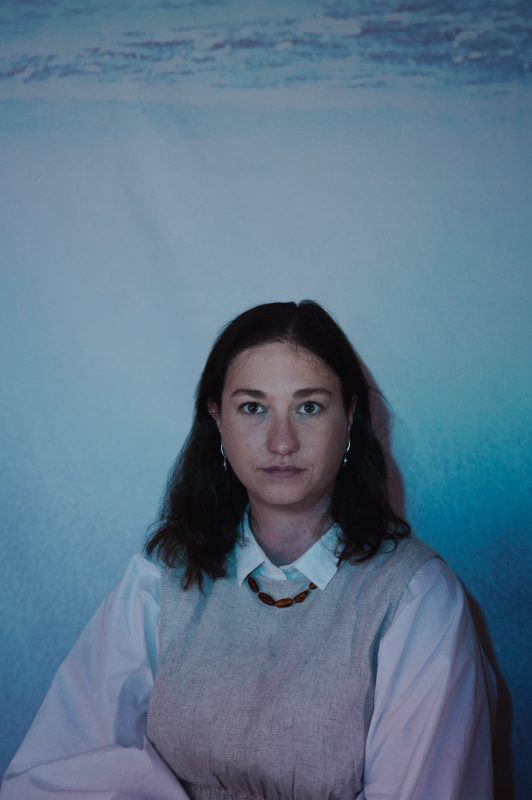
Author Bio

HATTIE CRISELL is a freelance writer based in London. She is a contributing editor of Grazia magazine and her writing regularly appears in The Times, Telegraph, Elle, Vogue, and You among others. Since 2019 she has produced and hosted the podcast In Writing with Hattie Crisell, interviewing writers of all kinds in their studies. (Biography sourced from https://granta.com/contributor/hattie-crisell/)

Strength Through Fragility

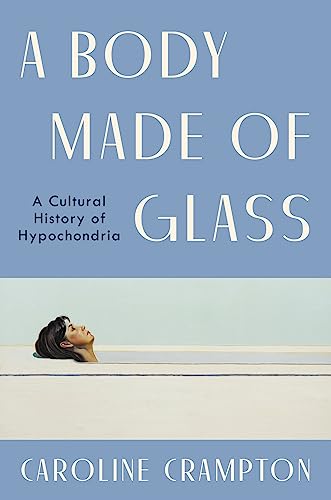
A Body Made of Glass by Caroline Crampton

How often does one read something which, within the first page, makes you wholly reconsider your stance on something?

I don’t mind admitting, hypochondria is not something to which I had really given a lot of thought. Or, any thought really. Now, I understand that this itself is a form of privilege – a freedom to not have worried about my health in any meaningful way, should not be taken for granted.

But if I had been given cause to pause and define hypochondria, I suspect I would have considered it… “a fear of illness entirely psychosomatic,” (a concept, and word, I know solely thanks to The Prodigy. Who says music teaches nothing?)

And yet, on page one of Caroline Crampton’s latest book, A Body Made of Glass, we are told of the teen cancer which, in essence, derailed her later teen years and triggers a long-term struggle with the condition of hypochondria.

Which seems… reasonable? It had never occurred to me that hypochondria might be based upon a rational foundation. To have been diagnosed, and then survived, what can only be described as a trauma, and to then imagine that every twinge may be the beginning of another setback on the road to full, sustained health, begins to look like a logical belief structure.

Crampton herself examines this in her own inimitable style. “The body has what has been described as ‘a limited vocabulary of subjective sensations’. I may think that I can feel things growing inside me that shouldn’t be there, like roots creeping unseen through the soil, but there is no evidence to suggest that this is actually the case.”

Creepily effective pastoral metaphor aside, the reader can’t help but think, “Yeah! How could you not!?”

Once you get up to speed with this concept, the slippery and transitional nature of the condition comes into view. What follows is fascinating as Crampton embarks on a multi-millennium tour of the way that medicine has approached the unknown – and unknowable – nature of medicine.

Spoiler alert – women seem to get the fuzzy end of the lollipop. Repeatedly.

I know Crampton best from her work on Golden Age of Crime podcast, Sheddunnit. She is an engaging and accessible doyen of that particular manor and her erudite, spectacularly widely read knowledge of the genre pervades that particular domain.

But it is nothing compared to the interdisciplinary tour de force which A Body Made of Glass presents to the reader. From ancient Egypt, via Plato, Peter Griffin and South Park, this is a whip smart journey through cultural reference points of high brow, pop and low brow culture.

Frankly I am exhausted by the thought of her reading list, let alone the writing of the text which followed.

Interspersed through these cultural touchstones are anecdotes, personal, observational – what I have come to regard as the “jar of pee” episode is one I see attracting attention in other reviews – but I was rather fond of the family she encounters at a hotel breakfast room who express their familial affection by recounting in lavish detail their bowel movements as they break their fast. Personally, I’d have recounted my own food at projectile velocity over them as a reward for this particular start to my morning but CC is a lot nicer than I am.

Crampton includes an excellent section of Robert Burton’s Anatomy of Melancholy, a text a favourite author of mine, Anthony Powell, leans heavily on in the later volumes of A Dance to the Music of Time. In the same way as Nick, the narrator of the series, says, “became rather hard not to see Burton in everything,” one feels Crampton has been living her life seeing hypochondria and its “’infinite varieties,’ Burton said,” in every book she has read, television show she has watched, every play she has seen.

She quotes Burton further when she recounts him writing, “the tower of Babel never yielded such confusion of tongues, as the chaos of melancholy doth variety of symptoms.’” Her corollary to this, that, “reading Burton, one comes away with the dizzying feeling that melancholy is everything and everything is melancholy,” is rather how the reader leaves the text feeling. Is hypochondria everything and everything hypochondria?

Does Crampton manage to move on and improve her trauma informed response to her childhood illness and the fruits of this poisoned tree it left her?

Well, that would be as bad as giving away the killer on page two of a Golden Age detective novel. Suffice to say, in a writer as warmly welcoming in her accomplished prose, as well as being as erudite and engaging as Caroline Crampton, you will just be happy to be along for the tour.

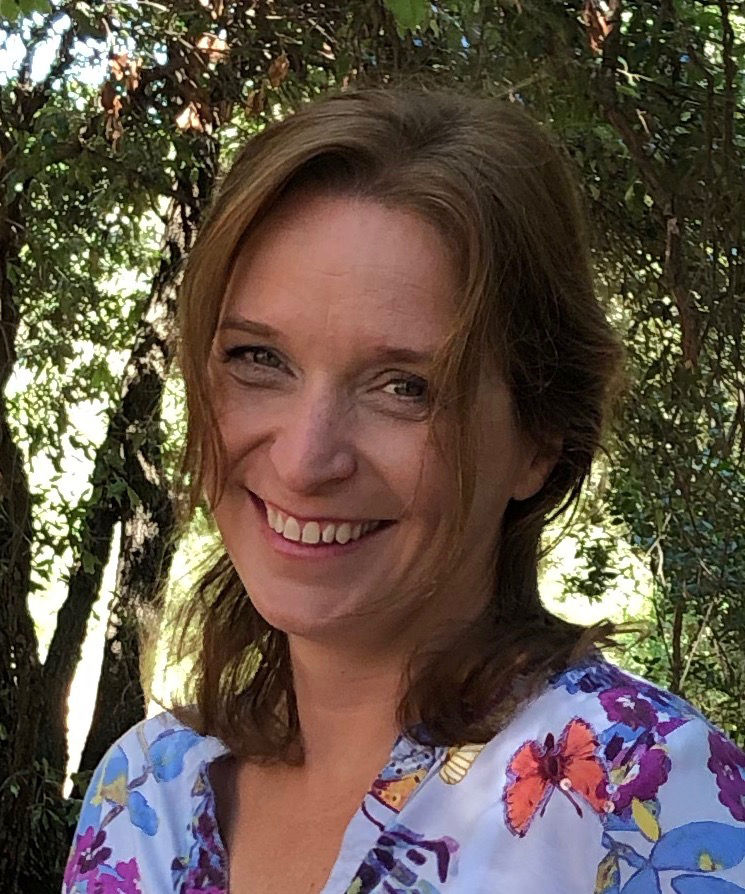
Author Bio

Caroline Crampton is a writer and podcaster. She writes non-fiction books about the world and how we live in it — The Way to the Sea (2019) and A Body Made of Glass. She makes a podcast about detective fiction called Shedunnit, she curates articles for The Browser, and reviews and essays for publications like Grantathe New Humanist, the Guardian and the Spectator. (Biography and photograph adapted from https://carolinecrampton.com/)

Purchase Links:

https://geni.us/aK99kec

Without This, Nothing Else Matters

‘Caring Conservationists Who Are Changing Our Planet’ by Kate Peridot.

Travel around the world and discover the stories of 20 conservationists and the endangered animals they are helping to save, including the orangutang, blue whale, Indian tiger, rhino, honeybee, Komodo dragon and sea turtle. Positive, uplifting and packed full of information, with 20 fun activities for children to try, this book will show children no one is too small to make a difference.  

When I was about nine years old, my Mum took me to London Zoo. We didn’t really do things like that very often and London was big and far away and expensive and a rare luxury.

I’ve never forgotten that trip. It was the late 80s and Zoos were moving away from being the preserve of manically depressed gorillas staring mournfully out of inadequate cages and towards being research and conservation centres, the way the public want them to be today.

Something was awoken in me for sure. And I badgered my Mum to sign me up to the World Wildlife Fund (the original WWF) right there in the park. I suspect that we could scarcely afford this but she acquiesced because, well, she is my Mum and she was/is lovely and I was spoilt.

I moved quite far from an interest in nature as I grew up but, in the last 10-15 years, that interest has come back with a passion. Children – of all ages, classes, and background are interested in the natural world but we lose it so quickly.

In this lavishly illustrated book, Kate Peridot aims to introduce to some of the most famous conservationists who have tried to make a difference and increase awareness. There’s a beautiful breadth of figures featured and a range of activities which could act as excellent introductory tasks for inquisitive young minds.

A full colour delight for the eyes, I have a couple of young nephews who will be getting this for their birthdays. Without their engagement in these issues, nothing else is going to matter anyway.

Purchase Links

Author Bio –

About Kate

Kate is an author of both fiction and non-fiction children’s books. Originally from London, she now lives with her family in the South of France. She writes wild and adventurous stories about animals, people and STEM that encourages a can-do spirit, a quest for knowledge and a sense of adventure. 

Caring Conservationists (Walker Books) is her first non-fiction children’s books. A further nine books are in production launching between 2023-2025. Find out more about Kate and her books at www.kateperidot.com .

Social Media Links –

https://www.instagram.com/kateperidot/

https://www.facebook.com/kate.peridot.7/

Chow Down All Over the World

‘Cook it Eat it Live it’ by Jo Kenny

‘Cook it Eat it Live’ it is written by Jo Kenny, food writer and owner of GirlEatsWorld.co.uk.
In this first publication, Jo offers readers a vibrant and varied collection of recipes inspired by both travel and family ties to the UK, Japan, Guyana, the Caribbean.


This delicious collection of every day recipes satisfies appetites for light bites, indulgent dinners, fresh sides and delicious desserts.You’ll find a spectrum of dishes from rich, earthy flavours to fresh aromatics giving you meals to enjoy year round. All recipes are firm favourites in Jo’s own household and cooked regularly. This is family style, every day inspiration to ensure no more boring dinners.

Recipes are punctuated with stories of travel, food inspirations and a personal philosophy of enjoying food unapologetically. Cook it Eat it Live it is about finding happiness in the little things and injecting some joy into every day life through wholesome, exciting meals.

Purchase Link – http://mybook.to/cookiteatitliveit  

Cookery is one of those things – like book blogging I suppose – which has exploded in the age of social media. Wonderfully easy to post on Instagram, those who have travelled about a bit are able to share their food in easy snaps at the click of a phone camera.

Whilst this hasn’t exactly improved people’s experiences of being in restaurants – a sea of camera lenses maketh not the most entertaining scene for dining – it has opened up worlds of food previously not available to the every day person.

Enter Jo Kenny. With ten years at the forefront online sharing of food via her website, GirlEatsWorld.co.uk, here Jo has published a cookbook with vibrant variety, covering a great many culinary corners of the globe.

Richly illustrated with photos from her own travels, the recipes are laid out in sensible order and the intervening prose is light and bubbly.

This is a book for people who want a decent standard of cooking and are interested in the world around them. This is not a book for people who have the desire to sous vide everything and spend their time trying to operate liquid nitrogen in the comfort of their own kitchen: it is all the better for that.

Practical, real world cooking for the culinary adventurous. That will do me.

Author Bio

Processed with VSCO with a6 preset

Jo is a food writer from Bedford, living with her husband Alex, newborn son and Kimchi the cat. Her website GirlEatsWorld.co.uk was founded in 2012. Starting out as a personal space to capture cooking and food adventures, it has evolved into a public hub for recipes, cooking guides and food inspiration. Jo is passionate about fresh ingredients eaten joyfully, intuitively and adventurously.

Social Media Links – 

Instagram – https://www.instagram.com/kingsleypublishers/?hl=en-gb

Instagram – https://www.instagram.com/jogirleatsworld/

Twitter – https://twitter.com/kingsleypublis1

Less A Frog Prince Than a Toad

Normal 0 false false false EN-GB X-NONE X-NONE

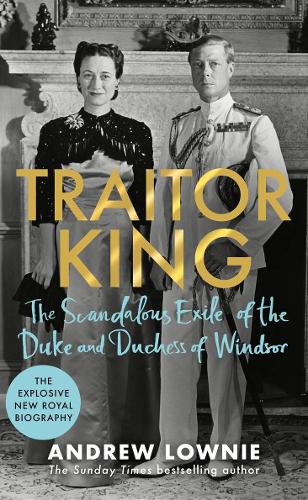
‘The Traitor King’ by Andrew Lownietraitor king

You can find an exclusive Q&A with author Andrew Lownie here

Drawing on extensive research into hitherto unused archives and Freedom of Information requests, it makes the case that the Duke and Duchess of Windsor were not the naïve dupes of the Germans but actively intrigued against Britain in both war and peace.

‘Traitor King’ reveals the true story behind the German attempts to recruit the Duke as a British Pétain; the efforts, by Churchill in particular, to cover this up; the reasons why the Duke, as Governor of the Bahamas, tried to shut down the  investigation into the murder of a close friend, and shines light on the relationship between the Duke and Wallis, revealing it to be far from the love story it is often assumed to be.

Lownie’s previous book with Bonnier Books UK, ‘The Mountbattens’, was a ‘Sunday Times’ bestseller and a Waterstones Book of the Year. (Synopsis courtesy of http://www.bonnierbooks.co.uk)

I’ve danced with a man, who’s danced with a girl, who’s danced with the Prince of Wales” went the lyrics to the popular1927 song by Herbert Farjeon and Harold Scott, performed by Elsa Lanchester.

After reading this incendiary work of revisionist history, perhaps we need to rework the lyrics to read, “I’ve danced with a man, who’s danced with a girl, who’s compromised national security with the Prince of Wales.”

If, like me, most of your knowledge of Edward VIII is derived from fictional portrayals – Edward Fox in ‘Edward and Mrs Simpson’, Guy Pearce in ‘The King’s Speech’ – then I think it’s fair to say that you will almost certainly be horrified by the portrait of Windsor which emerges in Andrew Lownie’s first class biography.

There are a number of reasons for this shock therapy for the reader. Firstly, Lownie –  an accomplished literary agent and power house behind several campaigns related to archives and freedom of information – is a powerhouse researcher. In this work he had gained access to previously unpublished memoirs by key characters in the narrative, as well as scoured the UK and US National Archives for previously unexplored resources.

Secondly, Lownie has an unparalleled knowledge and background with which to unpack his topic. His previous works: on Guy Burgess; on the Mountbattons and – to a lesser but relevant extent – John Buchan allow this Cambridge graduate to peel away the onion layers of how the British establishment really works and how it protects its own, obfuscates and evolves.

Finally, it deals with a clearly under explored aspect of this tale. Book of book, movie and TV show has dealt with the abdication – the run up to it, the emotional aftermath, the toll it took on the unsuspecting successor Bertie and his stoic daughter.

But little to nothing has been written of Edward and Wallis’ post-abdication roles. Along the way, he had uncovered enough salacious details of their sex lives to keep the most prurient reader happy whilst also painting a frankly horrifying portrait of the personalities of the two of the major figures of twentieth century history.

Edward emerges as a tone deaf man/child who literally could not be trusted. Secrets are shared with the Germans and his rampant anti-semitism continues, according to sources quoted here, throughout his entire life.

As Europe is falling and Hitler is sweeping away opposition, the nearly King embarks on his famous 1938 German Tour. “The couple arrived by train in Berlin at a station festooned with alternating Union Jacks and swastikas, to be met by Robert Ley, the head of the National Labour Front, [and] the foreign minister Ribbentrop.”

This is before we are treated the sheer tone deaf imagery of Edward and Simpson leacving for their “honeymoon in a convoy of cars to join the Simplon-Orient Express, which had been kept waiting for them. They were accompanied by Dudley Forwood, an attaché at the British Legation in Vienna… two cairn terriers, a pair of Scotland Yard detectives whose brief was as much to spy on as guard the Windsors, and 186 trunks and 80 additional items of luggage.” Modest, retiring and appropriate, they are not.

This is all rather good clean, if horrifying fun, but Lownie is not an author who allows his reader complacency. Just as one has adapted to a former monarch gnashing his teeth abroad, surrounded by unwise companion, but a sort of exasperatingly neutered Charles II before you are treated to the emotional consequences of this collusion.

Another day was spent in Dusseldorf for an industrial exhibit, where they toured a miners’ hospital and a concentration camp. Forwood later recalled, ‘We saw this enormous concrete building which, of course, I now know contained inmates. The duke asked, “What is that?” Our host replied, “It is where they store the cold meat.”’
Andrew Lownie has produced another first class piece of revisionist history which still contains the power to intrigue, shock and startle. If you read only one excoriating deconstruction of the power dynamics of the British state this year, make it this one.

Author Bio

Lownie study Andrew Lownie was born in 1961 and was educated in Britain and America. He read history at Magdalene College, Cambridge where he was President of the Union. He went on to gain an MSc at Edinburgh University and spend a year at the College of Law in London. After a period as a bookseller and journalist, he began his publishing career as the graduate trainee at Hodder & Stoughton. In 1985 became an agent at John Farquharson, now part of Curtis Brown, and the following year became the then youngest director in British publishing when he was appointed a director. He set up the Andrew Lownie Literary Agency in 1988. Since 1984 he has written and reviewed for a range of newspapers and magazines, including The Times, Spectator and Guardian, which has given him good journalistic contacts. As an author himself, most notably of a biography of John Buchan, a literary companion to Edinburgh and a prize-winning biography of the spy Guy Burgess, he has an understanding of the issues and problems affecting writers. He has acted as the literary agent to the international writers’ organisation PEN. In 1998 he founded The Biographers Club, a monthly dining society for biographers and those involved in promoting biography, and The Biographers’ Club Prize which supports first-time biographers. He has had a regular advice column in the writing magazine Words with Jam, written the entries on submitting to agents for The Writers Handbook and The Writers and Artists Yearbook, contributed to The Arvon Book of Life Writing and regularly gives talks on aspects of publishing. (Biography courtesy of www.andrewlownie.co.uk)

Wax On and Get Away

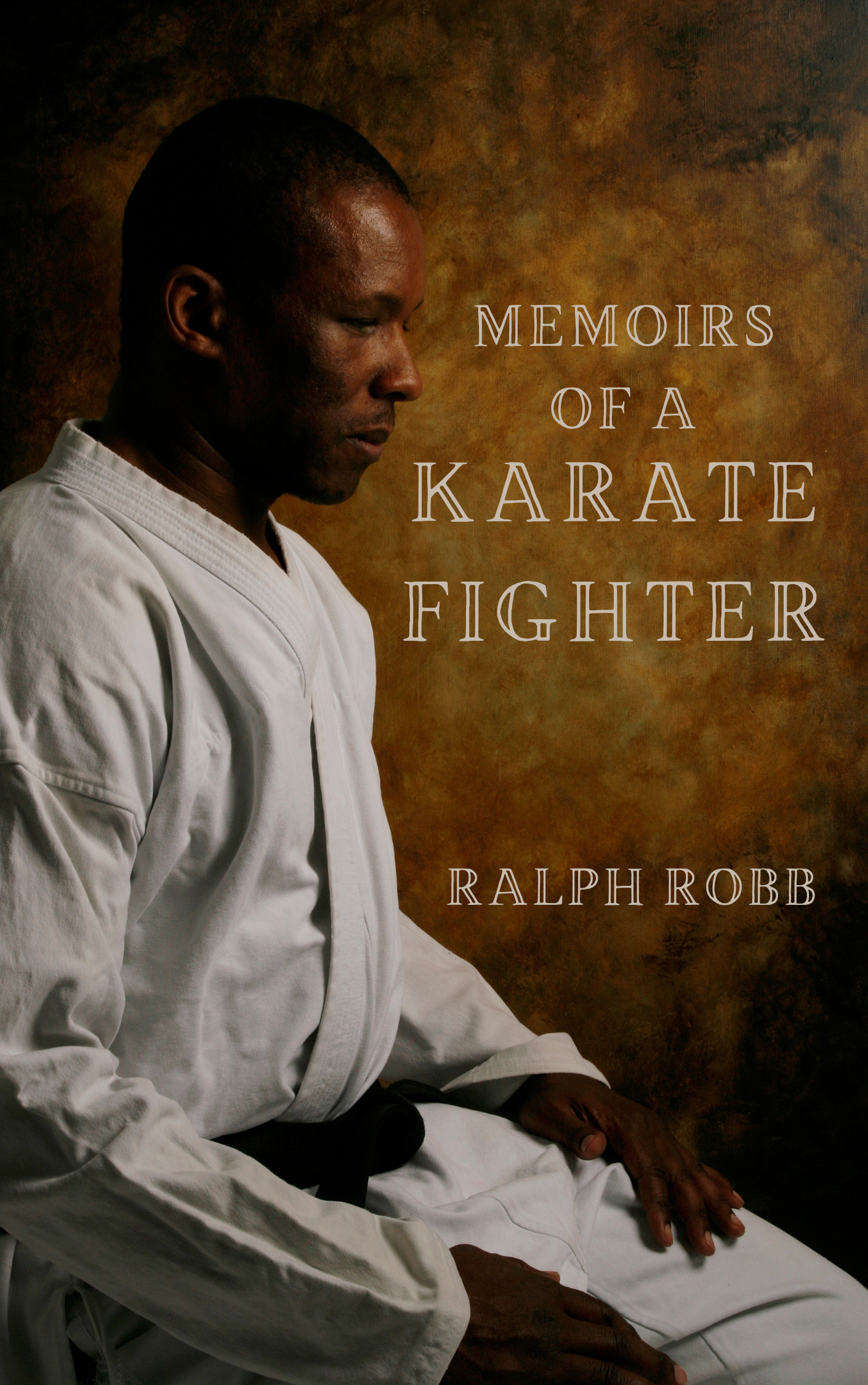
Memoirs of a Karate Fighter by Ralph Robb

Novelist and former karate champion Ralph Robb recounts his experiences at one of Europe’s toughest dojos and provides an insight into the philosophy and training methods of a club which produced national, European and world titleholders. In a hard-hitting story, Ralph tells of the fights on and off the mat; his experiences as one of a very few black residents in an area in which racist members of the National Front were very active; and the tragic descent into mental illness and premature death of the training partner who was also his best friend.

Most readers who pick up this book will, I would guess, be attracted by their memory of The Karate Kid (the proper one with Ralph Macchio  – piss off Jayden Smith) and the 80s karate craze it inspired – admit it you were tempted to paint your father’s fence, or wax his car or catch the flies with chopsticks.

This is not that story. This is a sad book in many ways. Ralph Robb recounts his time in the dojo and is effusive in his praise of the discipline and positives which karate brought into his life.

But it is hard not to see a narrative shot through with injustice, toxic masculinity and societal inequalities which mean that these young men are forced to fight constantly just in order to be left to go about their daily business.

The memoir is littered with racist skin heads targeting Robb and his friends for the colour of their skin or for refusing to rise to the bait while they work on the door of a nightclub. Robb himself risks serious long term health damage because he cannot show weakness to his peers inside the dojo and continues to train with a terrible injury.

All of which made me terribly sad. I would like to think that we have moved on as a society but I fear we really have not. Perhaps the best that can be said is that Ralph Robb is an engaging guide, with a captivating style leading his readers through a Midlands beset with all of the problems we see in society.

And yet, by never losing hope , Robb points a way towards optimism for all his readers and the hope of a better life.

Purchase Links

UK – https://www.amazon.co.uk/Memoirs-Karate-Fighter-Ralph-Robb-ebook/dp/B08X2WB8RT/

US – https://www.amazon.com/Memoirs-Karate-Fighter-Ralph-Robb-ebook/dp/B08X2WB8RT/

Author Bio – Ralph Robb was born and raised in the industrial town of Wolverhampton, England and now lives in Ontario Canada with his wife, cat and dog. A proud father of four, Robb works as an engineering technician and loves rugby, martial arts and a good book. His world is balanced by quality TV, global events, great outdoors and of course his grand-daughter.

Social Media Links –

Facebook: www.facebook.com/RalphRobbBooks

Twitter: @RalphSRobb

Webpage: www.ralphrobb.com