Author Simon Conway set to triumph with ‘The Stranger’

Scottish author Simon Conway’s fifth novel looks poised to position him as one of the best authors working in the thriller genre today c

Full confession: I’d heard of Simon Conway but this is the first novel of his that I have read. Frankly, after this, my ignorance shames me and, I mean this sincerely, this piece should propel Conway into the very first rank of thriller writer’s working today. 

A world of smoke and mirrors

The Stranger centres on Jude Lyon, an SIS officer, dispatched by his duplicitous Head of Service, Queen Bee, to track down a legendary terrorist who was taken to Syria back when we didn’t do that sort of thing. Honest. 

But this terrorist is not all that he seems. And neither is anyone else in this novel.

As well as Lyon, a lead character with a love life complicated enough to make George Smiley blush, and Queen Bee, the smoke and mirrors head of the security services, the novel is populated with a fascinating cacophony of characters, including a squirming semi-alcoholic former Foreign Secretary, a Scottish journalist with a professional and personal interest in Lyon and a Russian diplomat and his wife who may or may not be luring Jude towards the rocks of disaster. 

Conway’s plots are onion layered: peeling back one skin at a time. He manages that neat trick so often missing in this type of novel which makes plot reveals seem inevitable and surprising rather outlandish or tediously predictable. 

His storytelling remind me of the best of Charles Cumming or Jeremy Duns – engaging, jigsaw tight, satisfying at the end but with potential for expansion in a future work. 

Descriptive passages Martin Amis would be proud of

He writes well too. “Jude’s immigrant provenance is equally exotic and fragmentary, shot through with competing veins of conformity and criminality, from a cigar-chomping bank robber for a grandfather to a general given to eccentricity and dark moods for a father,” is the sort of descriptive passage that Martin Amis at his most interesting would have been proud of. 

And, while it is true, Conway’s novel doesn’t – of necessity – have the same laugh out loud quality of some of Mick Herron’s novels, “Jonno Butcher, one of Cathy’s seemingly inexhaustible supply of meat-faced nephews,” is a description of which even the Slough House author would be proud.

I will be surprised if it emerges that Conway is not a fan of Le Carré. In fact, I’m not sure if it’s an affectionate nod to Le Carré, or merely to do with the abundance of such names in the region, but all the characters from the Caucuses we encounter in the book have names from Le Carré’s novels, especially ‘Our Game’.

Perhaps the most impressive area is that of the terrorists. He makes them well-rounded, whole characters who you don’t mind spending time with. Terrifying, yes, but nuanced and engaging too.

A crash, bang, wallop conclusion done with joie de vivre 

The ending of The Stranger may be slightly crash, bang, wallop for some people’s tastes but even this is done with enjoyable joie de vivre and edge of the seat inducing tension as well as some final plot twists which make me hope that this is not a standalone novel but the first in a series.

Overall, a triumph of a novel that makes me long for the opportunity to encounter Jude Lyon and his world again. 

Just need to go back and read Simon Conway’s back catalogue now. Whole-heartedly recommended.

Agent Running Through Fields of Wheat?

“You know what Trump is?’

‘Tell me.’

‘He’s Putin’s shithouse cleaner.’

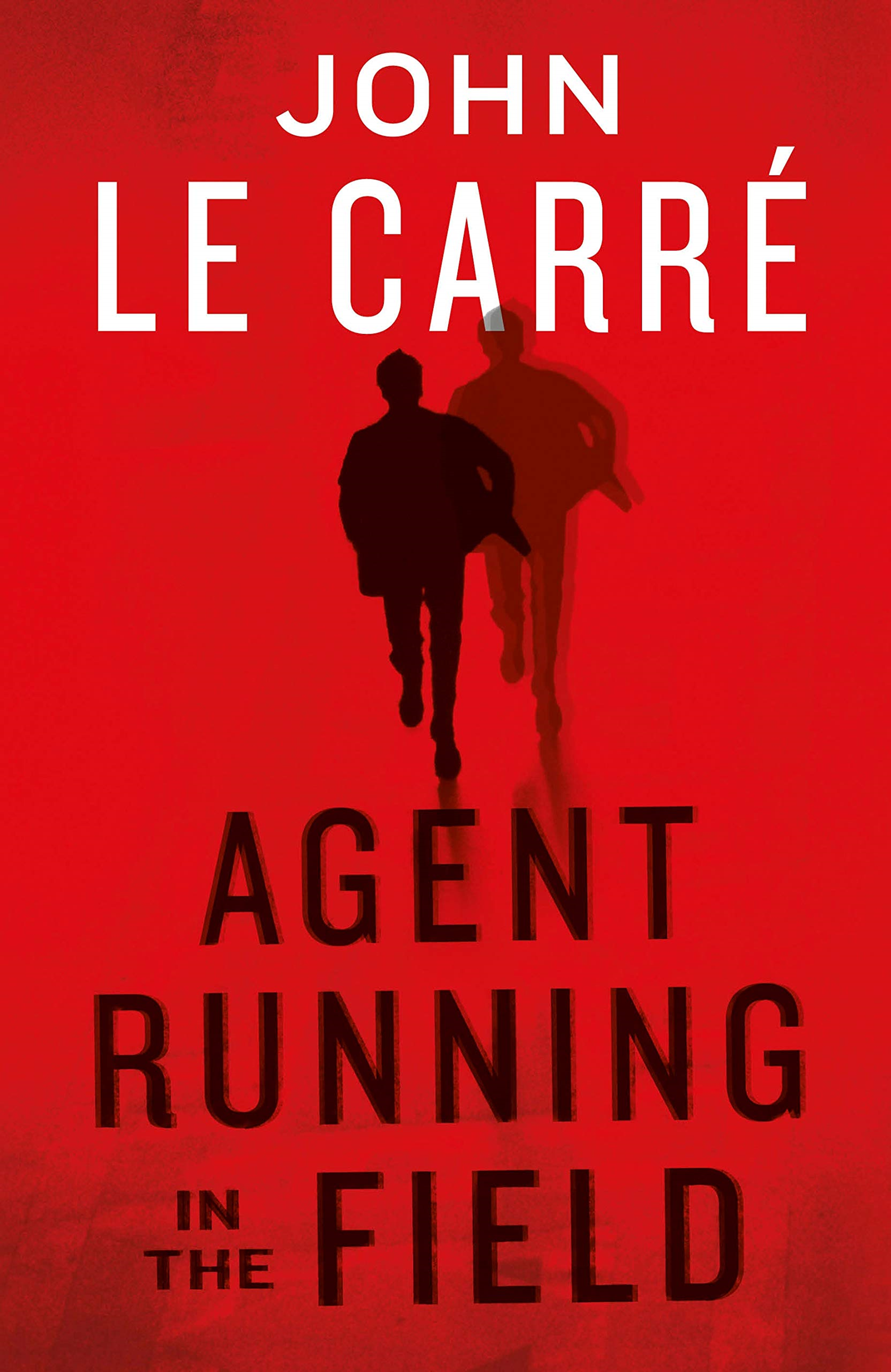
Which is as good a place as any to begin with John Le Carrè’s latest work, Agent Running in the Field. Rumoured to have angered his former employers, (according to one very put out spook at the Cliveden Literary Festival at least)

Mr Le Carrè’s somewhat classy retort in The Times was enough to generate some publicity for what is certainly a lower key release than 2018’s Legacy of Spies (which even got a session at the London’s Royal Festival Hall beamed to cinemas over the UK).

This was supposed to be his Brexit rant – his anti-Trump, reactionary wail of despair at UK national suicide, the world gone mad, manipulated by the kleptocratic, Tsarist spook-in-chief in Moscow. This was supposed to be his deconstruction of the British state and it’s Cambridge Analytica-altered, Putin fiddled with, Big Red Bus of Deceitful Propaganda opus. Hell, even the title sounds like a riff on our former Prime Minister’s childhood agricultural misdemeanours. And, at least in the character of Ed, the novel does reflect those emotions.

“It is my considered opinion that for Britain and Europe, and for liberal democracy across the entire world as a whole, Britain’s departure from the European Union in the time of Donald Trump, and Britain’s consequent unqualified dependence on the United States in an era when the Us is heading straight down the road to institutional racism and neo-fascism, is an unmitigated clusterfuck bar none.”

This, in fairness, is hardly an equivocal position. But, nor is it a radical stance so far out with the opinions of many of the people watching Brexit unfold and, in comparison to – say 2003’s Absolute Friends – this is a quiet and measured response.

And, really, that is my take away from the novel. It is a small story in a way that the absolute first rate Le Carrè pieces aren’t. The character of Ed is a graceless and, as a narrator in one of his novels might say, seems to have elevated gracelessness to an art form. Nat is an unreliable narrator, the seemingly happy marriage undermined by what everyone else sees in him apparently, although the influence of this on the plot seems slim.

Overall, it’s always better to read Le Carrè than others. There are the usual damning characterisations, the usual pithy descriptions and he does physical nuance just about better than anyone but, here, the plotting lacks surprises and the ending fails to pack the sort of punch that even a relatively minor novel of his latter period, Our Kind of Traitor or A Most Wanted Man for example, manage to produceAgent Running.

‘Nobody Move’ by Philip Elliott

If you like… (takes deep breath) Heat, Reservoir Dogs, Jackie Brown, Pulp Fiction, The Godfather, Baby DriverNo Country for Old Men, Get Shorty, Kill Bill Vols 1 & 2, The Getaway, Silence of the Lambs, Out of Sight and Point Break, then this may just be the book for you.

Nobody Move by Toronto-based debutant Philip Elliott is a love letter to the crime thriller movies of the 90s and is packed with enough sleazy motels, 80s punk rock and characters making questionable life choices to make you want to ask, “Whose chopper iz dis?’

Philip Elliott author photo

Philip Elliott, debutant author of crime thriller, Nobody Move, out in September 2019

Clearly, the man knows his Tarantino, his Elmore Leonard and his Jim Thomson.

However, although this may sound like pastiche, it is so cleverly done, the novel ripping along in 315 pages, and Elliott managing to make you enjoy spending time with these monstrous characters, that you don’t feel oppressed by the references. The fact that the characters are self referentially referring to them acting like they’re in a movie, only adds to the fun.

Nobody Move opens with the character of Eddie, a small time hoodlum beginning to tire of the life, making a catastrophic mistake which only escalates as variously his pretentious, restaurant owning mobster boss, Saul Benedict, and his men (and Eddie’s ex-partners), Floyd and Sawyer, all enter the fray hunting the want-away Eddie. Fate twists further as the beautiful Dakota, a Native American woman fresh in the City of Angels searching for her missing friend and psychotic, Texan assassin Rufus, seeking vengeance for his murdered brother, takes up his beloved daggers one final time and begins the long drive to L.A. Meanwhile, put-upon vegetarian LAPD detective Alison Lockley’s hunts for the killers becomes increasingly urgent as the bodies pile up.

The novel, published by small press Into the Void, has rather too many uses of “the N word” for my liking and appears to have an unfortunate relationship to violence against women – but persevere for all is not what it seems.

This is to be the first of a series of novels, known as the Angel City series. I’m looking forward to reading the next instalment.

Nobody Move (Angel City #1) is out from Into the Void press on September 10th.

ISBN: 978-1-7753813-5-8

Slow Horses Still Glued Up

Slough House’ is dirty; ‘Spook Street’: deadly. Now we have the duplicity of ‘Joe Country’ – perhaps the next stop for Mick Herron’s ‘Slow Horses’ will be a devious ‘Intelligence Continent’?

As it is, ‘Joe Country’ is a fine addition to the series. Few writers can weave such deft description and pacy plotting – garnished with lashings of humour and even dashes of pathos – as Herron and each novel builds to a crescendo in which the reader is left feeling both traumatised and hungry for the next instalment.

There’s little doubt that Herron is a confident writer at the top of his game. This series has become famous for its openings: Dickensian wanders through locations in an omniscient voice quite unlike other writers working today. Here, he sheds this trope, instead opting for a reveal different to the structure of the other texts.

His confidence has also been apparent for a while in his wanton profligacy with his characters. It must take iron nerves for a writer to dispose of such well-rounded, independent characters brimming with such vim and spark as these Slow Horses. And yet, here again, Herron is prepared to dispose of them with abandon. As in the old TV series Spooks (MI:5 in the US), no one is safe and this means no reader can ever truly relax that their favourite character won’t end up at the knackers yard in the next ten pages.

Finally, there is Jackson Lamb. A Rabelaisian grotesque, becoming progressively more grotesque by the novel. And, in truth, Lamb is actually my biggest quibble of this first rate book. He dominates the proceedings so completely that you pine for his nastiness when he is off stage. This is Banquo as central character, relegating Macbeth to bit part player by sheer force of personality (or blackened toe wiggling through undarned sock, if you will).

There are a few minor worries deriving from Lamb which I hope are me being hyper critical. He keeps “appearing” and “vanishing” like an obese Paul Daniels – or a less creepy David Blaine – and I hope this doesn’t signal either Lamb as supernatural entity or that Herron is now so successful that he has entered the realm of the uneditable: too grand for repetitions to be noted and corrected. I think not on the whole.

Joe Country’ is proof, if any were needed, that Herron stands at the pinnacle of the espionage genre, (possibly snug on the heights with Jeremy Duns and Charles Cumming). Others have already noted it is not a book which would reward readers unfamiliar with the series but for all that, I hope the Slow Horses have many more races left to run.

In short: Horses far from in need of the knacker’s yard: 4/5*

  • Other details:
  • ISBN: 9781473660359
  • Publication date: 20 Jun 2019
  • Imprint: John Murray

Thanks to Netgalley for the advance copy

A Dance to the Music of Crime

I have an aunt who once told me in confidence that the greatest relief of her life was when she read an article explaining that she did not have to read Proust in order to be considered well read. She is, by any normal, sane standards, an exceedingly well read lady but no amount of madeleines and tea or epiphanies can persuade her that she wants to wade through the full text of A La Recherche du Temps PerduIn a House of Lies

As someone who is still struggling to chart the full course of ‘Swann’s Way’, I understand those readers who share her aversion when it comes to the writer regarded as the English Proust, Anthony Powell and his masterwork, ‘A Dance to the Music of Time. Interestingly, Ian Rankin does not appear to be one of them. In fact, he’s quite the fan.

I was a member of the Anthony Powell Society (I lapsed, I’m sorry! I’m coming back – promise!) but every year, I re-read the full 12 novel sequence (or, perhaps, re-listen is a more apt description as I listen to the mighty Simon Vance’s audiobook recording?)

This time, I had to bench this particular pleasure as I I was impatient to listen to the latest John Rebus outing – ‘Taggart’ actor James MacPherson having recorded all of the Rebus novels to date and done a superb job.

The_dance_to_the_music_of_time_c._1640

Nicholas Poussin’s Dance to the Music of Time

I’ve long believed that Rankin is foremost chronicler of contemporary Scottish life. From as far back as ‘Set in Darkness‘ which hinged upon – and poked fun at – the furore around the opening of the Scottish Parliament, it has long been obligatory to say that ‘Edinburgh is as much a character as the people’ (a compliment used so often it sets my teeth on edge, what it does to Rankin’s dentistry I can only imagine.)

But, for me, it always felt that it was ‘Naming of the Dead’ where Rankin really began to embrace parachuting Rebus and his Watson – boy she’d hate that – Siobhan Clarke like action hero Rosencrantz and Guildensterns charging through the 2005 G8 summit.

And then Rebus reached retirement age and that was that.

Except it wasn’t. Rankin managed the seemingly impossible. He brought our misanthrope hero back, he got to have the joy of seeing Clarke outrank her mentor and then he got to play fantasy comic book team up by including anti-Rebus goody two shoes, Malcolm Fox.

Rebus’ Moriarty, “Big Ger” Cafferty also lurched towards retirement although –spoiler alert – maybe not of the lasting variety. The Naming of the Dead

Last year, 30 years after he first beat the streets of our capital, a character now as unrecognisable as the city he is associated with, Rebus took a year off.

It was void in my reading life, for sure.

Hence my impatience to get hold of the big man’s 22ndouting. And then: somewhat unexpectedly, it was Powell that ‘In a House of Lies‘ reminded me of.

You could detail the plot: body in car in woods, old case reignited, Rebus on original investigation, the veteran doing a favour for Clarke who has been receiving threatening calls, but you know what? It’s not important (sorry Ian, I can only imagine how annoying it is after all your hard work) but I just like seeing the team back together.

I love Rebus bristling with Fox, walking his new sidekick Brillo, see him still driving his knackered Saab (“It’s not vintage, it’s old,” he testily informs another character at one point.) It’s comforting to spend time with Clarke.

For a reader, it’s like a warm bath – albeit one with murder, low budget Scottish film making and a distinctly tongue in cheek hat tip to the more cosmetic societal changes of the MeToo movement. Perhaps the greatest trick Rankin pulls off is introducing new characters like

The way characters move in and out of each other’s lives is Powell-esque, as are the coincidences. I wonder how the books play down south where I imagine having a detective who worked the original case and all the spiralling connections seems far-fetched. For those readers I say: come to the Highlands, it seems positively weird if you don’t run into colleagues all the time.

Nick Jenkins

James Purefoy as Nick Jenkins

So, can you directly compare Rebus world to the comic novels of upper middle class manners of ‘Dance’?

Course you can.

John Rebus as Nick Jenkins? I think not. Our hero is far too down to earth and interesting to play the arrogant first person protagonist of Powell’s world. But he (used to) drink enough to be classic soak Charles Stringham and is charming enough when he wants to be to get his own way with a passion for danger so, perhaps, he is the Peter
Templar of the sequence.

Siobhan Clarke is, I think, Emily Brightman. An esoteric pull, I admit, but this seemingly minor character has Clarke’s desire to cut through the flowery prose which obfuscates and frustrates clarity (see her demolition of the French gutter press in book 11 ‘Temporary Kings) which powers Siobhan.

Malcolm Fox is more tricky. He has elements of the Widmerpool about him in his difficult family life, his desire to be “good” (whatever that means in his world) but he also wants to be loyal and, across his immersion in the word of Rebus has become a far more interesting character than in his more staid standalone world. His seemingly magnetic romantic attraction brings to mind Ralph Barnby, although a Byronic Lothario painter is about as far from Malcolm as could be imagined, so a hybrid Widmerpool, Barnby and civil servant Sir Leonard Short is possibly convincing, even if the mind boggles. Widmerpool

And so what of Big Ger Widmerpool then? He has waltzed in and out of the dance of Rebus’ life for nigh on 30 years and, even though pretenders to the throne like Daryl Christie are strong characters, even the best of these never quite move past Pepsi to the big man’s full fat Coke.

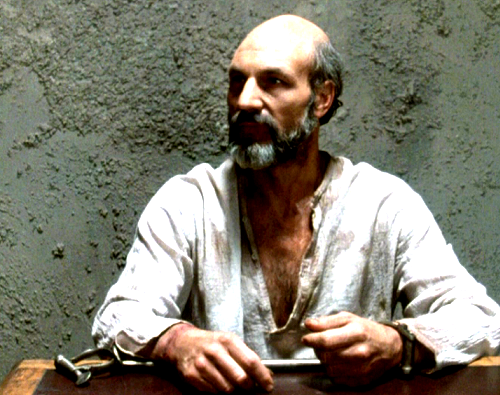
That’s why this is where the comparison breaks down. Powell never wrote anyone like the Gothic Cafferty. He’s more like John Le Carre’s Karla, locked in intellectual combat with his nemesis, as Rebus’ dance card fills and people come and go.
smileypeoplekarla.png

Patrick Stewart as the reticent espionage genius Karla.

Powell’s 12 novel sequence is, arguably, the finest long form work in English. Certainly, as roman fleuve go, it is accessible, amusing and poigniant.

But what Rankin has achieved is truly remarkable. If it was “literary fiction”, whatever that is, it might get treated with less snobbery but for a razor sharp analysis of the monumental changes which have taken place in the last 30 years in Scotland, this is as fine writing as you could ask for. Funny, sharply observed, moving, pacey and rooted in a world recognisable to ordinary folk. And he’s done that over 22 novels (in this sequence alone).

61wMZQZ69PL._SX496_BO1,204,203,200_In a 2015 piece about ‘Even Dogs in the Wild‘, I suggested that Rankin was getting better and better. On this evidence, and unlike the unholy trinity of Rebus, Clarke and Fox, I may have understated the case.

‘In A House of Lies’ Ian Rankin, Orion, 4thOctober, 2018, ISBN-10 9781409176886
 

Mister Brunetti and the things that he is not

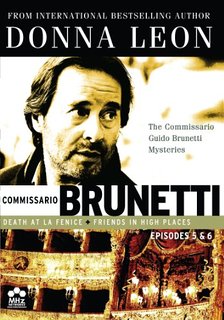
Is it really 23 years since first we  met? Who could not love Commisario Guido Brunetti and his loveable collection of family and colleagues?

Venice – it is traditional at this point to say that the city is as much a character in the novels as the humans,  – the city Brunetti navigates with as much detached san froid as he can muster as the murky world of Italian police work intrudes on his homelife.

Falling in love

Donna Leon’s 24th addition to the Brunetti series is Falling in Love

There are many theories as to why people read crime fiction – catharsis born of frustration at their own lives, vicarious wish-fulfillment to name but two – but there’s no doubt that Donna Leon’s characters buck the trend of the standard tropes found in the genre.

So much so, that to define the character of Brunetti, it may be easier to say what he is not.

Brunetti is not divorced. Married to a wonderful professor of literature, Paola. She may have been born into the Venetian nobility, but this rebellious left wing academic with a burning – necessarily unrequited – love of Henry James is mother to his children and always on hand to tease him, gently chide or act as a moral arbiter for Guido if he begins to stray too far from the path of righteousness. Paola can cause him problems, such as when, in fury at the authority’s lack of power to counter a sex tourism travel agency, she was driven to smashing the firm’s window with a brick, but she is almost always on hand to provide a sumptuous home cooked lunch or dinner.

Brunetti is not an alcoholic. Although, he is partial to a little tipple on his terrace at the end of a long day. Or lunch time. Or whenever the Veneziano weather will allow.

Brunetti is not fetishistic about the law.  As a Commisario of the Italian police, Brunetti is most often found examining his cases in terms of real politik – can something be done? If so, at what cost? And, how many favours will it cost a good man? If the answer to any of these is too much; then he may well let things slide. But never too far – after all, he still has to face Paola at the end of the day.

Brunetti is not estranged from his family. He has too children, Raffi and Chiara. They have not aged a great deal over the preceding near-quarter of a century, Raffi is a perpetual teen at university and still coming home to Mama, whilst Chiara has inherited his mother’s social conscience, but both children will still do the washing up after a family meal – even with a little grumbling.

Brunetti is not a lone wolf, or vigilante against the world. Guido relies heavily on a support network of colleagues, most notably his sergeant (later Ispettore) and friend Vianello, who plays Horatio to his Hamlet.

His greatest asset in his work – at least in terms of getting results – is the mysterious Signorina Elettra. His boss Vice-Questore Patta’s secretary, well connected and with a varied dating history, she spends the finances of the Questura on flowers to brighten her day and spends the rest of the time frightening Patta with her intelligence and Brunetti with her ability to circumnavigate the computer systems of the Italian state. Oh and the law, but she never seems to worry too much about that.

Brunetti

Some of the Brunetti books were adapted fro German television, apparently to Leon’s displeasure.

On the other hand, Brunetti is in conflict with his boss. One trope of the genre Guido does fit is his dislike of his boss. Vice-Questore Patta is vain, lazy and southern. Not a great combination in Brunetti’s opinion. He is joined by his subordinate brought along from Naples in the unlovely form of Lieutenant Scarpa who, over the course of the novels, has done nothing but snarl and act as a counter-weight to Brunetti and Vianello’s innate goodness.

Across a series this long, there is some variation in quality, for sure. The earliest novel, Death La Fenice was a promising start, but the series really hit its stride with a run that took Brunetti from a military academy in Uniform Justice to the famous glass works on Murano in Through a Glass Darkly.

Latterly, the novels feel like they have fallen into a comfy rhythm that pleases rather than pulsates on the reader’s palate. The latest novel, Falling in Love, is the 24th in the series and brings us back full circle to the opening opera-themed novel. And it’s fine. Not the best, not the worst.

But, if you’ve never had the pleasure of meeting the Brunettis, dip in. You’ll not be sorry.

Falling in Love is available from Amazon.co.uk

‘Even Dogs in the Wild’ by Ian Rankin

The man just seems to be getting better and better.

61wMZQZ69PL._SX496_BO1,204,203,200_Twitter star @Beathhigh, also known as writer Ian Rankin, has been entertaining fans of his Inspector John Rebus novels since the debut of the hard drinking, ex-squaddie in 1987’s Knots and Crosses. Rebus has changed over the years – his musical taste, his sense of humour, his relationships with friends and family – but with this, the 20th novel to deal with the Edinburgh underworld, Rankin may have outdone himself again.

Famously, Rebus was written in tight chronology, aging in real time. This gave Rankin a problem as Rebus was forced to retire in 2007’s Exit Music but Rebus was saved and was able to be brought out of retirement in the darkly brooding 2012 Standing in Another Man’s Grave due to the advent of (the then-Lothian and Borders) cold case units.

I first entered the dark underbelly of this particular crime series through an abridged audiobook of Knots and Crosses (on cassette – I’m old) read by James MacPherson in his pacifying, undulating Scottish lilt, somewhere around the year 2000. By the time Rankin published The Naming of the Dead in 2006, I was hooked and hugely impressed with the author’s ability to meld a gripping narrative with real life events in faction-style rarely so successfully achieved in the orbit of tartan noir.

However, whilst I think this was the time that Rebus as a character really got his hooks into the reading public’s imagination, I actually believe the post-retirement novels have been even more satisfying, even if the contemporary references are now broad brush strokes designed to add colour rather than driving plot in the quite the way of old.

Even Dogs in the Wild is a novel of big themes – death and love (of course) – but also of families and relationships; parents and children, friends and enemies. Exemplifying these themes are the characters who pump the heart of Rankin’s tale.

Rebus and Big Ger Cafferty have mellowed from the ying and yang of Edinburgh’s mean streets to a pair of bickering pensioners with more fight left in them than outsiders expect – the Still Game Jack and Victor of organised crime and detection, if you will.

Rebus trying to improve his relationship with his daughter Sammy at the prompting of Malcolm Fox, as Fox’s own father ails and his sister thrashes about in hurt and confusion.

It is the arcs of the characters which are so satisfying. Rankin has also moved Malcolm Fox from the uptight sober (literally and metaphorically) semi-policeman of The Complaints to a touching foil for Rebus and Siobhan, almost becoming natural police (as McNulty would say) and dancing around a relationship with DI Clarke which is supportive, if not brimming with passion.

Rebus, Clarke and Fox are becoming The Good , The Bad and The Ugly (although which is which is anyone’s guess) of these tales but the passing of batons and dying of immature lights are echoed on the other side of the street by Cafferty’s dealings with too-cool-by-half upstart Daryl Christie making his third appearance.

Finally, I listen to these novels using the (thankfully unabridged) Audible downloads – no more cassettes. James Macpherson is still doing a grand job and has the tonal shifts to represent all of the characters with realism and subtlety.

I don’t know if it’s because we’ve been with the characters for so long, or because to read characters we know so well and to see them change and adjust to new realities, but Rankin is better than ever. I just hope that a) no one tries to do another terrible adaptation of these and b) that they are still wheeling Rebus out in his bath chair for Rebus 40.

http://www.amazon.co.uk/Even-Dogs-Wild-Rebus-Inspector-x/dp/1409159361/ref=sr_1_1?ie=UTF8&qid=1448108611&sr=8-1&keywords=even+dogs+in+the+wild

The Corsican Caper

Peter Mayle's latest south of France delight

Peter Mayle’s latest south of France delight

The Corsican Caper In the UK, Peter Mayle is still best known for his non-fiction account of life in France, A Year in Provence. Nearly 30 years old, the book recounted Mayle and his wife’s move to a broken down house in the countryside and his struggles to work with the builders and locals.

In terms of epoch-defining work, this was definitely an under-the-radar success but the result was an glut of Brits shelving the rat race and heading to the sun at the earliest opportunity. The book also created an entire new genre of works by a range of authors with similar stories to tell. Some are excellent – Chris Stewart and Driving Over Lemons – some are rot.

But, what people are perhaps less aware of, is Mayle’s latter career as a novelist. He has been turning out a range of work – both fiction and non-fiction – since his big successes of the early 90s and the novels are of an infinite lightness and charm.

I’m never really comfortable with work being described in the ‘guilty pleasure’ category. Either you like the work or you don’t and Mayle, I’m sure, pours all his efforts into producing the work. They have a formula – charming, handsome English male with enough money to do what he pleases gets sucked into solving crime in the south of France, whilst dalliancing with a beautiful local girl and stopping for lashings of Provencal cuisine and gallons of rose wine.

So far, so parfait. However, over the last few novels, there appears to have been an evolution in the formula. The lead characters are now American and there is definitely a move to try and tap into a wider international market.

The Corsican Caper is the third in a series – preceded by The Vintage Caper and The Marsaille Caper and the first time Mayle has tackled a series of fiction titles – and is centred around the character of Sam Levitt, a former criminal turned adventurer for hire, who has, over the course of the books, been involved in wine heists, kidnapping and art theft. The gorgeous Elena Morales and his billionaire chum Francis Reboul, owner of a sumptuous Gatsby-esque mansion overlooking the Mediterranean near Marsaille, join Sam in his quest for a profitable life.

This latest novel actually centres around the house itself, when an unscrupulous Russian business man – Oleg Vronsky – who, when not indulging in standard Russian oligarch behaviour as prescribed by Mayle, such as purchasing a football club, tries to acquire the luxurious property by a series of increasingly desperate methods. This, inevitably, involves kidnapping, assassination attempts, the Corsican mafia and Sam saving the day. And lunch. Lots of lunches.

The charm of the novels is in the descriptions of the food and the wine. I’m guessing that Peter Mayle has had to dredge out his old thesaurus across the span of his writing for new ways of describing rose wine – but that’s OK because I like the vicarious experience of eating and drinking in sunny climes, especially when I’m stuck in a wintry Highlands.

The Corsican Caper is not high art. It’s not going to lecture you on the human condition or tell you anything about human nature which had slipped your attention previously. But, the novel nips along, the plot twists and turns without apparent effort on Mayle’s part and the man can write about wealthy people, enjoying the good life, like few others.

I can only offer a wholehearted recommendation for this as a first class beach book.

The Corsican Caper in Five Words: Crime and Wine in paradise

http://www.amazon.co.uk/Corsican-Caper-Peter-Mayle/dp/0345804562/ref=sr_1_1?ie=UTF8&qid=1433683461&sr=8-1&keywords=the+corsican+caper

Wisden Cricketers’ Almanack 2015

Wisden 2015 - a welcome addition to the shelf

Wisden 2015 – a welcome addition to the shelf

Wisden Cricketers’ Almanack 2015

I remember reading a review of a previous edition of the Great Yellow Book that compared reading it to the eating of a Cadbury’s Cream Egg (the line of thought was something like the strapline – ‘How Do You Eat Yours?’ if memory serves…)

Well, I ingest mine in a gluttonous, inelegant fashion, diving headlong into the annually weightier tome with the certain knowledge that if Wisden is here, then Summer is here and I can go back to dreaming about cut shots and hook shots and pull shots that I do not have the talent to actually play when the season proper actually begins.

If the Great Yellow Book is to cricket fans what the Little Red Book was to Maoists, then this latest edition sees editor Lawrence Booth taking no prisoners and hitting the ECB hard for their bungled handling of the sport over the last 12 months.

Indeed – if you’ll allow me to labour a simile – it was Mao who said, “Members of the Party committee maintain only formal, not real, unity among themselves. This situation must be changed,” and that’s not far from Booth’s sentiments in his Editor’s notes, which maintain that, “It was nexus of self-preservation – yet, as the wagons circled, the wheels kept threatening to come off.” Ouch; harsh, but fair.

This is, apparently, not a sentiment shared by the ECB themselves; as evidenced by the reports of out-going Chairman Giles Clarke’s confrontation with Booth at the launch dinner of the almanack.

As on so many topics, I disagree with Clarke and am very happy with the 2015 incarnation. Booth’s notes are strident – but accurate to a large percentage of observers. But to read Wisden is never to endure a one-note innings; there is always timbre. Here we have Gideon Haigh’s affection ode to nicknames in the game, Ed Cowan on the mindset of opening batsmen and the ever-readable Simon Barnes on the increasingly rare joy of the genuine “bunny” no.11 batsman and Michael Clarke’s emotional farewell to Philip Hughes.

These joys are supplemented by the, long overdue, inclusion of a section dedicated to Women’s cricket as well as an expanded obituaries which takes in some of the people omitted for various reasons in the past (and I’m surely not the only person reduced to hoping for a call up due to illness/injury of a player while watching a first class match as my final hope of being included in this section in the future?)

Quite simply, Wisden is the go-to place for a collection of the finest writers, writing about a sport with an (arguably) greater literary tradition than any other. So alongside Booth, there is Simon Hughes on he-that-shall-not-be-named, Michael Atherton, Rob Smyth, Stephen Chalke, Jarrod Kimber, the ever-green Marcus Berkmann and the first fiction entry in the annual Wisden Writing Competition by a writer I’d not encountered before, Peter Casterton.

The final joy is the Chronicle of 2014 where you can read about the Pakistani Taliban’s refusal of a good will match against the government and the use of Cannabis growing lamps, confiscated by West Midlands Police, to aid the growth of Warwickshire’s (legal) grass alongside many other vignettes of the charming, and slightly dotty, world of cricket.

If you’ve not invested before, you’ll not be disappointed. This edition makes a fine addition to any cricket lover’s shelf.

The Wisden Cricketers’ Almanack 2015 in five words: Another delightful first class innings.

‘Gironimo’ by Tim Moore

Girnomino

I read Tim Moore’s book, ‘French Revolutions’ when it came out 10 years ago and liked it. In the book, Moore details his attempts to cycle the route of the Tour de France on his own in his ill-prepared fashion, with a charmingly wry wit.

I liked it, I think, because I like travel books and I like travel, and manage to do so as regularly as I can, always in a wry and ill-prepared fashion and without any of the insouciance and sang froid that I would like to imagine that I possess. So, I liked his work. But I didn’t remember it as especially memorable and I’d lost track of his work subsequently.

I picked up this book for a friend’s birthday gift. A thought process no more complex than; ‘he likes cycling and we both love Italy. What could go wrong?’

This time, Tim Moore cycles the route of a race, on his own, recording his observations about his lack of preparation in a charmingly wry fashion. Seeing a pattern here?

In this case, he retraces the route of the 1914 Giro d’Italia, known as one of the most difficult races in cycling history. A nice addition is that this time he decides to undertake this madcap scheme on a reconditioned original – or as original as can be sourced – century old bicycle and dons woollen riding kit to boot.

And, here’s the thing: I loved it. It is one of the most genuinely laugh out loud books I’ve read, ever. I was not prepared for the sheer range of laughs the writing provoked, ranging from childish sniggers as he brakes and catapults his genitals onto the exposed rusted bolt where the front of his saddle should be, to the screamingly funny story of the cyclist who had enough in the original race and proceeded to savagely beat an unfortunately officious customs official who got in the way.

Moore manages to convey all of this with grace and no little use of simile. “‘To ride is to work,’ I said to my knees. ‘Each turn of the pedals is like the click of the freelance writer’s mouse’ or “‘It was as if my intimate parts now belonged to someone else: someone who was dead, and had died a virgin.’”

There are lags in the book, for sure. Any travel book will, at some stage, encounter the problem that, after a while, the writer must move and conveying regular movement – unless something extreme is happening – can be quite dull.

Moore’s solution when he doesn’t have a homemade wine bottle cork brake block repair anecdote to convey is two-fold. He either simply dips into the official history of the original tour and finds another tale of riders falling asleep in barns from hypothermia or drinking red wine from their panniers or keeps track of his own progress along the course against the times and distances of the original riders.

This book is a triumph of the genre and fully deserved its place on the Radio 4 Book of the Week list. It is so good I’m off to re-read ‘French Revolutions’ to check that I didn’t miss something a decade ago.

Moore is an approachable guide and its light, amusing, tone is the perfect complement to the guilt that comes from reading about someone else’s adventures while you’re slobbing at home.

I’m glad there are men out there prepared to do things to push themselves physically to the limits. I’m glad it’s not me that has to and I’m especially glad when they have Tim Moore’s ability to document these feats of ill-prepared carnage in charmingly wry observations.

Gironimo! in Five Words: Laughing to the Finish Line

You can follow the author on Twitter @MrTimMoore and the publishers, Yellow Jersey Press @YellowJersey_ed