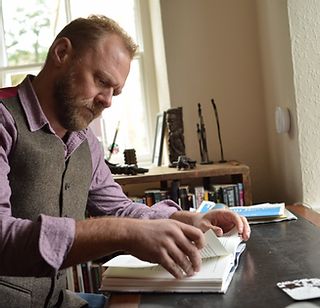
Question and Answer with Andrew Lownie

If you would like to read a review of ‘The Traitor King’, you can read about it here
Between Stalin’s EnglishmanThe Mountbattons and now The Traitor King you have investigated and peeled away layers of the twentieth century British establishment. What do you think it is which attracts you to this sort of topic?

I’m interested in revisionist biography, taking a well-known subject and looking at them with a new angle – a portrait of a marriage as in The Mountbattens , the consequences of a seismic event such as the Abdication in the case of Traitor King – and based on fresh  sources. That can be private archives or  interviews with people who knew the subject but largely it depends on public archives and using FOI requests. This was crucial with regard to the Guy Burgess biography and, never a natural  rebel, I was shocked by the way government departments failed to adhere to Freedom of Information requests or honour the various Public Record Acts. I became increasingly enraged by the lies and obfuscation but also the fact that cover ups have simply continued. The White Paper into Burgess & Maclean’s disappearance was known as the Whitewash Paper and I became increasingly interested in how the narratives were shaped by subject or government. This became very apparent with the way Mountbatten curated his life by cooperating with tame journalists and writers and denying access to anyone who might be sceptical of his PR line. It was a pattern repeated by the Windsors. For a biographer this is fascinating. Here’s the story they want you to believe , such as we lived happily ever after, and here’s the reality.

I understand that this might seem flippant, but I mean it seriously: how do you get the time? Not only to write, but also to do the archival research necessary to produce books of this level of detail, especially when maintaining a difficult day job and then mounting various campaigns.

It is time-consuming because, as you say, I spend a lot of time on research , which I do almost entirely myself unless another language is required, yet have a demanding day job representing some 200 authors as a literary agent. The answer is I work long hours every day and I work quickly. I tend to write the books in a few months without few revisions because my research is thorough and I know exactly how I’m going to tell the story. I think the fact that I write against tough deadlines gives a certain narrative pace to the books. The research has been particularly difficult for Traitor King because archives were closed and many remain so which is very frustrating but US archives, in particular, but also the Churchill College Archives in Cambridge, provided digital access .

What is a typical writing day for you?
There is no typical day. About six months before the book is due, irrespective of where the research is because one can always do more,  I sit down to aim to write 4-5,000 words, a chapter, each day. Usually that’s after a day’s work at the agency  and I’ll write into the night. During this period I’ll try not to do agency work at weekends so I can have a clear two day run to immerse myself properly in the chapter. If I’m struggling at one point, I’ll just keep writing leaving a gap to be filled.The key is to keep putting words on the page even if it doesn’t look very fluent. One can always polish later.

As well as your writing and literary agency, you have been a vocal campaigner for Freedom of Information, counteracting measures by the UK government to destroy documents as well as latterly, for the University of Southampton to release the diaries of the Mountbatton. What are the latest on this and what can people do to help?

I feel very strongly that our history is being censored and we cannot tell the truth about the past unless we know the full picture. I’m very concerned that all the documents which by law should be in the National Archives  – we now have a 20 year rule – are not there, that many are ‘temporarily retained’ by departments for years and when sent  to the archives have been heavily weeded and that a high proportion of documents are destroyed without any record of their contents being kept.. Much of this has nothing to do with national security but rather with an over-cautious  culture of secrecy in Whitehall and to cover up embarrassment. In this country the attitude of those dealing with research requests is ‘how can we keep this secret’, in the US it’s ‘how can I help you in your research’.

I’ve just mounted a six year campaign to ensure that the diaries and letters of Dickie and Edwina Mountbatten, bought for £4 million with public monies or in lieu of tax on the basis they would be ‘available publicly to all’ , are released. The Information Commission ruled in 2019 that they should be opened but Southampton University and the Cabinet Office appealed and managed with excuses to delay a hearing  until November this year. Their approach was to hope I would give up because my book was finished and that their pockets were deeper than mine. I refused to be bullied into submission. So far it has cost me £250,000 in legal fees – all my earnings and savings- so heaven knows what public funds were spent  by the Cabinet Office.

In May this year, after another delaying tactic by Southampton and the Cabinet Office,  I had to crowdfund another  £50,000 to ensure I could go to the hearing. People, most of whom I didn’t know, contributed because they could see the important principles at stake – freedom of speech, access to archives, the abuse of State power.

A media and parliamentary campaign, alongside pressure from my lawyers, has meant that some diaries from 1920-1960 have been released but they have been redacted and there is no sign of the diaries to 1980 or the couple’s correspondence. There also remain missing files in the inventory in the Mountbatten papers and no sign of the Edwina-Nehru correspondence. Much still needs to be done and those interested can help by joining the Campaign for Freedom of Information, lobbying MPS, writing letters to the paper and sharing the various horror stories on social media.

I’m not a natural conspiracy theorist but the destruction of documents and the restrictions placed upon academics to access records does seem Kafkaesque in its sinister implications. How structured and explicit do you think these policies are?

I think it is very calculated. Freedom of Information officers in government departments are trained in how to use exemptions to deny accessthey deliberately confuse requestors  by changing reference numbers or simply don’t answer.The stock response from the Met asking for files on the inter-war period is they don’t know if they have them because almost a hundred  years later they have still not been catalogued. We know for a fact that material going back to Victorian era is still held in the Hanslope archive outside London and it was only a court case that forced the Foreign Office to admit to the ‘migrated’ archive there relating to Mau Mau terrors of the 1950s. Another problem is the regulator for Freedom of Information, the Information Commissioner, reports to the Cabinet Office who are one of the worst offenders for failing to answer FOI requests. The Cabinet Office simply cuts the ICO budget so they can’t do their job properly.

The Government use the excuse of resources but I would suggest they use their resources to open up papers rather than suppress them – we know the QCs used by the Cabinet Office and Southampton in our hearing cost £33,000 for a few days’ work.

I’ve heard you speak elsewhere of the way there seems to be a two tier system for historians and researchers in this country. Those willing to “tow the line” rewarded with access to releases, advanced sight and invitations to events beneficial to them whilst others labelled “difficult” are excluded. Do you think this is still the case?

Absolutely and it refers to both archivists and writers. It is noticeable that the archivists with gongs are those who ‘cooperate’ with the Government and I know plenty of well-known historians who are convinced they will be enobled  or knighted if they write supportive articles about the Royal Family, cosy up to the government of the day and diss anyone who takes a more independent line. It was revealing that no historian  came out in support of my campaign to open the Mountbatten diaries for everyone though it went to the heart of historical scholarship. Nor incidentally did many of the organisations set up to support free speech, support writers or academic. The two exceptions were EnglishPen and the Royal Historical Society.

Where are you on choosing your next project?

I have started a new book but am keeping quiet about it. With Traitor King, I told one of my authors and he promptly went and tried to do it himself hence the need to deliver quickly.
Author Biography

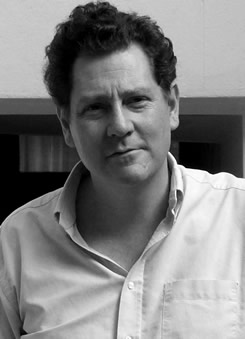
Andrew Lownie was born in 1961 and was educated in Britain and America. He read history at Magdalene College, Cambridge where he was President of the Union. He went on to gain an MSc at Edinburgh University and spend a year at the College of Law in London. After a period as a bookseller and journalist, he began his publishing career as the graduate trainee at Hodder & Stoughton. In 1985 became an agent at John Farquharson, now part of Curtis Brown, and the following year became the then youngest director in British publishing when he was appointed a director. He set up the Andrew Lownie Literary Agency in 1988.

Since 1984 he has written and reviewed for a range of newspapers and magazines, including The Times, Spectator and Guardian, which has given him good journalistic contacts. As an author himself, most notably of a biography of John Buchan, a literary companion to Edinburgh and a prize-winning biography of the spy Guy Burgess, he has an understanding of the issues and problems affecting writers.

He has acted as the literary agent to the international writers’ organisation PEN. In 1998 he founded The Biographers Club, a monthly dining society for biographers and those involved in promoting biography, and The Biographers’ Club Prize which supports first-time biographers. He has had a regular advice column in the writing magazine Words with Jam, written the entries on submitting to agents for The Writers Handbook and The Writers and Artists Yearbook, contributed to The Arvon Book of Life Writing and regularly gives talks on aspects of publishing.

Less A Frog Prince Than a Toad

Normal 0 false false false EN-GB X-NONE X-NONE

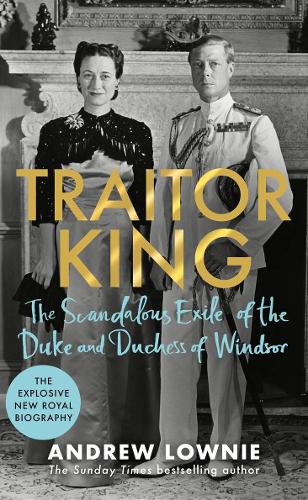
‘The Traitor King’ by Andrew Lownietraitor king

You can find an exclusive Q&A with author Andrew Lownie here

Drawing on extensive research into hitherto unused archives and Freedom of Information requests, it makes the case that the Duke and Duchess of Windsor were not the naïve dupes of the Germans but actively intrigued against Britain in both war and peace.

‘Traitor King’ reveals the true story behind the German attempts to recruit the Duke as a British Pétain; the efforts, by Churchill in particular, to cover this up; the reasons why the Duke, as Governor of the Bahamas, tried to shut down the  investigation into the murder of a close friend, and shines light on the relationship between the Duke and Wallis, revealing it to be far from the love story it is often assumed to be.

Lownie’s previous book with Bonnier Books UK, ‘The Mountbattens’, was a ‘Sunday Times’ bestseller and a Waterstones Book of the Year. (Synopsis courtesy of http://www.bonnierbooks.co.uk)

I’ve danced with a man, who’s danced with a girl, who’s danced with the Prince of Wales” went the lyrics to the popular1927 song by Herbert Farjeon and Harold Scott, performed by Elsa Lanchester.

After reading this incendiary work of revisionist history, perhaps we need to rework the lyrics to read, “I’ve danced with a man, who’s danced with a girl, who’s compromised national security with the Prince of Wales.”

If, like me, most of your knowledge of Edward VIII is derived from fictional portrayals – Edward Fox in ‘Edward and Mrs Simpson’, Guy Pearce in ‘The King’s Speech’ – then I think it’s fair to say that you will almost certainly be horrified by the portrait of Windsor which emerges in Andrew Lownie’s first class biography.

There are a number of reasons for this shock therapy for the reader. Firstly, Lownie –  an accomplished literary agent and power house behind several campaigns related to archives and freedom of information – is a powerhouse researcher. In this work he had gained access to previously unpublished memoirs by key characters in the narrative, as well as scoured the UK and US National Archives for previously unexplored resources.

Secondly, Lownie has an unparalleled knowledge and background with which to unpack his topic. His previous works: on Guy Burgess; on the Mountbattons and – to a lesser but relevant extent – John Buchan allow this Cambridge graduate to peel away the onion layers of how the British establishment really works and how it protects its own, obfuscates and evolves.

Finally, it deals with a clearly under explored aspect of this tale. Book of book, movie and TV show has dealt with the abdication – the run up to it, the emotional aftermath, the toll it took on the unsuspecting successor Bertie and his stoic daughter.

But little to nothing has been written of Edward and Wallis’ post-abdication roles. Along the way, he had uncovered enough salacious details of their sex lives to keep the most prurient reader happy whilst also painting a frankly horrifying portrait of the personalities of the two of the major figures of twentieth century history.

Edward emerges as a tone deaf man/child who literally could not be trusted. Secrets are shared with the Germans and his rampant anti-semitism continues, according to sources quoted here, throughout his entire life.

As Europe is falling and Hitler is sweeping away opposition, the nearly King embarks on his famous 1938 German Tour. “The couple arrived by train in Berlin at a station festooned with alternating Union Jacks and swastikas, to be met by Robert Ley, the head of the National Labour Front, [and] the foreign minister Ribbentrop.”

This is before we are treated the sheer tone deaf imagery of Edward and Simpson leacving for their “honeymoon in a convoy of cars to join the Simplon-Orient Express, which had been kept waiting for them. They were accompanied by Dudley Forwood, an attaché at the British Legation in Vienna… two cairn terriers, a pair of Scotland Yard detectives whose brief was as much to spy on as guard the Windsors, and 186 trunks and 80 additional items of luggage.” Modest, retiring and appropriate, they are not.

This is all rather good clean, if horrifying fun, but Lownie is not an author who allows his reader complacency. Just as one has adapted to a former monarch gnashing his teeth abroad, surrounded by unwise companion, but a sort of exasperatingly neutered Charles II before you are treated to the emotional consequences of this collusion.

Another day was spent in Dusseldorf for an industrial exhibit, where they toured a miners’ hospital and a concentration camp. Forwood later recalled, ‘We saw this enormous concrete building which, of course, I now know contained inmates. The duke asked, “What is that?” Our host replied, “It is where they store the cold meat.”’
Andrew Lownie has produced another first class piece of revisionist history which still contains the power to intrigue, shock and startle. If you read only one excoriating deconstruction of the power dynamics of the British state this year, make it this one.

Author Bio

Lownie study Andrew Lownie was born in 1961 and was educated in Britain and America. He read history at Magdalene College, Cambridge where he was President of the Union. He went on to gain an MSc at Edinburgh University and spend a year at the College of Law in London. After a period as a bookseller and journalist, he began his publishing career as the graduate trainee at Hodder & Stoughton. In 1985 became an agent at John Farquharson, now part of Curtis Brown, and the following year became the then youngest director in British publishing when he was appointed a director. He set up the Andrew Lownie Literary Agency in 1988. Since 1984 he has written and reviewed for a range of newspapers and magazines, including The Times, Spectator and Guardian, which has given him good journalistic contacts. As an author himself, most notably of a biography of John Buchan, a literary companion to Edinburgh and a prize-winning biography of the spy Guy Burgess, he has an understanding of the issues and problems affecting writers. He has acted as the literary agent to the international writers’ organisation PEN. In 1998 he founded The Biographers Club, a monthly dining society for biographers and those involved in promoting biography, and The Biographers’ Club Prize which supports first-time biographers. He has had a regular advice column in the writing magazine Words with Jam, written the entries on submitting to agents for The Writers Handbook and The Writers and Artists Yearbook, contributed to The Arvon Book of Life Writing and regularly gives talks on aspects of publishing. (Biography courtesy of www.andrewlownie.co.uk)

Questions and Answers with Simon Conway

You can read a review of Simon Conway’s new novel, ‘The Saboteur’ here

PAJNewman (PAJN): Jude Lyon is back and, once again, confronted with his nemesis Guy Fowle. I know last time you spoke about these characters representing your principled side and your inner psychopath and, this time out Fowle is even more dastardly than before. Do you see a long-term Bond/Blofeld, Smiley/Karla ying and yang relationship between these two?

Simon Conway (SC): It all depends whether one of them kills the other. I haven’t decided.

PAJN: Guy really is a villain – do you ever find yourself writing a chapter featuring him and think, “what’s wrong with me?!?” He certainly seems to be getting more evil as the books go on. I can’t see an emotional heart opening change in his behaviour any time soon but perhaps I’m being too harsh?

SC: Never. I refer you to the narrator of my second novel Rage who says: “There were so many things wrong with me I’d become frightened of drawing up a list of them, for fear of what I might learn.”

I like to believe in the possibility for redemption but for Guy Fowle it is hard to see what form that might take.

PAJN: The novel obviously has echoes of Covid with the vast majority of London being confined to their homes. Will Covid play a part in your future work do you think? And was it quite nice to play with parts of it, like the lockdown, but not have to deal with the dreary reality so much.

SC: I think that there is a place for COVID drama but I’m not sure that it’s what my readers are looking for. If it plays a part in my writing it will either to be through deliberate echoes – empty streets, deserted airports and overcrowded hospitals – or as a recent historical event.

PAJN: When we spoke last, you had taken about 18 months to write The Stranger. This novel is appearing much sooner and a great chunk of it was (I believe) written in combat zones. Would you mind speaking a little about how that works for you and how you manage to concentrate when doing such a difficult and dangerous day job?

SC: It’s not easy to balance a job that would consume very waking hour if you let it and the dogged business of writing novels. When it works, writing is a good way of switching off and relaxing. When it doesn’t, I can go days or weeks without writing and I feel like I’ve become slack and unmoored. I am fortunate that my job has allowed me to travel to some very interesting locations and meet memorable people. It is clear that has influenced my writing.

I did some of the final edits of The Saboteur in the evenings when I was in Libya last October. It’s not safe to go out at night so perfect for editing.

PAJN: In terms of Jude and Guy, do you think they will be back for a third outing? If so, do you have anything planned yet or are you working on anything different at the moment.

I’m working on a third instalment.

PAJN: The Saboteur is (I think this is correct) your seventh novel. Are you finding it easier to write as you get further in or is each a challenge in a different way?

SC: Yes, I think that it is becoming easier to write. I’m more confident of my skill. I spend less time agonising over the edit and as a consequence I’m more assured with the knife.

PAJN: The Stranger garnered some outstanding reviews and this must have been really pleasing. Has that changed how you approached the sequel and are you now under greater pressure for this instalment?

SC: I suppose I feel some pressure to keep up the pace.

Simon Conway has worked for The Halo Trust since 1998 clearing landmines all over the world.

PAJN: Does seeing landmines which have been placed indiscriminately by both governments and non-state actors, sometimes just to terrorise a populace, colour your view of human nature? Can you maintain a positive view of the world with the things you see in this role?

SC: It’s not an easy question to answer. By nature, I’m an optimist. I believe that it is possible to make the world better with sustained effort. I’ve seen evidence of that but my writing seems to tap into a more cynical and world-wearier vein. I worry that most people would burn their neighbour’s house down if goaded into it. That’s why those in power carry such a huge responsibility not to feed peoples’ worst prejudices.

PAJN: June this year saw an appalling loss of life in your team in Afghanistan. I was obviously so sorry to read about it and can only imagine how difficult it must have been. Is there anything practical that readers of yours can do to help and how are things out there now?

SC: In June this year eleven of my colleagues died in an attack on a remote demining camp in Baghlan Province. Later Islamic State claimed responsibility for the attack although it was more likely an armed robbery that went wrong.

We are all very concerned about the situation in Afghanistan and the safety of the two and half thousand HALO staff there, however we have been clearing mines and saving lives in Afghanistan for thirty years, including under Taliban rule, and we have weathered tough times before. Just because we don’t have troops there anymore doesn’t mean that the west can just give up on Afghanistan. No good will come of that. It is important that our government recognises that. Tell your MP!

Slightly less serious questions:

PAJN: What colour is Monday?

SC: Monday is blue, obvs

Who had the idea of coming up with a whisky to go with the advanced reader copies? Because it’s a superb idea!

SC: My editor at Hodder, Nick Sayers, is responsible for the whisky. He is being mysterious about how he acquired them.

PAJN: Last time I asked you what was the question you wished interviewers and readers would ask but never do and your answer was “is it possible to entertain and inform”. Has lockdown and the success of The Stranger altered the questions you get asked and how readers treat you?

SC: I have no idea why I thought that was a good question. I certainly don’t know the answer.

Author Bio

Simon Conway is a former British Army officer and international aid worker. He has cleared landmines and the other debris of war across the world.


As Co-Chair of the Cluster Munition Coalition he successfully campaigned to achieve an international ban on cluster bombs.


He is currently working as Director of Capability for The HALO Trust.


He lives in Edinburgh with his wife the journalist and broadcaster Sarah Smith. He has two daughters. (Biography courtesy of http://www.simonconwaybooks.com)

Death, Destruction and the Best Spy Novel of the Year


You can read an exclusive Q&A session with Simon Conway here

The terrorist Guy Fowle has escaped from prison.

Jude Lyon of MI-6 has been saved from a Syrian ambush by his lover – and enemy? – Julia Ermolaeva.

A mysterious Russian has been murdered in London and his thumb cut off.

The Chancellor of the Exchequer has made an unfortunate social connection at a party, which he hopes he can keep secret.

And suddenly, the world is literally going up in flames.

Jude needs to start putting together the pieces of this jigsaw and quickly, because someone is putting into play a terrifying Russian plan to disable and destroy the UK. Once it has begun, it is designed to be impossible to stop.

Bad enough if that someone is the Russian government. Worse if it is the psychopathic genius Fowle, otherwise known as The Stranger. (Synopsis courtesy of www.hachette.co.uk)

When I reviewed Conway’s initial instalment in this series, ‘The Stranger’ in August 2020, I wrote that it “should propel Conway into the very first rank of thriller writer’s working today.”

I went on to include Conway amongst the top triumvirate of thriller writer’s working today alongside Charles Cummings and Jeremy Duns. Unarguably, ‘The Saboteur’ both confirms this position and propels him further to the very pinnacle of espionage writer’s working today.

Conway’s plot begins in the aftermath of the destruction wrought by psychotic sociopath Guy Fowle on an unprepared London at the end of ‘The Stranger’.

After a daring escape, Fowle manages to get hold of a Russian Doomsday teeing up the most deadly of foes to continue wreaking havoc and also setting up a confrontation with the ying to his yang, our own damaged hero, Jude Lyon.

The main characters of ‘The Saboteur’ are drawn into an exciting death waltz, like John Le Carre’s Smiley and Karla filtered through a big budget Hollywood action thriller from the good old days when Tony Scott was tilting cameras and spraying bullets around.

There is also more crash, bang, wallop than in the first novel too, for those who enjoy that sort of thing. The original outing was a slow burn with a horrifying twist of explosive violence spattered throughout it: this adventure sees reams of blood flowing from day one with Lyon struggling against a ruthless enemy and almost all the decks stacked against him.

Conway’s background allows him to write about the violence with predictably bone-jarring verisimilitude but – and perhaps more importantly from a character development and depth of reading enjoyment point of view – is equally strong on the aftermath of terrible acts on people forced to endure unimaginable suffering.

This is quite simply the spy thriller release of the year so far and I strongly urge you to get hold of a copy as soon as you can.

If you are interested in learning more about Simon Conway, you can read an exclusive Q&A with the author here.

Purchase Links

Amazon

Apple

Google Books

Kobo

Simon Conway is a former British Army officer and international aid worker. He has cleared landmines and the other debris of war across the world.


As Co-Chair of the Cluster Munition Coalition he successfully campaigned to achieve an international ban on cluster bombs.


He is currently working as Director of Capability for The HALO Trust.


He lives in Edinburgh with his wife the journalist and broadcaster Sarah Smith. He has two daughters. (Biography courtesy of www.simonconwaybooks.com)

Putting a Finger on the Issue

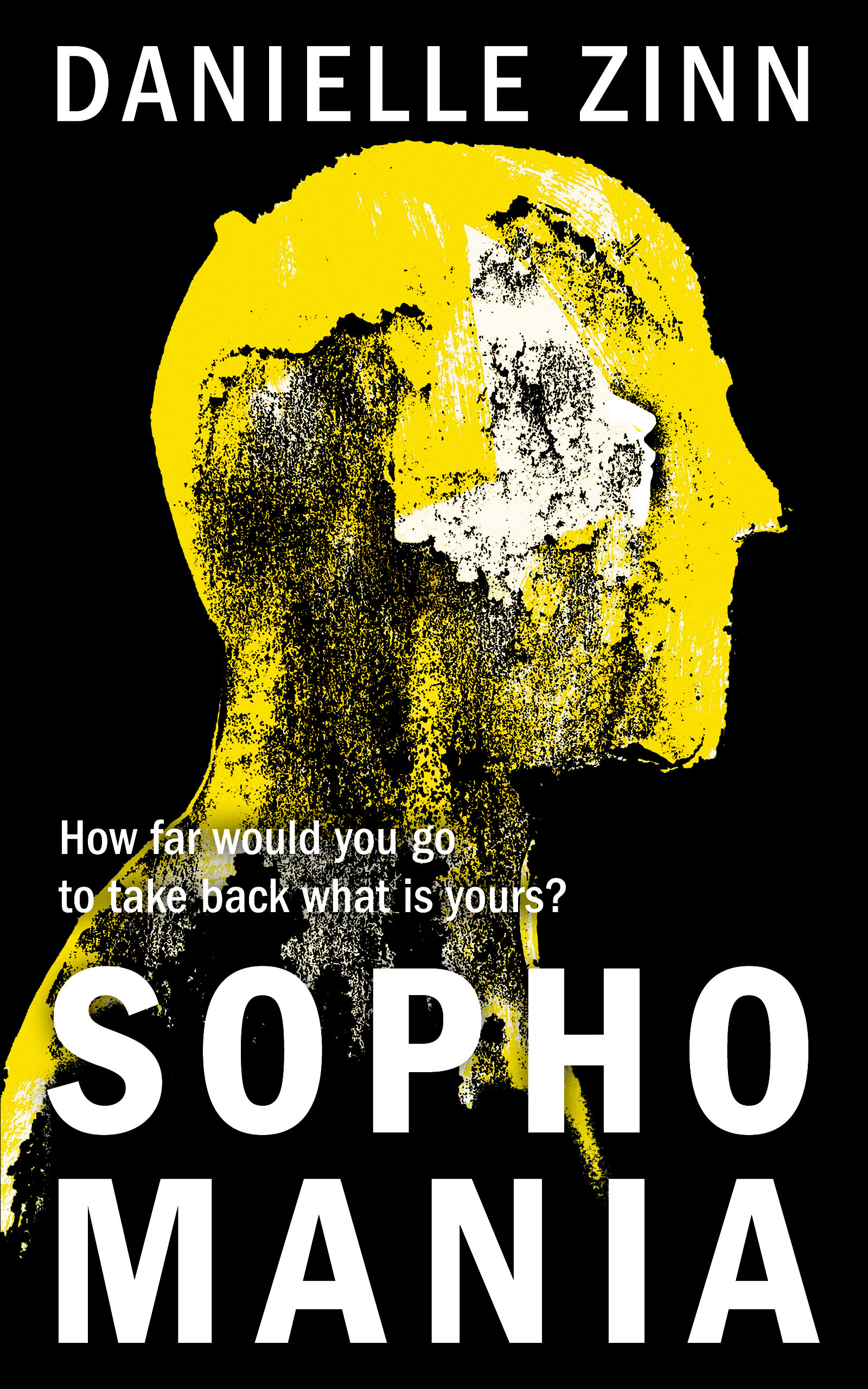
Sophomania’ by Danielle Zinn

When Detective Inspector Nathaniel Thomas is presented with an anonymous letter and three unexplained deaths in less than twenty-four hours, he realizes that his idyllic home village Crottendorf masks a turbulent reality. Summoning his trusted colleague, DS Ann Collins, Thomas begins to unravel what quickly becomes an overwhelming mountain of conflicting evidence.

So many secrets. So many lies. So many attempts to cover things up.

All is not as it first appears and it proves a lot harder to pin down the killer who prides himself on being more than one step ahead of the DI.

A deeply rooted family tragedy, greed and vengeance are at the core of this crime novel. The twists and turns of Sophomania leave you wondering to the very end who the real murderer is—or if there may actually be more than one killer on the loose in the anything-but-sleepy village of Crottendorf.

I love crime fiction set outside the UK – and, after the last two years – the escapism of which my mother would have referred to as, “a nice murder” is of benefit to us all.

I’ve written in these pages of some of my favourites Martin Walker, Donna Leon and a pairing I’ve not written about as yet, the parents of Scandinoir, Maj Sjowall and Per Wahloo (who I will get to at some stage, honest)

But my knowledge of German literature – crime and otherwise to be honest – is scant. So, Danielle Zinn’s second novel Sophomania immediately appealed.

This synopsis driven attraction was soon rewarded by the arrival of a mummified thumb which sets our hero, Detective Inspector Nathaniel Thomas, off on the track of the rapidly expanding body count in rural German village, Crottendorf.

Zinn spins a pleasingly pacy yarn with a likeable, hulking 6ft 7 tall, detective just trying to get by in the world of murder and lingering trauma from past experience.

Oh, and a tip from a novice gardener to another, just be patient Nathaniel. The plum tree will be fine with patience.

Purchase Link – https://amzn.to/3vCT7IF

Author Bio –

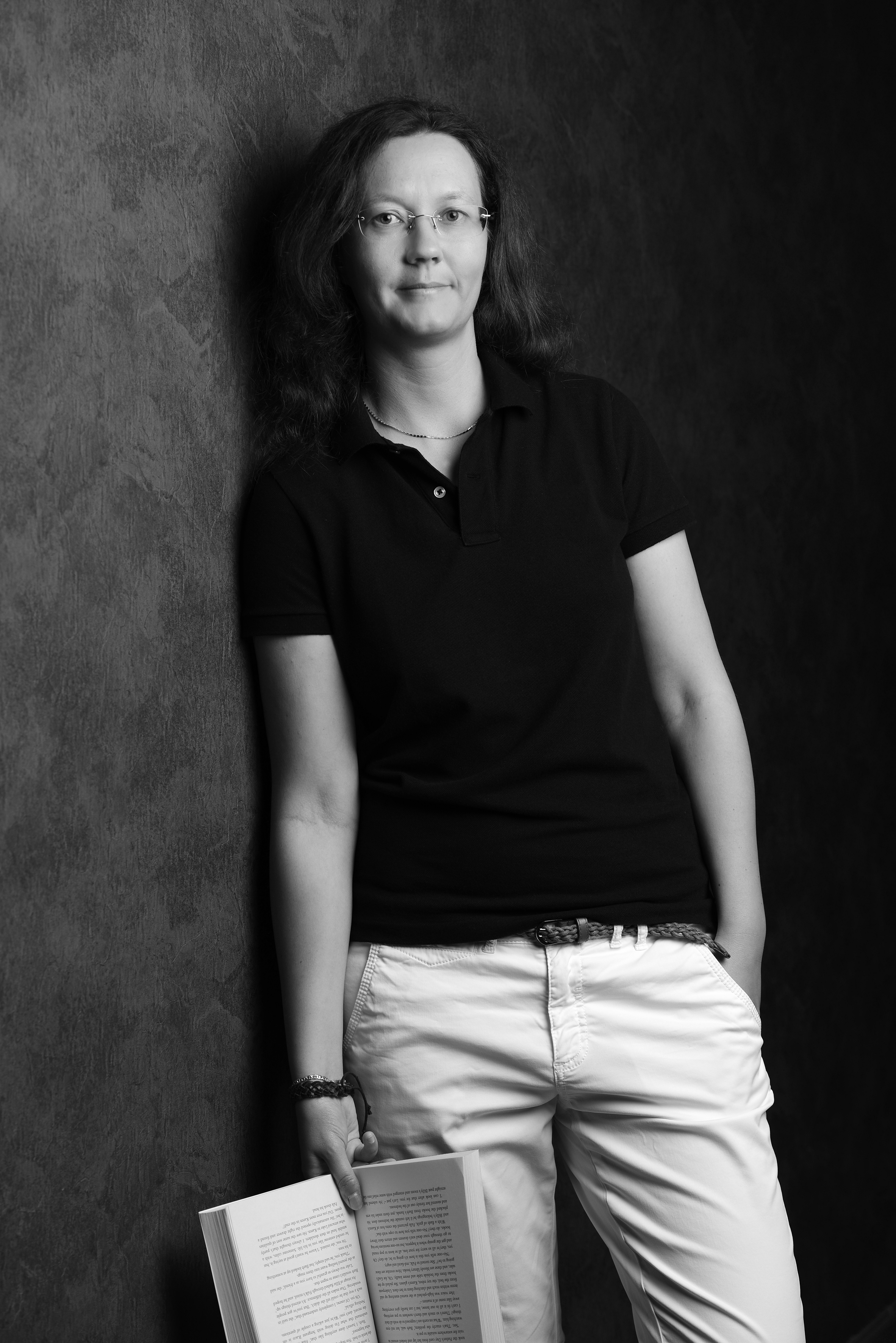
Danielle Zinn is a German author, born and raised in a small village in the Ore Mountains, Germany where not only her debut crime novel Snow Light is set but also her second book, Sophomania.

She holds a BA (Hons) degree in Business and Management from New College Durham/UK and has settled down in Leipzig where she works as a Financial Controller at an IT Consultancy.

She was introduced to the world of English literature and writing from an early age through her mother – an English teacher. Over the last years, she circumnavigated the globe and loves visiting her friends scattered all over the world.

Social Media Links –

Twitter: @DanielleZinn4             https://twitter.com/daniellezinn4

Facebook: Danielle.zinn.7           https://www.facebook.com/danielle.zinn.7

Fruits of the Forest

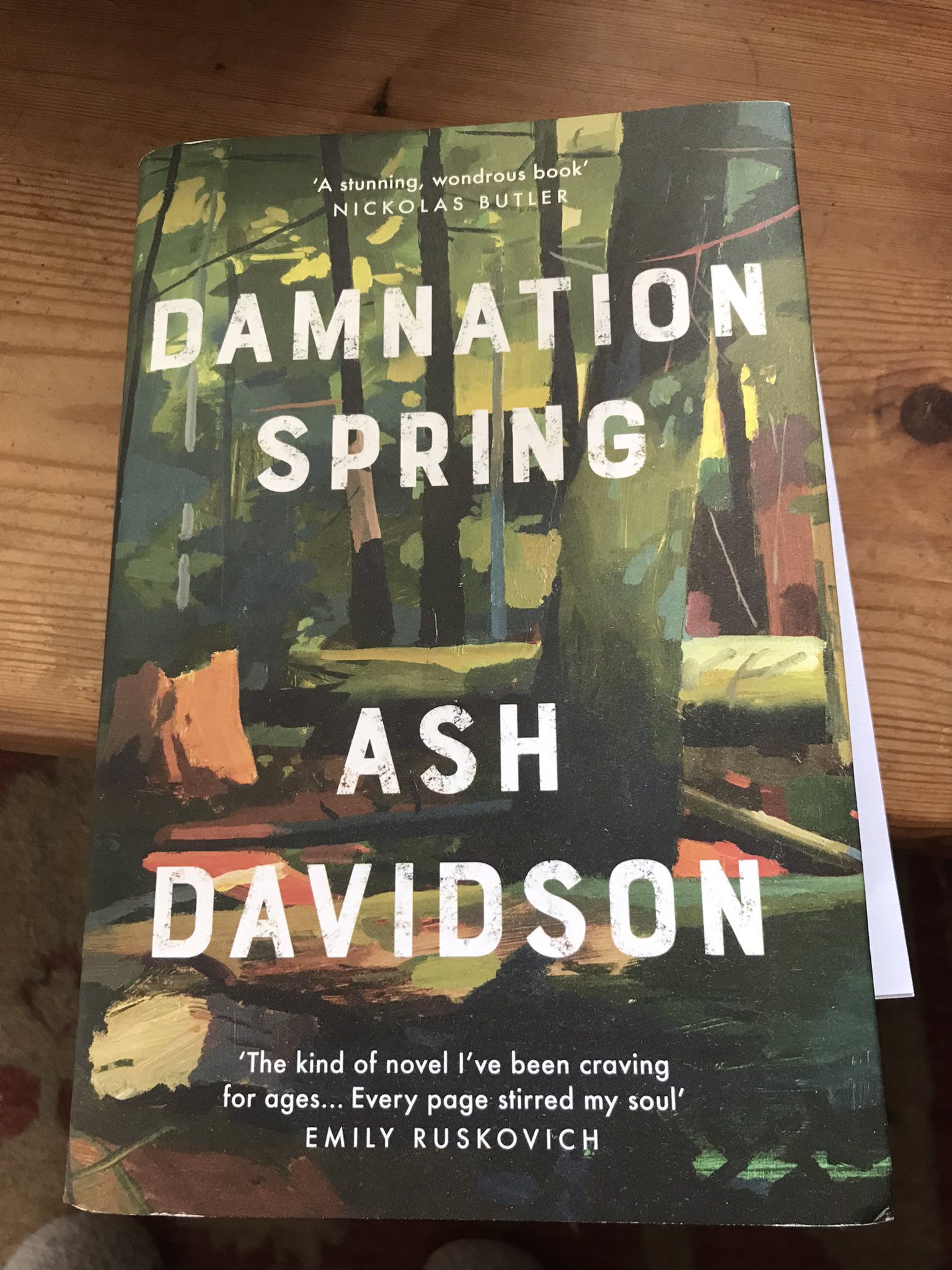
Damnation Spring by Ash Davidson

Not a lot of guys are born to do something.

For generations, Rich Gundersen’s family has chopped a livelihood out of the redwood forest along California’s rugged coast near Damnation Grove, a swath of ancient redwoods on which Rich’s employer, Sanderson Timber Co., plans to make a killing. In 1977, with most of the forest cleared or protected, a grove like Damnation – and beyond it 24-7 Ridge, named for the diameter of its largest redwood, a tree Rich was born to harvest – is a logger’s dream.

It’s dangerous work. Rich has already lived decades longer than his father, killed on the job. Rich wants better for his son, so when the opportunity arises to buy 24-7 Ridge – costing all the savings they’ve squirreled away for their growing family – he grabs it, unbeknownst to his wife, Colleen. Because the reality is their family isn’t growing; Colleen has lost several pregnancies. And she isn’t alone. As a midwife, Colleen has seen it with her own eyes.

For decades, the herbicides the logging company uses were considered harmless. But Colleen is no longer so sure. What if these miscarriages aren’t isolated strokes of bad luck? As mudslides take out clear-cut hillsides and salmon vanish from creeks, her search for answers threatens to unravel not just Rich’s plans for the 24-7, but their marriage too, dividing a town that lives and dies on timber. (Synopsis courtesy of www.ashdavidson.net)

I’m still learning about gardening. It is creeping up on me; to be honest somewhat like the weeds which would be allowed to run rampant over the garden if I was left to my own devices.

Last night I was reading Damnation Spring in the garden. In an adjacent field there is a Scot’s Pine. These trees, endangered, indigenous, slow growing has stood for at least 400 years. It predates the forest of larch which overlooks us and was used for logging, it predates our little house – by about three centuries – and it predates the rowan trees and cherries we have planted and nurtured in our own garden by about 390 years.

And none of those Scot’s would come within logging distance of the 24:7 redwood described in Ash Davidson’s beautiful novel, Damnation Spring.

Selected by Vogue as one of their ‘Best Books to Read this Summer’, Davidson’s debut arrives in the UK with some serious traction behind it.

It does not disappoint. American novels do not lack for characters chasing their destiny through hard to pin down goals. The story of Rich Gundersen’s history with the mightiest redwood in the forest; the dawning realisation that, perhaps, all is not right with the land that is all his family has ever known is startling. Moving, concerning, relevant to an age beset by climate concerns and told through the simple elegiac prose of a writer who has crafted her work to best effect.

These are simple people but not in a patronising way. They have the same multi-layered concerns of us all and, in Colleen there is a good hearted and brave woman determined to save her family, preserve her marriage and solve the issue of her multiple miscarriages. Indeed, at some stages, Damnation Spring reads like Erin Brockovich meets Deliverance via Moby Dick and Bill Bryson’s A Walk in the Woods.

Purchase Links:

Bookshop.org: https://uk.bookshop.org/books?keywords=9781472286628

Amazon: https://www.amazon.co.uk/gp/search/ref=sr_adv_b/?field-isbn=9781472286628&tag=hachetteuk-21

Blackwell’s: https://blackwells.co.uk/bookshop/product/9781472286628

Foyle’s: http://www.foyles.co.uk/all?advsearch=1&isbn=9781472286628&aCode=AFW&awc=1414_1627989402_857675b3d0ab047546247e9452021edd

Author Ash Davidson, photo by Carol B. Hagen, courtesy of http://www.ashdavidson.net)

Ash Davidson was born in Arcata, California. She attended the Iowa Writers’ Workshop. Her work has been supported by the Arizona Commission on the Arts and MacDowell. She lives in Flagstaff, Arizona.

Davidson’s debut novel, Damnation Spring, is published by Scribner in the U.S. and Tinder Press in the U.K., Australia, and New Zealand, and is forthcoming from Actes Sud in France. (Biography adapted from www.ashdavidson.net)

Facebook: https://www.facebook.com/ash.davidson.writer

Twitter: https://twitter.com/_AshleyDavidson

Goodreads: https://www.goodreads.com/book/show/55711638-damnation-spring

Instagram: https://www.instagram.com/ashdavidsonwriter/

@Bookywookydooda

A Quick Chat with ‘Dead Man’s Grave’ Author Neil Lancaster

Former policeman turned crime writer, Neil Lancaster

You can also read a review of Dead Man’s Grave from me, here:

This novel began with a chap called John Fisher telling you a story. What was it about that story, do you think, which struck you so strongly?

It just grabbed hold of me almost instinctively. The wild and remote tumbledown graveyard, literally miles from anywhere in Caithness and then a grave that simply says, “This Grave Never To Be Opened.” What a way to grab a readers’ attention. I write contemporary thrillers, but the place just reeked of history, so I wanted to find a way of writing my kind of book, but with it’s feet in the 1830s. It was fun.

I love how the novel begins in one way and then shifts on its axis very quickly to be something a reader might not expect. How important is that for you as a writer to not allow your readers to be ahead of the plot?

I’m never quite sure how these things work. I just set out to write a book that I’d like to read. I hadn’t really considered how the book morphs from a procedural into a full on thriller. I let the characters decide how the story goes, and I just like to see how the narrative progresses. Maybe I should plan a little more, but I’m not sure my books would be any better if I did.

You are based on the Black Isle now. Did setting great chunks of the novel in and around areas familiar to those of us who live and work here – Rosemarkie, Berriedale Braes, Latheron – add an extra frisson for you?

Very much so. Scotland is home now, and I love it deeply. I want to tell stories set in areas I know well. I think readers get a kick of a story being told in their back yards.

The novel obviously exists pre-Covid. I know a lot of writers are grappling with this dilemma but will Covid play a part in your future work, do you think?

I’ve taken a decision to ignore COVID. I just don’t want to talk about distancing, masks and tests, I want to give readers escapism. Once we are well past it, maybe I’ll give it a mention, but for now, the novels are set in what ever time people think they are, whether it’s before or after. My books are a COVID free zone.

Max Craigie has a similar(ish) background to both you and Tom Novak in terms of a military beginning before service with the Met, as well as Scotland being in the mix. Are those autobiographical echoes touchstones you begin with in the writing or is a way of ensuring that you make the novels appear as true to life as possible?

Well, the link is really vague. We are all ex-servicemen turned cops, but that’s kind of it. Much of it is because I don’t have to research backstory too much. There is such a vibrant crime writing scene in Scotland that I really wanted to be part of, so I chose to write about the country I live in. Plus, the scenery is so staggering that it can be deployed almost as an extra character when giving the book a sense of place. I think it allows me to add a real sense of atmosphere that is pretty unique to Scotland.

The cover of Neil Lancaster’s latest novel, Dead Man’s Grave

A further echo I notice from your previous work is the role of police corruption. Obviously, the success of Line of Duty has raised the profile of this issue again in the recent past but you’ve been there for a long time. How important an issue is it in terms of Police Scotland and what can be done to improve the situation?

Serious, organised crime needs corruption to function. Not just in terms of law-enforcement, but with the legal profession, banking, solicitors, money laundering. They operate hand-in-hand. It is thankfully very rare, but a tiny proportion of corrupt officials can cause disproportionate damage to policing and the legal system. I don’t actually watch LOD, not really my cup-of-tea, but the theme of corruption is fascinating. I’m interested in the route to corruption. What makes previously good people become corrupt? What is the backstory? Taking a single tenner from a criminal at the start of your career can define the rest of it.

Dead Man’s Grave is your fourth novel. Are you finding it easier to write as you get further in or is each a challenge in a different way?

Well, I’ve written two others in this series already, so it seems not. The follow up to Dead Man’s Grave is undergoing edits right now, and the third is with my agent. I love writing both series, but you do need a little time to let the creativity come back and leave you fresh to write some more. I’ve written essentially 3 books in 12 months, so a little break before I start again to let the ideas breathe will be a good thing.

I’m making the assumption that this is going to be a series of books as it has all the hallmarks of being set up that way. How far ahead have you planned if this is the case and how long would you like the series to run for?

As long as people want to read them, I’ll keep writing them, always assuming that I keep getting the ideas. I’ve assembled a little cast of characters, you’ll meet them when Craigie 2 comes out next year, so I can see me writing more.

What is a typical writing day for you?

It varies enormously. I write for probably 4 hours a day if I’m in the groove, but it can be more or less. I’m lucky that I don’t have a day job, so I can devote my time to writing. There’s always other stuff to do, particularly on the run up to publication regarding publicity etc.

What are your long term goals with the writing?

Just to keep writing, as long as folk want to read what I produce, I’ll keep doing it.

Was Dead Man’s Grave’s long listing for the William McIvanney Prize a complete surprise or had you had an inkling beforehand? How has the nomination affected you and what will you do to celebrate if you win?

I had no idea whatsoever. I knew that I’d been entered for it, but didn’t expect to get longlisted. It’s been really flattering and to be mentioned in the same breath as Val McDermid, Chris Brookmyre, Stuart MacBride and Denise Mina is just so cool.

What colour is Monday?

When I was commuting 3 hours a day, 6 years ago it was blue. Now it’s all multi coloured, same as every other day.

Having followed you on social media, I love the videos of Peggy dancing for the bin men. Was she pleased to be featured as Nutmeg in this novel or has the attention gone to her head?

Peggy was actually in 2 of the Novak books. Nutmeg is a real dog, that belongs to my great friends. I’ll probably take her along to book signings. She’s a really sweetie.

What is the question you wished interviewers and readers would ask but never do?

Do you fancy a pint?’

Many thanks to Neil for taking the time to answer some questions about his latest novel. You can find more about Neil and his work at https://neillancastercrime.co.uk/

A Dead Man’s Grave But a Very Much Alive Talent

‘Dead Man’s Grave’ by Neil Lancaster

For those keen to know more about Neil Lancaster and Dead Man’s Grave, Neil kindly agreed to speak to me about his writing routine and this latest book. You can find the interview here:

This grave can never be opened.
The head of Scotland’s most powerful crime family is brutally murdered, his body dumped inside an ancient grave in a remote cemetery.
 
This murder can never be forgotten.
Detectives Max Craigie and Janie Calder arrive at the scene, a small town where everyone has secrets to hide. They soon realise this murder is part of a blood feud between two Scottish families that stretches back to the 1800s. One thing’s for certain: it might be the latest killing, but it won’t be the last…
 
This killer can never be caught.
As the body count rises, the investigation uncovers large-scale corruption at the heart of the Scottish Police Service. Now Max and Janie must turn against their closest colleagues – to solve a case that could cost them far more than just their lives… (Synopsis courtesy of
https://harpercollins.co.uk/products/dead-mans-grave-ds-max-craigie-scottish-crime-thrillers-book-1-neil-lancaster?variant=39314373050446)

The cover of Neil Lancaster’s latest novel, Dead Man’s Grave

‘“Crime is common. Logic is rare. Therefore, it is upon the logic rather than upon the crime that you should dwell,”’ she said, dryly, as she got out of the car.

‘Sorry?’ said Max.

‘Doyle?’

‘Eh?’

‘Sir Arthur Conan Doyle, you know, Sherlock Holmes. That’s from The Adventure of the Copper Beeches. Have you read it?’

‘I only read books with exploding helicopters on the front cover,’ said Max, shaking his head.”

One of the best compliments I can pay Dead Man’s Grave by Neil Lancaster is that I’m fairly certain that lead detective Max Craigie would not enjoy it. No exploding helicopters, far too little of the Rambo on the run which people might expect from this genre.

Lancaster has made a name for himself as a writer of kick ass thrillers with fast paced plotting and bone crunching action. And his biography does suggest that, more than most writers, he has the experience to back this up.

Armed Forces background, surveillance and undercover work for the Met and now successful thriller writer based in the Highlands. His debut novel featuring, ‘Going Dark’ was part of a trilogy featuring Tom Novak, a man who seemed in capable of not being chased by various Eastern European mafia hoods and corrupt law enforcement officers.

This time out we have Max Craigie, a former soldier struggling with PTSD and recently moved from London to Scotland under a cloud with a fatal shooting on his record.

When a prominent gangster disappears near a creepily titled grave in the Badlands of Caithness, it isn’t long before Craigie and other outsider from the squad, Janie, is sent to get involved.

Lancaster manages to twirl this plot on a sixpence with no warning for the reader and this is a really attractive trait for the reader. Expectations are dashed at every turn and, for readers who have enjoyed the Tom Novak series, whilst there are similarities between Craigie and Novak – both military men, both are or have worked in the Met, both have ties to Scotland – here the character of Craigie is more cerebral, more open to human relationships and more easily likeable than the sociopathic here of the ‘Going…’ series.

The other aspect of this new series of novels which demonstrate the evolution of Lancaster as a master craftsman is the humour. Whilst plot is clearly where this author lives, funny interchanges between Craigie, Janie and their foul mouthed but essentially cheery boss, Ross, are handled with aplomb.

“‘What’s your instinct on this one?’ Ross asked.

‘Honest answer?’

‘No, I want you to bloody lie to me, you daft twat. Stop pissing about.’”

For my money, this is the funniest novel in terms of character relationships outside another crime writer with a Black Isle connection, Ian Rankin.

And, it would appear that I am not alone in my appreciation of the novel. While I was halfway through my advanced copy, it was announced that Dead Man’s Grave had been long listed for the coveted McIlvanney Prize from Bloody Scotland. This puts Lancaster alongside luminaries such as Val McDermid, Chris Brookmyre, Stuart MacBride and Denise Mina which is the right company for any crime writer, I’d have thought!

My only complaint on that score is that I’ve been a reader for that award since the inaugural year and I rarely get a novel as good as this.

In conclusion, Dead Man’s Grave is a fine introduction to a series and packed with plot twists, enjoyable characters and the verisimilitude of the author’s experience make this a fine addition to the Tartan Noir canon.

Neil Lancaster joined the RAF in 1983 and served as a Military Policeman for six years, in the UK, Germany, Cyprus and the Falkland Islands, mostly as a patrol dog handler.

In 1990 he joined the Metropolitan Police where he worked in a number of roles as a Detective investigating the most serious of crimes in the capital and beyond.  He was a covert policing specialist using all sorts of tactics to obtain evidence against murderers, human traffickers, drug dealers and fraudsters.

Since leaving the Met in 2015 he has lived in the Scottish Highlands where he now writes crime and thriller novels alongside work as a broadcaster and commentator on true crime documentaries.    (Biography courtesy of www.neillancastercrime.co.uk)

Joy by Name, Skye’s the Limit for the Series

Other people writing about Clueless in Crotia today include www.quirkybookreads.wordpress.com and www.eatwell2015.wordpress.com

‘Clueless in Croatia’ by Joy Skye

D.I. Fierce always gets his man, but can he get his woman?

Actor Leonard Lupine is sick of his life, both on and off-screen, so when his agent suggests a luxury villa holiday in Croatia he leaps at the opportunity to escape. What he doesn’t realise is that his greatest mystery of all is waiting to be solved on the tiny island of Brač.

Does he have what it takes to follow the clues to love? 

You know how it is: sometimes you pick up a novel because you think, “well, I need to read something and this will fill a space,” and your expectations aren’t high but it’s the holidays and what else you going to do?

So, full disclosure – this was the attitude with which I approached ‘Clueless in Croatia.’ Not dismissive or grumpy about needing to read it, but with a half-hearted distraction.

Well. Boy, do I love being surprised and delighted? Joy Skye has crafted a charming world, vividly conjured and one in which the prose is as enticing as the seas off Croatia which I now long to dive into.

Leonard Lupine is the sort of conflicted arse one might expect to find in a romantic comedy and Skye does a lovely job of lampooning and satirising the personas and absurdities of influencer culture.

Likewise, down to earth young widow Isabella is lovely counterpoint to Lupine. Her genuinely tragic backstory contrasting with his poor-little-rich-boy, but-Mummy-I-don’t-want-to-be-typecast-as-a-tv detective-with-only-all-my-money-to-count first world problems schtick.

So, we have an exotic location, a contrasting pair of confused but essentially loveable central characters and a smattering of supporting characters – the children primarily – who speak more sense than most of the adults put together. Which also adds a nice verisimilitude to the proceedings.

In short, ‘Clueless in Croatia’ was just what the post-lockdown Summer ordered – I’m off to dream of swimming in lagoons, eating an entirely cuisine from a country I’m yet to discover and also to research Joy Skye’s other novels.

I now feel less clueless about Croatia – and far more excited to visit. Joy is certainly an aptly named author. Bravo!

Purchase Links

Amazon.com – https://www.amazon.com/Clueless-Croatia-feel-good-romantic-Retreats-ebook/dp/B08X1QC7B7

Amazon.co.uk – https://www.amazon.co.uk/Clueless-Croatia-Joy-Skye/dp/B08X6DRPLC

Apple – https://books.apple.com/us/book/clueless-in-croatia/id1554657700

Nook – https://www.barnesandnoble.com/w/clueless-in-croatia-joy-skye/1138863706

Kobo – https://www.kobo.com/gr/en/ebook/clueless-in-croatia

Universal Link – https://books2read.com/Clueless-in-Croatia

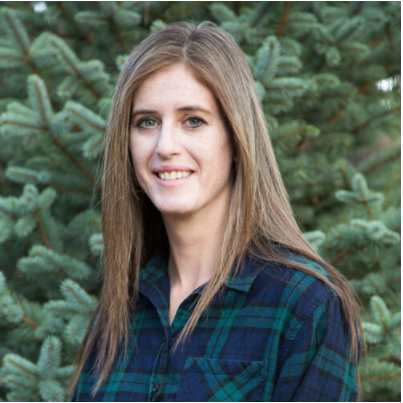
Author Joy Skye

Author Bio –

Joy lives on the seductive island of Corfu with her four dogs and an embarrassing number of cats.

Her many years working in the tourist industry on this sunny isle and her love of all things literary inspired her first novel Corfu Capers which recently hit the #1 spot in Parenting and Family humour much to her delight.

She loves to cook, dance and drink wine, usually at the same time, and is currently working on book number three, due to be released later this year.

She also loves to travel, absolutely anywhere, and is looking forward to jumping on a plane!

Social Media Links –

Website – https://joyskye.com/

Twitter – https://twitter.com/JoySkye4

FB – https://www.facebook.com/JoySkyeAuthor

Instagram – https://www.instagram.com/joys.kye/

Ever Wondered if a Caged Bird Can Sing?

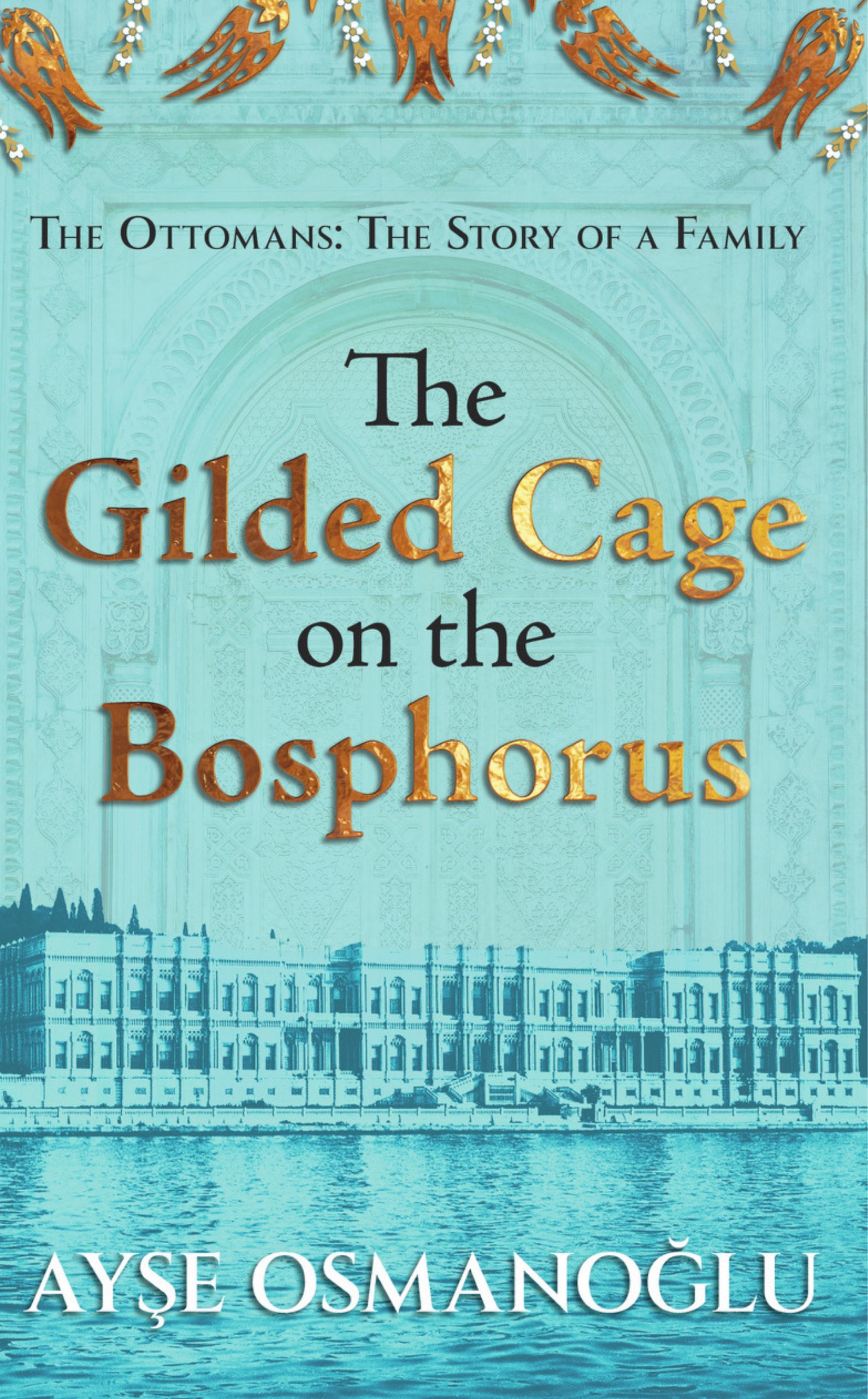
‘The Gilded Cage on the Bosphorus’ by Ayşe Osmanoğlu

Brothers bound by blood but fated to be enemies. Can their Empire survive or will it crumble into myth?

Istanbul, 1903.


Since his younger brother usurped the Imperial throne, Sultan Murad V has been imprisoned with his family for nearly thirty years.

The new century heralds immense change. Anarchy and revolution threaten the established order. Powerful enemies plot the fall of the once mighty Ottoman Empire. Only death will bring freedom to the enlightened former sultan. But the waters of the Bosphorus run deep: assassins lurk in shadows, intrigue abounds, and scandal in the family threatens to bring destruction of all that he holds dear…

For over six hundred years the history of the Turks and their vast and powerful Empire has been inextricably linked to the Ottoman dynasty. Can this extraordinary family, and the Empire they built, survive into the new century?

Set against the magnificent backdrop of Imperial Istanbul, ‘The Gilded Cage on the Bosphorus’ is a spellbinding tale of love, duty and sacrifice.

Evocative and utterly beguiling, ‘The Gilded Cage on the Bosphorus’ is perfect for fans of Colin Falconer, Kate Morton and Philippa Gregory.

I’ve never been to Turkey properly. I once went via Istanbul’s airport to transfer flights – it was the middle of the night and my main memory is of neon lights, 24-hour shopping and some beautiful marble floors.

But I have spent some time in the Islamic world and can tell you this: the history and culture of that religion, the misunderstandings of majority of the West and the complexity, beauty and the history which flows from the Ottoman Empire is well worthy of anyone’s time.

Ayşe Osmanoğlu has produced an absolutely fascinating account of a period which I didn’t know anything about. I love reading and learning and I particularly love it when it builds upon some scant knowledge I have of a complicated subject.

Osmanoğlu has picked a period just as the world pivots on its axis. Sultan Murad V is imprisoned by his brother in the eponymous gilded cage on the Bosphorus but what adds spice to this version of the true life event is that Osmanoğlu is writing about her own family.

This makes ‘The Gild Cage on the Bosporus’ unique, to the best of my knowledge. There are many historical novels, obviously, but there are few which blend fact with fiction and with emotive family issues woven through the narrative.

Osmanoğlu writes as though she is projecting herself back the 120 or so years to the crucible of a moment which will have profound effects on the geo-political map and her own familial destiny.

It is a journey I am grateful to have joined her on.

Purchase Links

getbook.at/gildedcagebosphorus

https://payhip.com/b/56IX

https://www.kobo.com/ebook/the-gilded-cage-on-the-bosphorus

https://www.barnesandnoble.com/w/the-gilded-cage-on-the-bosphorus-ayse-osmanoglu/1137405897?ean=2940163045105

https://play.google.com/store/books/details/Ayşe_Osmanoğlu_The_Gilded_Cage_on_the_Bosphorus?id=EeMsEAAAQBAJ

Author Bio –  Ayşe Osmanoğlu is a member of the Imperial Ottoman family, being descended from Sultan Murad V through her grandfather and from Sultan Mehmed V (Mehmed Reşad) through her grandmother. After reading History and Politics at the University of Exeter, she then obtained an M.A. in Turkish Studies at SOAS, University of London, specialising in Ottoman History. She lives in the UK with her husband and five children.

Social Media Links –

https://www.facebook.com/ayseosmanogluauthor

https://www.instagram.com/aysegulnevsultan/