The Mild Bunch

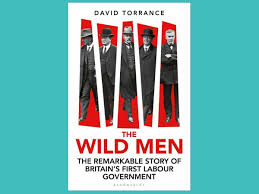
‘The Wild Men’ David Torrance

A Labour government elected on a promise of change – but without any closely thought out plans other than saying change – a Prime Minister seen as too focused on freebies and foreign affairs at the expense of domestic duties, an agenda beset by scandals pulling focus from essential matters, separatist movements in Ireland and Scotland being marginalised and potentially disastrous, an insurgent party destabilising the political status quo and a seemingly radical set of politicians proving to be tiresomely business as usual much to the frustration of their supporters.

It is not exactly difficult to see why David Torrance was struck by the historical parallels when he published his book, ‘The Wild Men: The Remarkable Story of Britain’s Labour Government’ in 2024.

And those parallels – less ringing a bell than clattering cymbals in their resonances I would suggest – certainly add a timely atmosphere to an historical exploration which rattles along and is never a chore to read.

Torrance takes the sensible approach of tackling the period of eleven months of the first Labour government which ran from January to November 1924, essentially department by department, using the minister as the route into both the achievements and the failings of the administration.

What this approach brings – detail, an appreciation of the diverse personalities and perspectives these (mostly) men brought to their roles – does, perhaps, come at the expense of a grand over-arching narrative.

In fairness, it is entirely possible that this is deliberate because one of the things which most clearly emerges is the total lack of a coherent narrative put forward by the government, plus ca change. Just to take office was the achievement and, to the disillusionment of their voters, much more seemed to be beyond these “wild” men.

Ironically, the aspect which seems least convincing is the “wildness” of these men. Compared to the derangement of Liz Truss, the debauched merry monarch-ing of Boris Johnson, the debacle of the Covid PPE procurement systems or even Keir Starmer and the world’s most expensive pair of spectacles, Ramsey MacDonald’s charmingly monikered “McVitie’s Share Affair” would even qualify for a -gate suffix these days. Although, surely, the best named scandal title still remains the Teapot Dome Scandal.

These “wild” men are certainly “mild” by modern manners.

I believe it was Karl Marx who said, “history repeats itself, first as tragedy, second as farce,” and it is difficult to conclude much else than that the current Westminster administration has achieved nothing except for stripping the humour away from a program of leadership which is to farce what Mr Bean is to word play.

None of that, however, is the fault of Mr Torrance who has written a timely, engaging and entertaining book of interest to anyone keen to learn more about how we got where we are – and quite possibly where we’re going.

Author

Author David Torrance

David Torrance is a constitutional specialist at the House of Commons Library. Prior to that, he was a freelance journalist, broadcaster and writer for almost 20 years. As a Herald columnist, he was one of the leading commentators on Scottish and UK politics during the 2014 independence and 2016 Brexit referendums, while as the author or editor of almost 20 books, he published unauthorised biographies of the SNP leaders and First Ministers Alex Salmond and Nicola Sturgeon, as well as the authorised biography of David Steel. (Biography adapted from https://www.northbanktalent.com/clients/current-affairs-business/david-torrance)

X: https://x.com/davidtorrance

Purchase Links:

Bookshop.org (Affiliate Link)

Amazon

Politicos

Toppings & Company

Waterstones

Spy-tastic

For nearly a decade, the best site on the internet, and the accompanying podcast, for fans of espionage books has been the mighty Spybrary.

I am not impartial, I was there from very early on and have appeared as a guest on a few episodes, but believe me when I say, it’s the friendliest, most informed and – frankly – expensive in terms of highlighting new books to read – place on the internet.

Control over there is the mighty Shane who had piloted both the pod and the Facebook group since day one.

Now, he’s revamped the website and made it easier to navigate as well even better for mobile.

He’s also recruiting agents to publish their reviews (if you have something give him a shout shane@spybrary.com

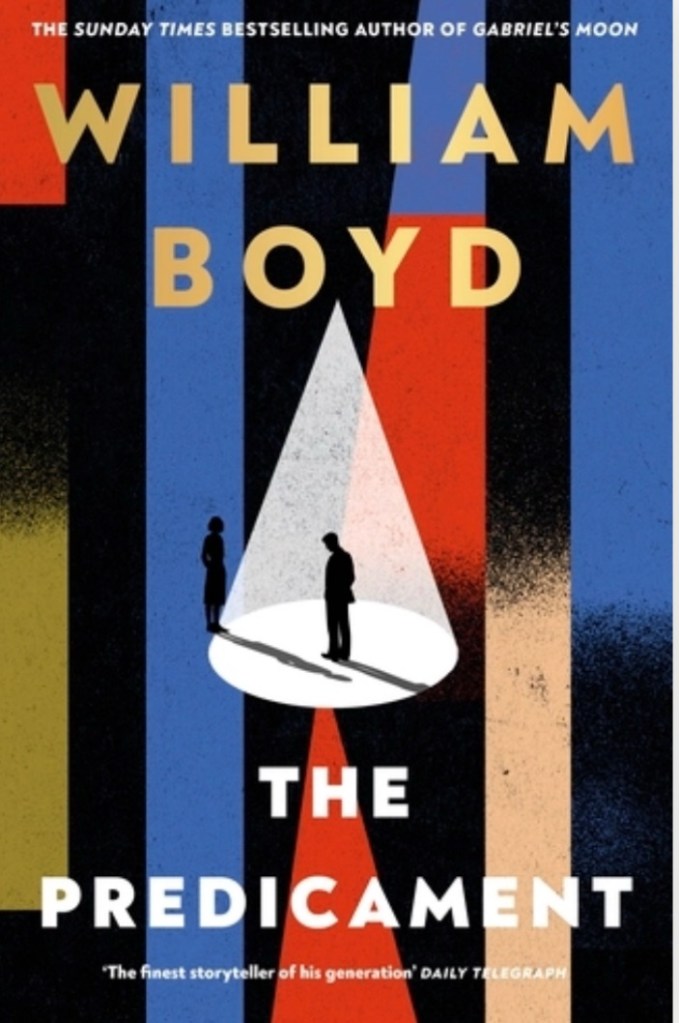
Here, however, is my small contribution. A review of William Boyd’s ‘The Predicament’

https://spybrary.com/the-predicament-william-boyd-review/?fbclid=IwdGRleANJ4lxleHRuA2FlbQIxMQABHkVOofgDB-X1E31X1YxBOtkF-adDBTP2G4h8B85KRTBAyybuWUxRRSb9inKm_aem_eVQWrhpGXB9tvDps8RvwrA

Here Comes the Hotstepper – Again

My podcast, ‘In the Footsteps of Politics’ has returned. I began the show during the General Election of 2024 when I was attempting to walk the entire constituency of Inverness, Skye and West Ross-shire. This strategy was ultimately foiled by Rishi Sunak going to market surprisingly early. So, the gambit failed – the podcast did not.

Now, we relaunch as an opportunity to speak to interesting people about interesting things – and the role of politics as it interacts with people’s lives.

Give the show a listen – we’ve already had some fantastic guests – including a football club chairman, a lady who set about defending county cricket and a former MI6 Intelligence author – and you can even watch us on YouTube if you feel so inclined.

https://www.youtube.com/@FootstepsofPolitics

Wise Words From the Workers

Is Hattie Crisell the nicest person in writing?

I ask because she certainly seems to be. 

The host of the ‘In Writing’ podcast, the freelance journalist has just published her first book.

Also called ‘In Writing,’ the reductionist description of the work is that it is a compendium of words of wisdom gathered from the interviews she has conducted for the show.

And it is that. But, Crisell’s debut is actually something more than that and builds upon this sense of her as one of life’s good guys.

I can’t imagine what it takes to be a woman in the public eye, (an infinite tolerance for taking shit springs to mind) but Crisell manages to be accessible, professional, seemingly endlessly busy as well as unfailingly curious about her subjects.

Her weekly Creative Writing hour in which her Substack subscribers join her for a silent Google Meet is a fabulous idea. Simple, but a solution to the procrastination which blights many who want to write but feel they don’t have the time. 

There has been a couple of independent women podcasters who have built their brands single-handedly and now extended into non-fiction recently – Caroline Crampton’s ‘A Body Made of Glass’ https://pajnewman.com/2024/04/11/strength-through-fragility/ was also superb – and Crisell is a welcome addition to the field.

I can’t remember how it was that I stumbled across her ‘In Writing’ podcast but the production values, the sky high quality of the guests but it was the professionalism, the openness to new ideas and the sense of community which sustained my interest.

That sense pervades every page of the book and it comes from the author. It is the best book I have read on writing since Stephen King’s ‘On Writing’. And there is no higher compliment I can pay it.

Author Bio

HATTIE CRISELL is a freelance writer based in London. She is a contributing editor of Grazia magazine and her writing regularly appears in The Times, Telegraph, Elle, Vogue, and You among others. Since 2019 she has produced and hosted the podcast In Writing with Hattie Crisell, interviewing writers of all kinds in their studies. (Biography sourced from https://granta.com/contributor/hattie-crisell/)

Not to Everyone‘s Taste? It’s a Top Choice

‘Karla’s Choice’ by Nick Harkaway


Two of writers who have given me the greatest pleasure over the longest period of time are John Le Carre and Martin Amis.

A quote from the latter’s autobiography, ‘Experience’ kept echoing through my head when reading this, the first in Nick Harkaway’s Smiley continuation novels, ‘Karla’s Choice’.

“I do it because my father is dead now, and I always knew I would have to commemorate him. He was a writer and I am a writer; it feels like a duty to describe our case — a literary curiosity which is also just another instance of a father and a son. This will involve me in the indulgence of certain bad habits. Namedropping is unavoidably one of them. But I’ve been indulging that habit, in a way, ever since I first said, ‘Dad.’”

And the parallels between Kingsley and Martin and David/John and Nick continued to resonate. 

Both Amis junior and Harkaway are successful writers in their own right, both with big name fathers. Both with “big” personalities, certainly as presented in the media, and both with literary legacies which outlive them.

The introduction to ‘Karla’s Choice’ does the thing which must surely be the wisest: tackle head on why anyone, least of all the son, would take on what must surely be a thankless task.

Resurrect the beloved characters of your own father’s legacy defining work? Oh no pressure then…

One of the highest pieces of praise I can give is that all Harkaway’s literary skill is deployed to make this feel like ‘genuine’ Le Carre.

Phrases such as, “If she could not induce Smiley to stay by her side with her laughter, she absolutely declined to keep him with her tears,” are note perfect in style and execution.

Harkaway gives more time and colour to the secondary characters than perhaps his father would have, but there’s an element of an accomplished and skilful writer seeming to enjoy playing in the doll’s house stuffed with wonderful toys.

If there is one criticism, it may well be that Harkaway roots the narrative almost too exactly in time and space in order to appeal to the Marvel universe aspect of the leadership who want to make sure that chronology is exact in a way that his father, frankly, never bothered with.

And yes, people will be sniffy – but people always are. 

Don’t let the sniffers put you off: this is a first class read, written by a writer who belongs in no one’s shadow.

Highly recommended.

Author Bio

Nick Harkaway is the author of eight novels including The Gone-Away World, Gnomon and Titanium Noir as well as the forthcoming George Smiley story Karla’s Choice. He has been described as “JG Ballard’s geeky younger brother” or “William Makepeace Thackeray on acid”, and compared with both Thomas Pynchon and Haruki Murakami. The Guardian said of him that “his great gift as a novelist is to merge the pace, wit and clarity of the best ‘popular’ literature with the ambition, complexity and irony of the so-called ‘literary’ novel” while NPR said he “makes you wonder why every book isn’t this smart and joyous and beautiful and heartbreaking.” Two of his novels – The Price You Pay and Seven Demons – were written under the pseudonym Aidan Truhen. Carl Hiaasen said of The Price You Pay “You’re mortified by the things you find yourself laughing at – and when you turn the page, there’s more. Guess what: you keep laughing…This novel has high-octane everything”.

Harkaway’s real name is Nicholas Cornwell and he is the fourth son of the David Cornwell (who wrote as John le Carré) and his second wife Jane Cornwell. He was born in Cornwall in 1972 and moved to London while he was still a child. He was educated at Clare College, Cambridge before working in the film industry. He is married to Clare Cornwell (Clare Algar), who was the Executive Director of the human rights charity Reprieve before working at Amnesty International and the Sigrid Rausing Trust, and who is now managing director of John le Carré Ltd.

In 2021, after the death of John le Carré, Harkaway took the writer’s role in bringing the final unpublished le Carré novel, Silverview, to publication. He said then that the point of the exercise was that he be as invisible as possible. In 2022 he was called upon to do the final necessary work on A Private Spy, the collected edition of his father’s letters, after his older brother Tim Cornwell, who was editing the work, sadly died. His other brothers Simon and Stephen Cornwell are the founders of The Ink Factory, the film and TV mini-studio behind The Night Manager TV show. He lives in London with Clare and their two children, and a very needy dog.

[Hi. Nick here. The above is my current official bio. It obviously reads like exactly what it is, and it’s a bit impersonal and yes, it’s also in the third person which is weird. There is however a real person behind this website, usually quite a long way behind, under a blanket, writing a novel. That would be me. Hello. If you want to get in touch, please reach out to Patrick Walsh for professional inquiries. If you just want to chat, I’m on Bluesky because, for the moment, it is the least horrible social network I know of. You can find the Bluesky link at the bottom of the main page of this site.]

(Bio taken from https://nickharkaway.com/about)

Anyone Brave Enough for Tennis?

‘Team Spirit’ by RJ Gould

Team Spirit: a humorous take on tennis club turmoil

Everything seems straightforward enough with agreement reached for the tennis club to hold social events at the nearby Dream Café while the clubhouse is being rebuilt.

When Oliver Kilroy is forced to resign as club chairman after taking a bribe from the builder, Laurie, his young and inexperienced deputy, is left in charge of running the club. He accepts the post on condition that the attractive Helen is prepared to support him as the new deputy.

The pair are faced with an unprecedented run of challenges. The builder is failing to deliver on time. A player’s dubious line calls are infuriating opponents. The WhatsApp group has become a hotbed of slanderous gossip. A middle-aged flirt is antagonising the female members. And poor behaviour at the Dream Café is threatening the agreement.

Helen and Laurie are struggling to cope, though tennis club problems are a distant second for Helen as she attempts to start a relationship with Laurie. She’s sure he also wants that but something major is going on in his life to prevent progress. What is that something and can it be overcome?

RJ Gould and I are that rarest of things: a pair of chaps willing to admit to a fondness for the romance genre. In my case, this usually amounts to an over enthusiasm for the ouvre of Hugh Grant, in Gould’s membership of the UK Romantic Novelists Association and novels such as ‘Dream Café’ which I reviewed back in 2021 and declared, “nice romantic comedy which nips along with ease of reading and light touch charm”, a view I would echo in ‘Team Spirit’.

We are back in the same milleau of the ‘Dream Café’ characters – now the fourth in the series which is in and of itself quite an achievement, and the locations and characters are as comfortable as an old jacket.

Which is not so true of the plot and writing which does a brilliant job of reflecting the spikiness, petty jealousies and simmering rivalries of small English places with a stiletto blade. All the social niceties employed, hiding the drinking problems, the hatred and the tensions. Gould is an accomplished skewerer of the seamy sides of English life: and what better location in a summer in need of sun than a tennis club?

A welcome addition to the series and a fine addition for the small male fan club of the romance genre persuasion.

Author Bio –

R J Gould writes contemporary fiction about relationships using a mix of wry humour and pathos to describe the tragi-comic life journeys of his protagonists. Team Spirit is his tenth novel and the fourth in the stand-alone ‘at the Dream Café’ series. He has been published by Headline Accent and Lume Books and also self-publishes. Before becoming a full-time author he worked in the education and charity sectors. In addition to his addiction to telling stories, he has somewhat milder addictions to playing tennis, watching film noir cinema, completing Wordle and eating dried mango slices. He is a member of Cambridge Writers, Society of Authors and the Romantic Novelists’ Association UK. He lives in Cambridge, England.

Social Media Links –

Website:                           http://www.rjgould.info

Twitter:               https://twitter.com/RJGould_author

Facebook:                         https://www.facebook.com/RJGouldauthor

Instagram:                        https://www.instagram.com/rjgould_author    

Goodreads                       https://www.goodreads.com/author/show/6432126.R_J_Gould

Less A Relic Than A New Find

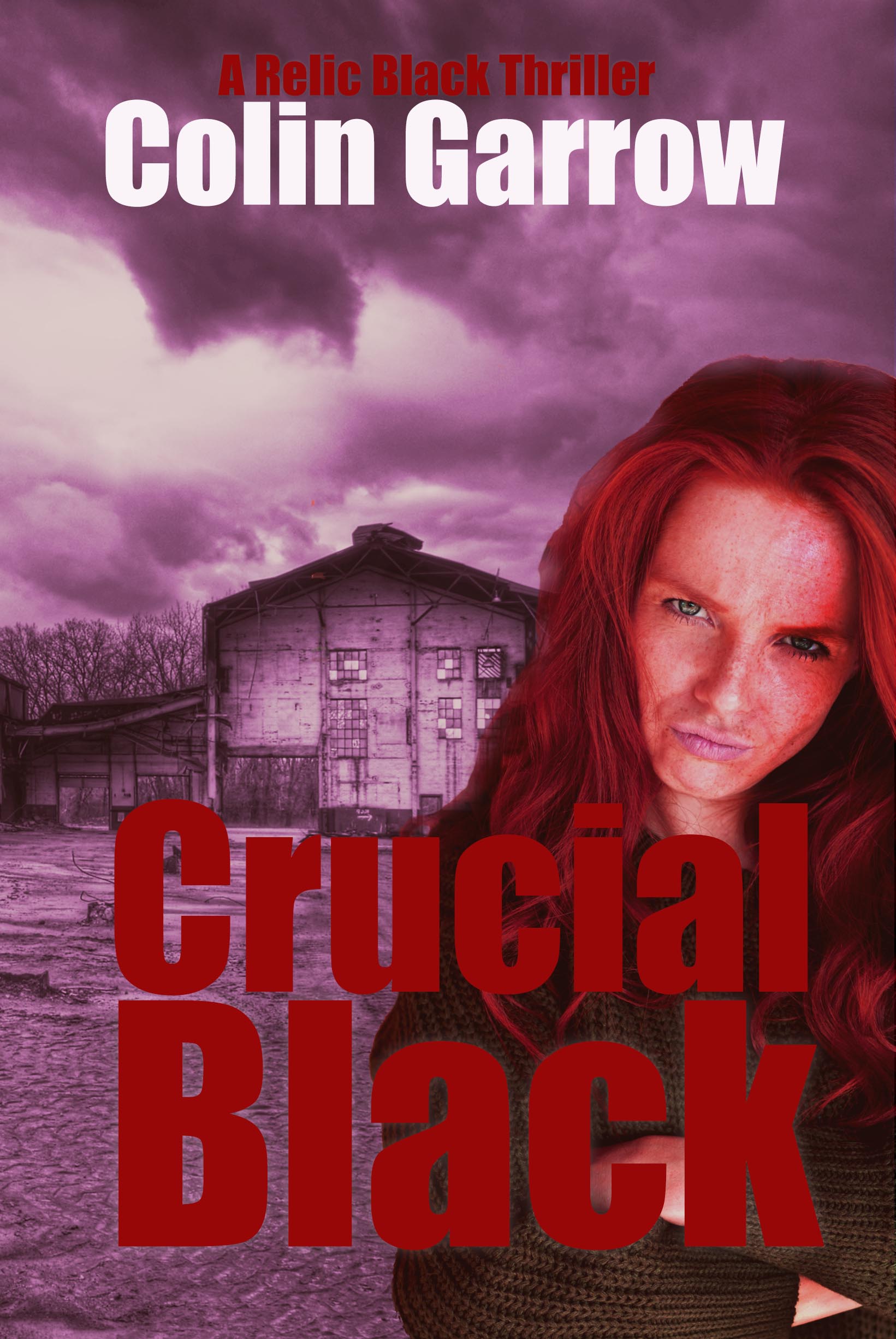
Crucial Black by Colin Garrow

Crucial Black Full Tour Banner

A brace of corpses. A bone-crunching machine. A new recruit.

Now employed by an Inverness organised crime gang, former petty thief Relic Black is teamed up with hitman Ali McKay, the man he almost killed a few weeks earlier. As the team tidy up
the loose ends after the shooting, gang member and bent cop DI McKenzie must
investigate the disappearance of two people, knowing Relic and Ali have already
disposed of the bodies.

Meanwhile, Rebecca’s unpopular colleague DI Swinney, suspects her of
involvement in the shooting. Knowing one of the bodies currently taking up
space in the mortuary remains anonymous, he discovers the man’s identity. Can
Swinney uncover the truth, dig the dirt on McKenzie and regain his former
status with the DCI, or will the gang step in to stop him?

Warning – strong language and adult situations throughout.

Crucial Black is book #2 in the Relic Black
Thriller series set in Inverness, Scotland.

NB book #2 is not a standalone – the series must be read in order.

Crucial Black COVER ebook Update JULY 2023

Over the last few years, there has been a move to build upon some of the pioneers of so-called “tartan noir” and the international success of the genre has seen a variety of regional variations spring up.

Inverness, with its highland locations, its tourism draw and its mix of city with genuine rurality on its
doorstep has featured in several of these types of novels before. ‘Terminal Black’, Colin Garrow’s 2020 novel introduced into the city the jauntily-named character Relic Black and, here, the low level criminal returns in book 2 of the series, out of his depth and in with the big dogs.

Garrow has something of the JD Kirk about his work. The vernacular is street-based, the action suitably  bloody and the narrative shot through with Scots, both in humour and language. He also does pace: there is no hanging aboot for any of the characters here.

The character of DI Swinney has also taken on something of a contemporary resonance with recent Scottish political events as well. Something which can only be in Garrow’s favour promotion and sales-wise.

Not for the faint of heart – I’d advise readers to take the warning note seriously – this is a novel which packs a punch and, for those of us based up here and who know the area – reads like a
map of the city.

Well worth your time!

Purchase Link

AMAZON https://geni.us/gXeQFS

SMASHWORDS https://www.smashwords.com/books/view/1345380

Author Bio –

Black-n-white-port-2

Colin Garrow grew up in a former mining town in Northumberland. He has
worked in a plethora of professions including taxi driver, antiques dealer,
drama facilitator, theatre director and fish processor, and has occasionally
masqueraded as a pirate.

His short stories have appeared in several literary mags, including SN
Review, Flash Fiction Magazine, Word Bohemia, Every Day Fiction, The Grind, A3
Review, 1,000 Words, Inkapture and Scribble Magazine. He currently lives in a
humble cottage in Northeast Scotland where he writes novels, stories, poems and
the occasional song.

He also makes rather nice vegan cakes.

Social Media Links –

Twitter https://twitter.com/colingarrow

Instagram
https://www.instagram.com/colinngarrow/

Website
https://colingarrow.co.uk/ 

Bookbub
https://www.bookbub.com/profile/colin-garrow

Facebook
https://www.facebook.com/colingarrowthewriter

TikTok
https://www.tiktok.com/@colingarrowauthor

If You’re There, Where the Hell Are the Rest of Us?

‘You Are Here’ by David Nicholls

Marnie is stuck.
Stuck working alone in her London flat, stuck battling the long afternoons and a life that often feels like it’s passing her by.

Michael is coming undone.
Reeling from his wife’s departure, increasingly reclusive, taking himself on long, solitary walks across the moors and fells.

When a persistent mutual friend and some very English weather conspire to bring them together, Marnie and Michael suddenly find themselves alone on the most epic of walks and on the precipice of a new friendship.

But can they survive the journey? (Synopsis courtesy of Hachette)

I am told that there is a concept in Silicon Valley known as Fail Fast. I’m not 100% sure what this means in practice – something to do with not paying enough in taxes one presumes – but I think the core idea is that you should be comfortable and confident to move on as quickly as possible when you realise that things are not going to work out as best they can. A similar idea is epoused by Steve Levitt, of Freakonomics-fame, who is a huge advocate of quitting, and quitting early.

David Nicholls is, I think, becoming the Wordsworth of characters who do not quit early enough, and probably when they should.

‘You Are Here’, is Nicholls’ sixth novel and the one which feels like his most middle aged – and I do not intend this as a criticism. The characters of Marnie and Michael feel real and like they have forgotten to give up. There’s little doubt that this feels like a novel born of that pandemic hangover period.

The role of loneliness – its long-term health implications, it’s role in mental health seemed to pop up around the pandemic – and then disappear along with stockpiles of toilet paper, face masks and hand sanitizer. The popularity of novels like Eleanor Oliphant is Completely Fine by Gail Honeyman and Meredith, Alone by Claire Alexander join, in my mind, Hotel Milano by Tim Parks as novels who deal with characters disorientated and sent spinning by a lack of connection to other people and the difficulty of re-establishing contact with the ocean floor after being set adrift from others. (Caveat: Tim Parks was pretty clear that he did not view Hotel Milano as a pandemic novel.)

If that makes this novel sound dull, or worthy or sombre, this is the fault of your reviewer, not the novelist. Good lord it is funny. Anyone who has ever resentfully trudged up a hill will delight in Marnie’s dismay, rendered in rhythmical joy by the author as he incredulity builds.

 “What was it like inside a cloud? The answer, it transpired, was fucking shit and, no, a cloud wouldn’t catch you because clouds were treacherous bastards and so were rocks and so was rain, and the mountain streams weren’t babbling: they were taking the piss and so was everything outside, the whole of nature.”

Some people will buy this novel because ‘One Day’ is having a renaissance on Netflix. Some people will buy this novel because they like ‘Starter for 10’, some, because a new novel by Nicholls does not come along every day.

This book propels Nicholls, for me, into that club of writers who I can no longer read with moderation. I’m afraid I drank ‘You Are Here’ down greedily. As with Mick Herron it is just too moreish. The review copy arrived Friday, I finished it Monday. Because, be in no doubt: Nicholls’ is an assassin with language.  

Characters are drawn with delicate flicks of language which conjure them as though in the room and, as with all of Nicholls’ work, are funny, delicate, heart breaking and charming in measures realistic enough for them to stick with them.

I did have one caveat: Nicholls keeps writing characters the exact same age as me. I often get irritated by school pupils who refuse to engage with characters in texts because “they can’t see themselves in them.” Well, that’s the point of fiction to experience other people’s opinions and points of view. As a 42-year-old teacher who just undertook the first stage of a long walk, it feel like one’s conceit will know no bounds if writers keep writing him into fiction (I think this may be coincidence. Even I’m not that self-important.)

What I do know for certain is that while these characters would certainly have been forgiven for giving up, I’m extremely grateful that David Nicholls continues to ply his trade – and that neither Michael nor Marnie feel the need to channel their inner tech bros and quit early.

Purchase Links

You can order ‘You Are Here’ through Bookshop.org and support this blog at this link

Other purchase options are available here: Hachette

Author Bio

David Nicholls trained as an actor before making the switch to writing. His TV credits include the third series of Cold FeetRescue Me, and I Saw You, as well as a much-praised modern version of Much Ado About Nothing and an adaptation of Tess of the d’Urbervilles, both for BBC TV. David has continued to write for film and TV as well as writing novels, and he has twice been nominated for BAFTA awards.

David’s bestselling first novel, Starter for Ten, was selected for the Richard and Judy Book Club in 2004, and David has written the screenplays for film versions of both Starter for Ten (released in 2006, starring James McAvoy) and The Understudy (not yet released).

David Nicholls’ third novel, One Day, was published in hardback in 2009 to extraordinary critical acclaim, and stayed in the Sunday Times top ten bestseller list for ten weeks on publication. It has since gone on to sell over five million copies and has been translated into forty languages. One Day won the 2010 Galaxy Book of the Year Award. David wrote the screenplay for Lone Scherfig’s film adaptation starring Jim Sturgess and Anne Hathaway, which was released in 2010. (Bio from https://www.curtisbrown.co.uk/client/david-nicholls)

Instagram

Twitter

Facebook

Strength Through Fragility

A Body Made of Glass by Caroline Crampton

How often does one read something which, within the first page, makes you wholly reconsider your stance on something?

I don’t mind admitting, hypochondria is not something to which I had really given a lot of thought. Or, any thought really. Now, I understand that this itself is a form of privilege – a freedom to not have worried about my health in any meaningful way, should not be taken for granted.

But if I had been given cause to pause and define hypochondria, I suspect I would have considered it… “a fear of illness entirely psychosomatic,” (a concept, and word, I know solely thanks to The Prodigy. Who says music teaches nothing?)

And yet, on page one of Caroline Crampton’s latest book, A Body Made of Glass, we are told of the teen cancer which, in essence, derailed her later teen years and triggers a long-term struggle with the condition of hypochondria.

Which seems… reasonable? It had never occurred to me that hypochondria might be based upon a rational foundation. To have been diagnosed, and then survived, what can only be described as a trauma, and to then imagine that every twinge may be the beginning of another setback on the road to full, sustained health, begins to look like a logical belief structure.

Crampton herself examines this in her own inimitable style. “The body has what has been described as ‘a limited vocabulary of subjective sensations’. I may think that I can feel things growing inside me that shouldn’t be there, like roots creeping unseen through the soil, but there is no evidence to suggest that this is actually the case.”

Creepily effective pastoral metaphor aside, the reader can’t help but think, “Yeah! How could you not!?”

Once you get up to speed with this concept, the slippery and transitional nature of the condition comes into view. What follows is fascinating as Crampton embarks on a multi-millennium tour of the way that medicine has approached the unknown – and unknowable – nature of medicine.

Spoiler alert – women seem to get the fuzzy end of the lollipop. Repeatedly.

I know Crampton best from her work on Golden Age of Crime podcast, Sheddunnit. She is an engaging and accessible doyen of that particular manor and her erudite, spectacularly widely read knowledge of the genre pervades that particular domain.

But it is nothing compared to the interdisciplinary tour de force which A Body Made of Glass presents to the reader. From ancient Egypt, via Plato, Peter Griffin and South Park, this is a whip smart journey through cultural reference points of high brow, pop and low brow culture.

Frankly I am exhausted by the thought of her reading list, let alone the writing of the text which followed.

Interspersed through these cultural touchstones are anecdotes, personal, observational – what I have come to regard as the “jar of pee” episode is one I see attracting attention in other reviews – but I was rather fond of the family she encounters at a hotel breakfast room who express their familial affection by recounting in lavish detail their bowel movements as they break their fast. Personally, I’d have recounted my own food at projectile velocity over them as a reward for this particular start to my morning but CC is a lot nicer than I am.

Crampton includes an excellent section of Robert Burton’s Anatomy of Melancholy, a text a favourite author of mine, Anthony Powell, leans heavily on in the later volumes of A Dance to the Music of Time. In the same way as Nick, the narrator of the series, says, “became rather hard not to see Burton in everything,” one feels Crampton has been living her life seeing hypochondria and its “’infinite varieties,’ Burton said,” in every book she has read, television show she has watched, every play she has seen.

She quotes Burton further when she recounts him writing, “the tower of Babel never yielded such confusion of tongues, as the chaos of melancholy doth variety of symptoms.’” Her corollary to this, that, “reading Burton, one comes away with the dizzying feeling that melancholy is everything and everything is melancholy,” is rather how the reader leaves the text feeling. Is hypochondria everything and everything hypochondria?

Does Crampton manage to move on and improve her trauma informed response to her childhood illness and the fruits of this poisoned tree it left her?

Well, that would be as bad as giving away the killer on page two of a Golden Age detective novel. Suffice to say, in a writer as warmly welcoming in her accomplished prose, as well as being as erudite and engaging as Caroline Crampton, you will just be happy to be along for the tour.

Author Bio

Caroline Crampton is a writer and podcaster. She writes non-fiction books about the world and how we live in it — The Way to the Sea (2019) and A Body Made of Glass. She makes a podcast about detective fiction called Shedunnit, she curates articles for The Browser, and reviews and essays for publications like Grantathe New Humanist, the Guardian and the Spectator. (Biography and photograph adapted from https://carolinecrampton.com/)

Purchase Links:

https://geni.us/aK99kec