“Don’t it always seem to go/That you don’t know what you got/Till it’s gone.” Joni Mitchell
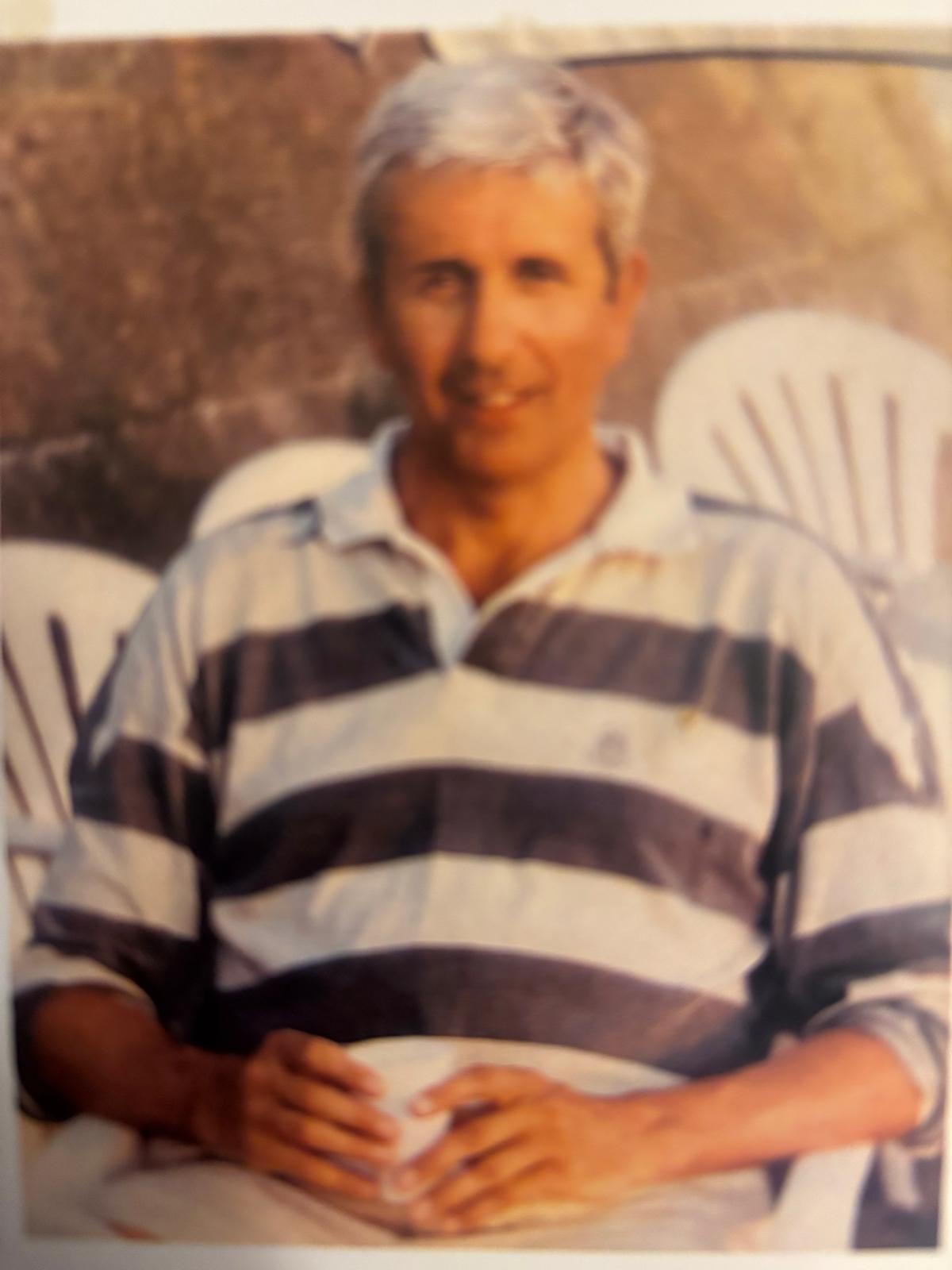
Last week I went to a funeral. It happens. The person at the business end of the ceremony was my former housemaster, Dr Hobson.
In truth, it was one of those deaths which, if I’d thought about it, should not have been surprising. But it hit me far harder than I had expected. Hobson, as he was mostly known by us, took over a senior boarding house part way through an academic session, the year before I moved into it. As such, I was part of his first cohort whom he took all the way through from 14-18.
Those can be difficult years for the best of us. In a quote I can’t at the moment track down or source, a character reflects that school masters when he was at school were “dangerous lunatics, to be mocked or deceived as the moment required.” Many of the masters of the early 90s fit that stereotype. Dr Hobson never did.
At the funeral, another pupil reminded me that our junior house had been run by a spectacularly combustible character who used to carry out “blitzes”. Although a piece of terminology I had forgotten,I have not forgotten the red faced, vodka-fuelled rampages when books, personal possessions, crockery and cutlery were hurled to the floor in the late evening and then 50 children were left to put the pieces back together again.
There was nothing like that under Hobson. The same peer pointed out he never shouted at us. I hadn’t thought about it. But then again, he hadn’t needed to. We feared disappointing him, far more than his wrath – although make no mistake, we wanted to avoid that too.
It was an environment in which relationships with fathers was complicated. Despite the milieu of a mixed boarding school, the majority of us came from single parent homes, where absentee fathers were the norm.
That wasn’t my experience, but it certainly was the experience of the majority. Against that background, as another friend said last week, “he was probably the most stable male role model I had”. Amen to that.
He certainly had ways of dealing with us. For a fairly notorious start, he decided that we potentially needed to be cured of, what today would have been called, our toxic masculinity. Cue a violently bright pink day room where we spent much of our time. It was his son Richard who reminded me that we tried to turn this to our advantage by telling girls that we were in touch with our feminine side. It may even have worked in some cases.
Fast forward a quarter of a century and I have been a teacher for nearly 20 years. There are certain truths which you learn in a classroom:
- you are the adult in the room. If you begin acting like the kids, and letting your emotions control you, you’re done.
- The best teachers teach you things which can take years to be useful. These are life lessons – the gap between acquiring the knowledge and using it can be tens of years.
- Every day is a fresh day. Grudges are for the weak. Everyone starts a new day with a new slate – especially when it’s hard to do.
- The best teachers allow you to fail safely.
Dr Hobson did all of those things for me. Being a slow learner and a bad student, I made just about every mistake a teen could make and gave him many opportunities to try out his exasperated good nature. This is, after all, the same man who suspended me not once, but three times. The same man who saw me sort out my disciplinary record, rise to the position of prefect and deputy house captain for him and then watch as I very nearly got expelled mere weeks after attaining the status he had backed me for.
I do not remember his ever showing any anger or frustration with these evidently moronic choices. Wry, amused detachment for sure. But every day was a fresh start and I served my various punishments and took up where I left off.
Yet another friend, when I told him of Hobson’s death, said, “he was such a perfect housemaster for us, let us have a bit of freedom, but… was very much, and it wasn’t a phrase back then, a FAFO type house master.”
He was indeed. A good number of years ago I went to celebrate his retirement as he got ready to leave the school. He hadn’t changed much. Still wryly amused, still a big man, pleased to see us and friendly. Interested but distracted by the need to care for the youngsters still under his charge. I’m pleased I went.
At the funeral both his children, who I remember as later teens bemused by these gangs of idiot boys marauding about, were there with children of the same age as when we came under their grandfather’s care. The family were exactly what one would hope a Hobson family member would be: calm, kind, friendly, funny.
Hobson’s wife, who god knows must have borne the burden of taking on 50 hormonal barely shaved apes who chapped the door at all hours of the day and night, with a good natured grace few of us ever earned looked positively identical as though the last 25 years hadn’t happened. The family welcomed me and my peer as though we had never been away, which was kind beyond words.
Early 90s boarding schools were – for a variety of reasons – dangerous places. Dr Hobson made us feel safe: literally and figuratively. The other lessons: the patience, the amused detachment, the fresh slate, the serve your time and pick up without damaging the relationship? Those are all lessons taught to me by a brilliant teacher and, despite the gap in years, amazingly relevant. I don’t often reach his standards – I have neither his presence, nor his innate kindness and compassion in the classroom – but I try. And by trying, perhaps I’ll get closer to it.
I wasn’t as good at keeping touch as I should have been. Facebook messages, that visit for his retirement. What, a Christmas card would have killed me? It’s another failing I shall have to live with.
At the funeral, I realised that he was almost exactly the same age as my own parents. Four years younger than my Mum, a year younger than my own late father. My mum is also now living with dementia and is, to all intents and purposes, gone. The three of them got on well, mainly I realise now, laughing at me and my stupidity.
That generation is passing on now, some quickly like my dad, some in the slow, long goodbye of dementia’s savage fog. But we should cherish them: because like the lady sang, “you don’t know what you got till it’s gone.”
 PAJ Newman