A Body Made of Glass by Caroline Crampton
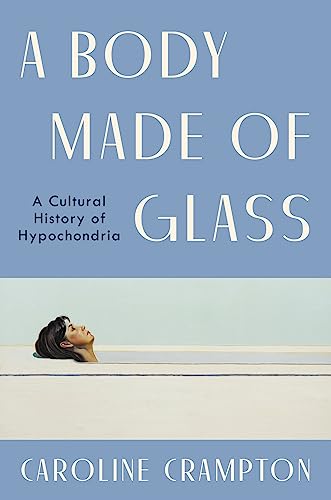
How often does one read something which, within the first page, makes you wholly reconsider your stance on something?
I don’t mind admitting, hypochondria is not something to which I had really given a lot of thought. Or, any thought really. Now, I understand that this itself is a form of privilege – a freedom to not have worried about my health in any meaningful way, should not be taken for granted.
But if I had been given cause to pause and define hypochondria, I suspect I would have considered it… “a fear of illness entirely psychosomatic,” (a concept, and word, I know solely thanks to The Prodigy. Who says music teaches nothing?)
And yet, on page one of Caroline Crampton’s latest book, A Body Made of Glass, we are told of the teen cancer which, in essence, derailed her later teen years and triggers a long-term struggle with the condition of hypochondria.
Which seems… reasonable? It had never occurred to me that hypochondria might be based upon a rational foundation. To have been diagnosed, and then survived, what can only be described as a trauma, and to then imagine that every twinge may be the beginning of another setback on the road to full, sustained health, begins to look like a logical belief structure.
Crampton herself examines this in her own inimitable style. “The body has what has been described as ‘a limited vocabulary of subjective sensations’. I may think that I can feel things growing inside me that shouldn’t be there, like roots creeping unseen through the soil, but there is no evidence to suggest that this is actually the case.”
Creepily effective pastoral metaphor aside, the reader can’t help but think, “Yeah! How could you not!?”
Once you get up to speed with this concept, the slippery and transitional nature of the condition comes into view. What follows is fascinating as Crampton embarks on a multi-millennium tour of the way that medicine has approached the unknown – and unknowable – nature of medicine.
Spoiler alert – women seem to get the fuzzy end of the lollipop. Repeatedly.
I know Crampton best from her work on Golden Age of Crime podcast, Sheddunnit. She is an engaging and accessible doyen of that particular manor and her erudite, spectacularly widely read knowledge of the genre pervades that particular domain.
But it is nothing compared to the interdisciplinary tour de force which A Body Made of Glass presents to the reader. From ancient Egypt, via Plato, Peter Griffin and South Park, this is a whip smart journey through cultural reference points of high brow, pop and low brow culture.
Frankly I am exhausted by the thought of her reading list, let alone the writing of the text which followed.
Interspersed through these cultural touchstones are anecdotes, personal, observational – what I have come to regard as the “jar of pee” episode is one I see attracting attention in other reviews – but I was rather fond of the family she encounters at a hotel breakfast room who express their familial affection by recounting in lavish detail their bowel movements as they break their fast. Personally, I’d have recounted my own food at projectile velocity over them as a reward for this particular start to my morning but CC is a lot nicer than I am.
Crampton includes an excellent section of Robert Burton’s Anatomy of Melancholy, a text a favourite author of mine, Anthony Powell, leans heavily on in the later volumes of A Dance to the Music of Time. In the same way as Nick, the narrator of the series, says, “became rather hard not to see Burton in everything,” one feels Crampton has been living her life seeing hypochondria and its “’infinite varieties,’ Burton said,” in every book she has read, television show she has watched, every play she has seen.
She quotes Burton further when she recounts him writing, “the tower of Babel never yielded such confusion of tongues, as the chaos of melancholy doth variety of symptoms.’” Her corollary to this, that, “reading Burton, one comes away with the dizzying feeling that melancholy is everything and everything is melancholy,” is rather how the reader leaves the text feeling. Is hypochondria everything and everything hypochondria?
Does Crampton manage to move on and improve her trauma informed response to her childhood illness and the fruits of this poisoned tree it left her?
Well, that would be as bad as giving away the killer on page two of a Golden Age detective novel. Suffice to say, in a writer as warmly welcoming in her accomplished prose, as well as being as erudite and engaging as Caroline Crampton, you will just be happy to be along for the tour.
Author Bio
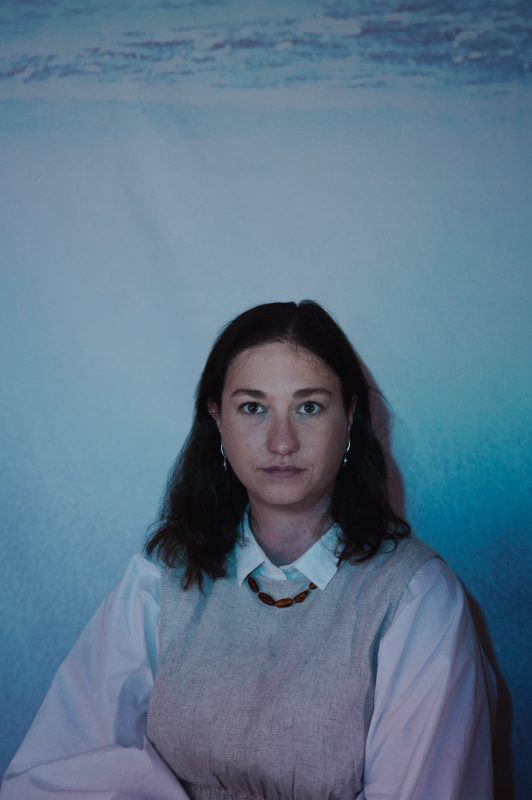
Caroline Crampton is a writer and podcaster. She writes non-fiction books about the world and how we live in it — The Way to the Sea (2019) and A Body Made of Glass. She makes a podcast about detective fiction called Shedunnit, she curates articles for The Browser, and reviews and essays for publications like Granta, the New Humanist, the Guardian and the Spectator. (Biography and photograph adapted from https://carolinecrampton.com/)
Purchase Links:
 PAJ Newman
Pingback: Wise Words From the Workers | PAJ Newman