‘Kennedy 35’ Charles Cumming

Charles Cumming has long, rightly, been regarded as one of the top two or three working in the espionage genre at the moment.
Emerging around the same sort of time as the impressive Jeremy Duns and Simon Conway, Cumming has managed the difficult task of longevity – Duns remains on hiatus and missed by readers, if not by charlatan sub-editors.
Cumming has also managed that still more difficult task: reinvention. He has produced several multi-volume series and moved on without alienating readers who allowing quality to diminish.
Oh and, for good measure, he’s also produced at least three of the best modern-era standalone novels of the genre in ‘Typhoon’, ‘Trinity Six’ and ‘The Man Between’, the latter a 21st century Eric Ambler – and all the better for that comparison.
And so here we have ‘Kennedy 35’, the latest in the Lachlan Kite series of stories.
These books, beginning with 2020s ‘Box 88’ are both simple in conception and classy in their execution.
By running a duel storyline, an historic case involving Lachlan as young man, juxtaposed with a modern day story and examining the repercussions across years, combined with the heavy lifting of personal details from youth woven through the text, Cumming has made his own narrative niche.
Now, even one’s own vanity does not run to consider this an especially significant observation, but it did mean that I snorted out loud with laughter in an early chapter when a character said, “Now if somebody puts a guava in front of me, or if I taste or smell the brine of tinned food, I throw up.’ In French he added: ‘It’s like an inversion of Proust’s fucking madeleines.”
And it is this slightly self aware tone which permeates the text. A French character name drops Camus and Kafka within a thin spread of pages and Kite acknowledges this and chuckles.
Likewise, Cumming keeps the reader rooted in period detail “London was Oasis and Blur. It was Friends and Don’t Forget Your Toothbrush.” A lovely turn of phrase, although one unlikely to resonate much outside the UK?
At one stage I had fretted that these novels would become a conceit. After all, how many life changing experiences can one character have which includes formative experiences and be naturally tied into contemporary life?
I’m delighted to report the answer is… at least three and it better be four!
Here, Kite is embroiled in a scenario related to the Rwandan genocide and brought to life by the reappearance of an old friend.
This actually ties into the one strand which concerns me on Cumming’s behalf. If I’d been asked previously, I’d have placed the character of Kite as a “small c conservative”. In this novel, the obvious contemporary overtones related to HMG’s Rwanda deportation scheme are striking as is a recognition of where the UK now stands internationally now we have “taken back control.”
Our villains “will launder and provide cover for whoever pays their 20 per cent fee. In this they are not ethical of course. Boko Haram. Allied Democratic Forces. Al-Shabaab. It doesn’t matter. They are interested solely in the accumulation of money and the power which goes with it… She parties with Tory donors and Conservative MPs here in London, attends the sort of events that make their way into the pages of Tatler and Daily Mail online. She has blood on her hands but she also has money. The people who want that money are entirely without moral scruple. They turn a blind eye.’
‘It’s a modern disease,’ Kite observed.”
Or take this exchange between Kite and a French intelligence officer. “I don’t mean to be disrespectful to your wonderful country, Lockie, but you know as well as I do that the UK has been enabling the likes… for years. Your lawyers prepare their tax returns, your PR firms polish their images and if any journalist wants to write about them, their editor knows that a seven-figure libel action is waiting just around the corner.’
‘It’s much worse than that,’ Kite replied with an air of amused fatalism. ‘Successive British governments have actively encouraged anyone with a large enough chequebook to get it out in London and start spending. Dirty money washes through the construction sector, the hospitality industry, car dealerships, football clubs, you name it. Without it, the British economy would probably go into freefall.’”
Why would I say this worries me when a) these are opinions of fictional characters and b) objectively verifiable facts? Mainly because the world appears to have run mad and authors don’t seem to be free to express obvious truths without people weaponising them for their own ends.
I’m hoping that ‘Kennedy 35’s inclusion on The Times Autumn books to read means, perhaps, CC has slipped under the culture wars radar. I do hope so.
This is neither a Vince Flynn bombastic bullets ahoy nor a Le Carre-esque disaffection with the state of espionage in the modern world. This is, quite simply, a novel by a top class performer, performing at the head of the pack.
I was concerned that it actually marked the end of the series, so confident, so accomplished and so self-assured it appeared.
But, it is fair to say, with an ending which leaves well loved characters physically and emotionally up in the air, ‘Kennedy 35’ is a triumph of a novel about which I can only say: read it. You will not be sorry.
Purchase Links:
Bookshop.org: https://uk.bookshop.org/a/10526/9780008363512 (Warning! Buying form this link gives money to this blog also)
Amazon: https://amzn.eu/d/dU94TWR
Author Bio:
Charles Cumming
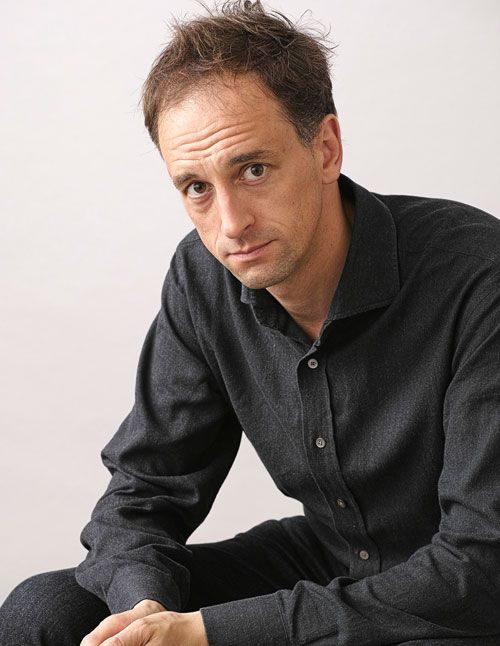
Charles Cumming was born in Scotland in 1971. He was educated at Eton and graduated from the University of Edinburgh in 1994 with First Class Honours in English Literature. The Observer has described him as “the best of the new generation of British spy writers who are taking over where John le Carré and Len Deighton left off”. In the summer of 1995, Charles was approached for recruitment by the Secret Intelligence Service (SIS). A year later he moved to Montreal where he began working on a novel based on his experiences with MI6. A Spy By Nature was published in the UK in 2001. (Biography courtesy of Harper Collins)

 PAJ Newman